Share This Review

Our review
The Let Them Theory
The Let Them Theory by Mel Robbins Review: A Viral Self-Help Manifesto for Letting Go
Mel Robbins' The Let Them Theory is a #1 New York Times bestseller and one of the most commercially successful nonfiction releases in recent memory, built around a deceptively simple two-word framework — "Let Them" — designed to help readers stop expending energy on other people's opinions, behavior, and drama, and redirect that energy toward their own goals and lives.
LuvemBooks Verdict
Best for
Readers who feel chronically drained by people-pleasing, overthinking, or seeking external validation, and want a clear, memorable, two-part mental framework they can apply immediately across relationships, family dynamics, and personal goals.
Worth it if
You respond well to conversational, anecdote-driven self-help — in the vein of Brené Brown or Glennon Doyle — and want a structured, widely celebrated tool for redirecting energy away from other people's choices and back toward your own life.
Skip if
You are already well-versed in acceptance-based or cognitive-behavioral frameworks, or you are looking for clinically grounded, research-heavy analysis rather than a streamlined, motivational guide.
What readers & critics say
Genuine reader reviewers highlight the book's radical simplicity and emotional relief, with maryse.net awarding it five stars and describing its message as "comforting" and "a relief," while athomealot.com notes that Robbins' personal experiences make the book feel distinctively hers, even as it acknowledges the framework's broad origins. Canecto.com offers a more measured view, praising the book's encouragement of self-acceptance while noting that its reliance on personal anecdote may leave readers seeking more empirical support.
Sources: maryse.net, athomealot.com, canecto.com, gramedia.comAsk LuvemBooks
Was this helpful?
- Is it worth reading?
- For readers who feel stuck, overwhelmed, or drained by their investment in what others think and do, The Let Them Theory delivers a clear, repeatable mental framework with genuine practical utility. Reader responses collected on Robbins' platform describe it as 'among the most straightforward and deepest of the many wisdom books published in recent years' and 'a sigh of relief for your stressed brain.' The caveat is real, though: readers who have already deeply engaged with cognitive-behavioral or acceptance-based frameworks, or who expect research-heavy depth, are likely to find the core idea familiar and the treatment insufficient.
- Similar books
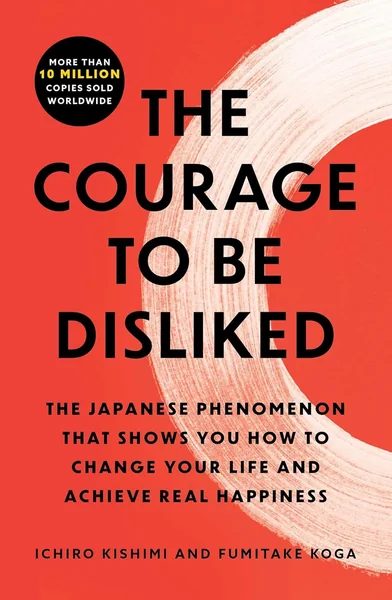
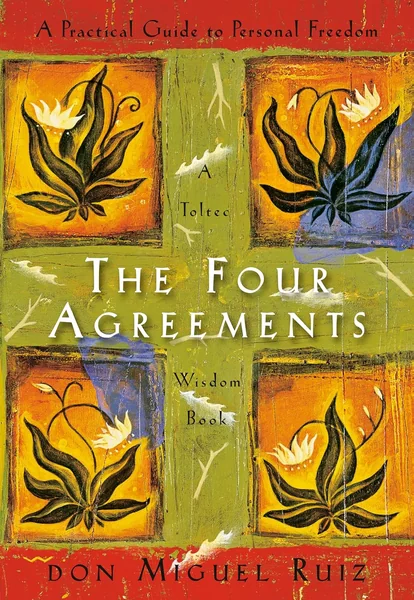
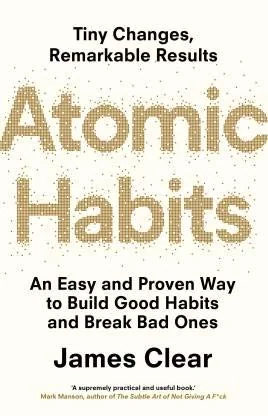
- Readers drawn to The Let Them Theory will find natural companions in several titles. Brené Brown's Daring Greatly explores vulnerability and the cost of seeking external validation in a similarly conversational register. The Courage to Be Disliked by Ichiro Kishimi and Fumitake Koga tackles the Adlerian philosophy of freeing oneself from others' expectations — a close thematic cousin to the 'Let Them' premise. Don Miguel Ruiz's The Four Agreements offers another short, memorable framework for personal freedom, and Nick Trenton's Stop Overthinking directly addresses the chronic overthinking audience Robbins targets. For readers who want a more structured habits-and-effectiveness approach, Stephen R. Covey's The 7 Habits of Highly Effective People remains a foundational text.
- Who should read this?
- The Let Them Theory is designed for readers who feel stuck, overwhelmed, or chronically drained by their investment in what others think and do — particularly those who struggle with people-pleasing, overthinking, and self-consciousness. Fans of Mel Robbins' previous work (The 5 Second Rule, The High 5 Habit), and readers who enjoy conversational self-help in the tradition of Brené Brown and Glennon Doyle, will find this a natural fit. Readers who prefer densely researched nonfiction or who have already deeply engaged with cognitive-behavioral or acceptance-based frameworks are the clearest exception.
- About Mel Robbins
- Melanie Lee Robbins is an American author, podcast host, and lawyer.
- How does it compare to Robbins' earlier books?
- The Let Them Theory sits within the same accessible mindset-and-behavior-change tradition as Robbins' earlier bestsellers The 5 Second Rule and The High 5 Habit, all built around short, memorable frameworks designed for immediate practical application. Where The 5 Second Rule centered on a countdown technique for overcoming hesitation, The Let Them Theory's 'Let Them / Let Me' split focuses specifically on releasing the energy spent on other people's behavior and redirecting it inward. Commercially, The Let Them Theory represents an escalation — publisher and bookseller data describe it as on pace to become the most successful nonfiction book launch of all time.
- Does it have real psychological depth?
- The book's central strength is the combination of radical simplicity and genuine resonance for its target audience — reader responses describe it as both 'straightforward' and 'deep' in the sense of practical wisdom rather than academic rigor. However, the review is candid that a framework reduced to two words is, by design, a blunt instrument. Readers seeking clinical grounding, research-backed behavioral psychology, or extended engagement with the systemic and cultural forces driving people-pleasing will find it insufficient. The book is deliberately a widely accessible tool, not a treatment for readers who want the depth of, say, a cognitive-behavioral psychology text.
Summarize this book
Follow up
Synthesized from verified book data & published reviews · How we review
Press Enter to ask. Answers come from our editorial Q&A — start typing to see related questions.
Our Review
What the Book Actually Is and Argues
Scope, Scale, and Place in the Genre
Strengths: Accessibility, Structure, and Emotional Resonance
A Genuine Limitation: The Trade-Off of Simplicity
Who This Book Is For
Sources & Further Reading
The key facts and claims in this review are grounded in the retrieved, verified sources listed below.
- Cited in this review
- 1
- 2
- Further reading
- 3
Mel Robbins, Wikipedia
- 4
melrobbins.com
- 5
- 6
- 7
scienceofpeople.com
- 8
Age & Reading Level
Recommended age
Adult
Reading level
Adult
who it suits
Skip if you're looking for research-heavy, clinically grounded psychology rather than an accessible motivational framework.
Reader reviews
Be one of the first readers to answer.
Read it? Was it right for you?
Books like The Let Them Theory
Curated picks for readers who enjoyed The Let Them Theory, with our reasoning for each match.

If you liked The Let Them Theory