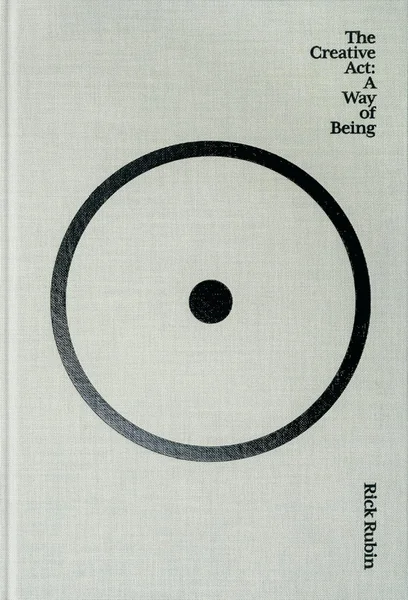
The Creative Act: A Way of Being by Rick Rubin cover

The Creative Act: A Way of Being

by Rick Rubin

Cultural Resurgence
$16.99 on AmazonRead our full review

At a glance

Pages432
First published2023
AudienceAdult
ISBN0593652886

About the Author

Rick Rubin

1 book reviewed

View author →

LuvemBooks Verdict

Best for

Curious creatives of any discipline — writers, designers, musicians, makers — who want a philosophical companion that reframes creativity as a universal human practice rather than a professional skill to be mastered.

Worth it if

You want a book of deep, re-readable meditations on the creative life that applies across disciplines and rewards return visits over years, not a single cover-to-cover read.

Skip if

You're looking for a step-by-step craft guide, discipline-specific technique instruction, or behind-the-scenes stories from Rubin's legendary recording career — the book is deliberately sparse on all three.

What readers & critics say

Kirkus Reviews praised it as "terrific encouragement for anyone embarking on a creative project, no matter what it might be," highlighting Rubin's insistence that creativity is a fundamental human ability rather than a rare gift. Critical coverage, as quoted on barnesandnoble.com, called it "a fascinating book infused with deep thoughts, insight and, yes, lots and lots of creativity," noting that Rubin "methodically lays out the process" through a blend of encouragement, inspiration, and practical tips.

Terrific encouragement for anyone embarking on a creative project, no matter what it might be.

Kirkus Reviews
Sources: Kirkus Reviews, Barnes & Noble, The Guardian, calvinrosser.com, armedwithabook.com, sandrasshelf.com
4.7from 11,536 Amazon ratings— reader ratings, not a LuvemBooks score

Ask LuvemBooks

Was this helpful?

The Creative Act: A Way of Being is Rick Rubin's philosophical treatise on creativity as a universal human practice, structured as 78 self-contained meditations that together argue the creative impulse belongs to everyone — not just professional artists. Endorsed by figures from Jony Ive to Matt Haig and a #1 New York Times bestseller, it is best suited to readers drawn to reflective, cross-disciplinary creative philosophy rather than step-by-step craft instruction. The key caveat: those expecting behind-the-scenes industry anecdotes from Rubin's legendary production career, or a linear how-to framework, will find the book deliberately sparse on both.
Is it worth reading?
For readers drawn to reflective creative philosophy, the critical and peer reception documented around The Creative Act is genuinely strong. Matt Haig placed it alongside Anne Lamott's Bird by Bird and Stephen King's On Writing as among the most inspiring books on creativity he had encountered, calling it "a godsend" for those wanting "new life and confidence in their creative bones." Poet and artist Kae Tempest described it as "a companion to anyone on the creative path." The caveat is meaningful: readers expecting either a conventional linear nonfiction structure or detailed behind-the-scenes accounts from Rubin's production career will find neither here.
Similar books
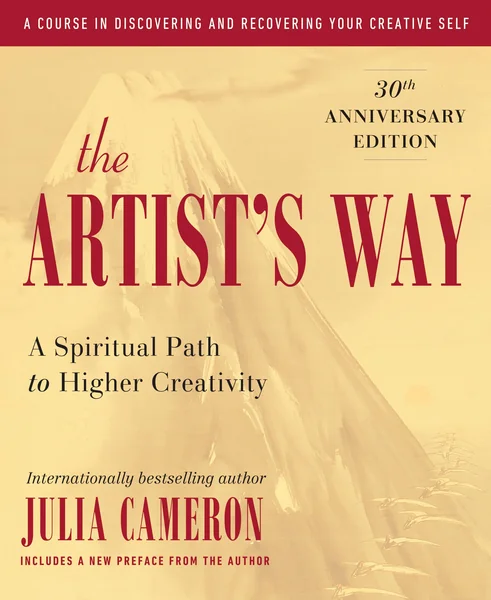
Readers drawn to The Creative Act frequently gravitate toward other works exploring creativity and self-expression as transformative practices. Julia Cameron's The Artist's Way is a natural companion — a structured twelve-week program for unblocking creative potential that shares Rubin's conviction that creativity is universal. Steven Pressfield's The War of Art (also praised by Matt Haig in the same breath as Rubin's book) takes a more combative angle on creative resistance, and Pressfield himself called The Creative Act full of "practical wisdom and nuts-and-bolts." Elizabeth Gilbert's Big Magic: Creative Living Beyond Fear and Austin Kleon's Steal Like an Artist occupy similar cross-disciplinary territory. For readers interested in the vulnerability and courage underpinning creative work, Brené Brown's Daring Greatly and Don Miguel Ruiz's The Four Agreements offer philosophical frameworks that resonate with Rubin's broader ethos.
Who should read this?
The Creative Act is explicitly written for anyone who engages with creative work in any discipline — writers, musicians, visual artists, and designers are all named in the critical record, and Jony Ive's endorsement specifically highlights its value for designers across disciplines. It is equally well suited to readers who feel creatively blocked or disconnected from their own creative potential, since Rubin's core argument is that creativity is a universal human attribute rather than a professional credential. Readers who prefer conventional nonfiction architecture, sequential how-to frameworks, or industry-specific craft instruction will likely find a poor fit.
About Rick Rubin
Frederick Jay "Rick" Rubin (born March 10, 1963) is an American record producer, co-founder of Def Jam Recordings, founder of American Recordings, and former co-president of Columbia Records. He is a nine-time GRAMMY-winning producer and the author of The Creative Act: A Way of Being, published by Penguin Random House. He lives part time with his family in Tuscany, Italy.
Why is this book trending?
Originally published in January 2023, The Creative Act hit #1 on the New York Times bestseller list and has demonstrated unusual staying power — more than three years later, designers, writers, and creative directors are still actively recommending and revisiting it. The book's resurgence appears driven by its re-readability: because it is structured as 78 self-contained meditations rather than a linear argument, readers return to it at different moments in their creative lives and find new relevance. Its cross-disciplinary framing means it circulates across creative communities — music, design, writing — rather than being contained to any single audience.
What are the main themes?
The Creative Act organizes its 78 meditations around several recurring concerns: the universal accessibility of creativity, the origins of creative ideas, the nature of creative blocks, and the relationship between an artist's inner life and their output. Rubin's overarching philosophical claim — that "to live as an artist is a way of being in the world" — frames creative practice not as a skill set but as a mode of existence. The book also engages with the tension between philosophical aspiration and practical creative work, with Steven Pressfield confirming the presence of "nuts-and-bolts" guidance alongside its more meditative passages.
Is it a good book club pick?
The 78-meditation structure makes The Creative Act an unusually flexible book club selection — individual chapters are self-contained and can be assigned selectively, allowing groups to focus discussion on specific themes such as creative blocks, the origins of ideas, or the relationship between inner life and output. The book's cross-disciplinary scope means members from different creative backgrounds — writers, designers, musicians — can each bring relevant personal context. The philosophical depth praised by critics, paired with the practical passages confirmed by Pressfield, provides a balance of reflection and concrete discussion points.
Summarize this book

Summarize this book

Published by Penguin Press on January 17, 2023, The Creative Act: A Way of Being is structured around 78 discrete philosophical meditations, each addressing a distinct facet of the creative process — from the origins of ideas, to creative blocks, to the relationship between an artist's inner life and their output. Rick Rubin's central argument is blunt: "Creativity is a fundamental aspect of being human. It is not a rare ability." Rather than positioning creativity as a professional credential, the book frames it as a way of inhabiting the world, with the thesis that "to live as an artist is a way of being in the world." The format is deliberately non-linear, designed to be revisited over years rather than consumed once.

Follow up

What does the 78-meditation format mean in practice?
Is it really applicable beyond music?
Is it more philosophical or practical?

Synthesized from verified book data & published reviews · How we review

Press Enter to ask. Answers come from our editorial Q&A — start typing to see related questions.

Age & Reading Level

Recommended age

Adult

Reading level

Adult

Skip if you want a linear craft guide with sequential steps, industry-specific techniques, or behind-the-scenes anecdotes from Rubin's production career.

Editorial Review

Rick Rubin's The Creative Act: A Way of Being is a #1 New York Times bestseller structured as 78 philosophical meditations on creativity, arguing that the creative impulse is not a rare gift reserved for professionals but a fundamental aspect of being human — accessible to anyone willing to live as an artist in the world.

Read the Full Review

Books like The Creative Act

Curated picks for readers who enjoyed The Creative Act, with our reasoning for each match.

If you liked The Creative Act
Why It’s Trending

Rick Rubin's 'The Creative Act' Keeps Finding New Readers — Here's Why It Won't Leave People's Desks

Originally published in January 2023, The Creative Act hit #1 on the New York Times bestseller list and never really went away. More than three years later, designers, writers, and creative directors are still actively recommending and revisiting it.

The Creative Act came out in early 2023 and shot straight to #1 on the New York Times bestseller list. That's not unusual for a hyped release — but what is unusual is that it's still getting genuine attention more than three years later. Recent reviews describe it as a book people actually keep on their desks, not one that gets shelved after the first read. Part of why this one sticks around is who keeps talking about it. It's not just general readers — it's working creatives: art directors, writers, musicians, and designers who return to it as a kind of reference point. That kind of word-of-mouth among practitioners tends to have real staying power, especially for a book that's more philosophical than prescriptive. Worth knowing going in: this isn't a how-to book. If you're looking for step-by-step creative exercises or a structured framework, you might find it too abstract. But if you're after something that reframes how you think about the creative process itself, that's exactly what it delivers.
The Creative Act: A Way of Being by Rick Rubin | LuvemBooks