At a glance

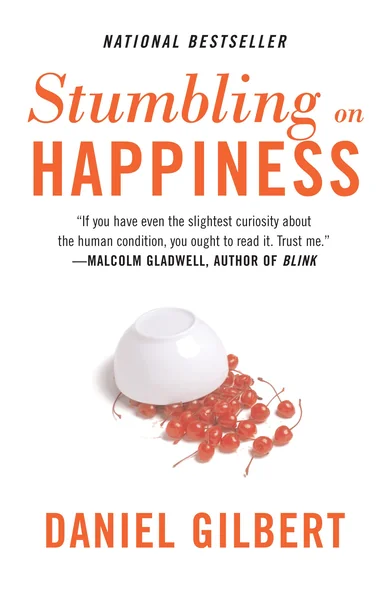
Stumbling on Happiness
LuvemBooks Verdict
Best for: Readers curious about the psychology of prediction and self-deception who want a rigorous, research-grounded account of why humans are poor judges of what will make them happy — and who are content to leave without a prescriptive plan.
Worth it? Skip it? Read the full verdict →Ask LuvemBooks
Was this helpful?
- Is it worth reading?
- For readers drawn to the intersection of academic psychology and accessible nonfiction, Stumbling on Happiness is a genuinely distinctive title — one that earned a New York Times bestseller ranking and has been translated into more than thirty languages, reflecting sustained cross-cultural appeal well beyond the initial reception. Gilbert's dry wit, noted by Greater Good Magazine as 'engaging and surprising,' keeps the dense material from becoming a chore. The key caveat is scope: readers who want actionable happiness strategies will be frustrated, because the book explicitly refuses to supply them, framing itself instead as a rigorous account of why our current forecasting tools are almost certainly wrong.
- Similar books
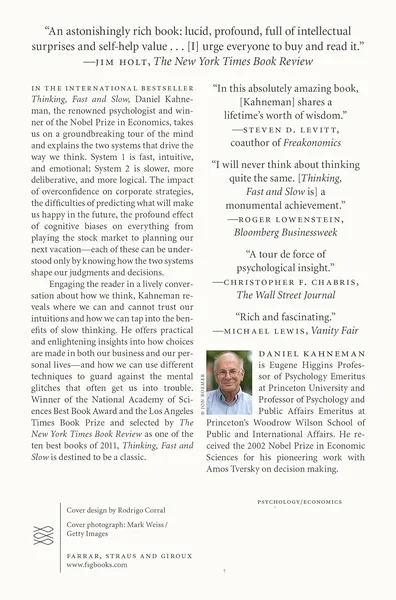
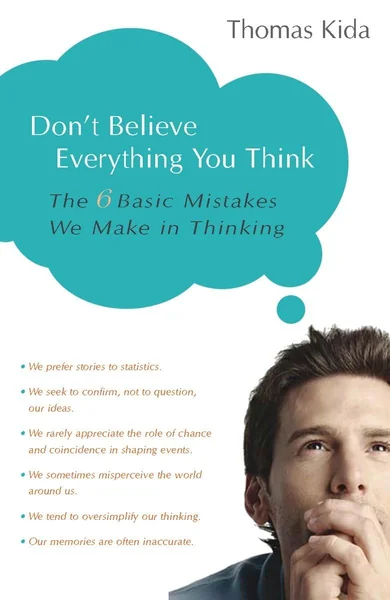
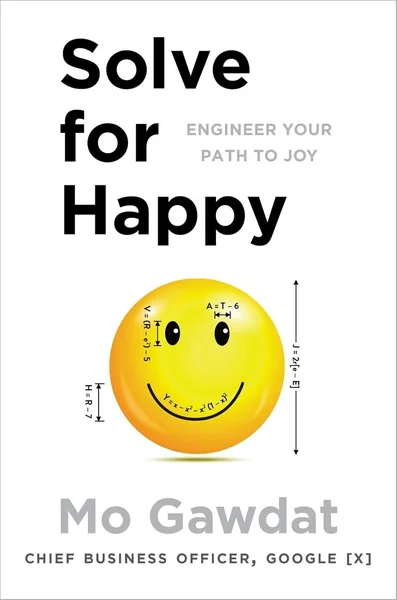
- Readers who respond to Stumbling on Happiness tend to gravitate toward other works that apply cognitive and behavioural science to everyday decision-making. Daniel Kahneman's Thinking, Fast and Slow is the most direct companion piece — a deep exploration of the two systems of thought that drive judgment and choice. Jonathan Haidt's The Happiness Hypothesis covers adjacent territory on the psychology of wellbeing, while Thomas E. Kida's Don't Believe Everything You Think focuses on the cognitive errors that distort reasoning. For readers interested in the philosophical and practical sides of happiness rather than purely the science, Mo Gawdat's Solve for Happy and Ichiro Kishimi and Fumitake Koga's The Courage to Be Disliked offer complementary perspectives from different traditions.
- Who should read this?
- Stumbling on Happiness is best suited to intellectually curious adult readers who want to understand — at a psychological and biological level — why human beings are such poor forecasters of their own happiness. It is particularly well-matched to readers who enjoy popular science and psychology (think Kahneman or Ariely) and who are willing to engage with a dense but accessibly written argument over multiple sittings. It is a poor fit for readers seeking a step-by-step guide to becoming happier; Gilbert is explicit that the book does not attempt to answer 'the trillion-dollar question' of how to find happiness — only why it is so hard to predict.
- About Daniel Gilbert
- Daniel Todd Gilbert is an American social psychologist and writer.
- What are the main themes?
- The book's central themes are affective forecasting, cognitive bias, and the systematic unreliability of imagination as a guide to future happiness. Gilbert returns repeatedly to the idea that the mind 'fills in' gaps in perception and memory using present-day patterns — the same mechanism by which the visual system eliminates the blind spot from conscious awareness — leading to futures and pasts that are more coloured by the present than they should be. The concept of the psychological immune system — the mind's ability to rationalise adversity — runs through the argument as a key reason why bad outcomes feel less devastating than predicted, and why people are poor judges of their own resilience.
- Does it tell you how to be happier?
- Deliberately and explicitly, no — and Gilbert frames this as a point of intellectual honesty rather than an oversight. He notes in the book that people have been writing works promising to answer 'the trillion-dollar question' of how to find happiness for roughly two thousand years, and that what distinguishes Stumbling on Happiness is that it does not try to answer that question at all. The one research-grounded practical insight Gilbert does offer, in the final Corrigibility section, is that consulting people who have already had a given experience is more reliable than relying on personal imagination to predict how it will feel — a counterintuitive finding that runs against most people's instincts.
Summarize this book
Follow up
Synthesized from verified book data & published reviews · How we review
Press Enter to ask. Answers come from our editorial Q&A — start typing to see related questions.
Age & Reading Level
Recommended age
Adult
Reading level
Adult
who it suits
Skip if you want a prescriptive, step-by-step guide to becoming happier rather than a rigorous explanation of why happiness is so hard to forecast.
Editorial Review
Daniel Gilbert's Stumbling on Happiness is a New York Times bestselling work of popular psychology that dismantles the assumption that human beings reliably know what will make them happy — and explains, with rigour and wit, exactly why they don't.
Read the Full ReviewBooks like Stumbling on Happiness
Curated picks for readers who enjoyed Stumbling on Happiness, with our reasoning for each match.
If you liked Stumbling on Happiness