BOOKS
Published

Read Time

3 min read

Curated & edited by

LuvemBooks Editorial

How we create our reviews →
Share This Review

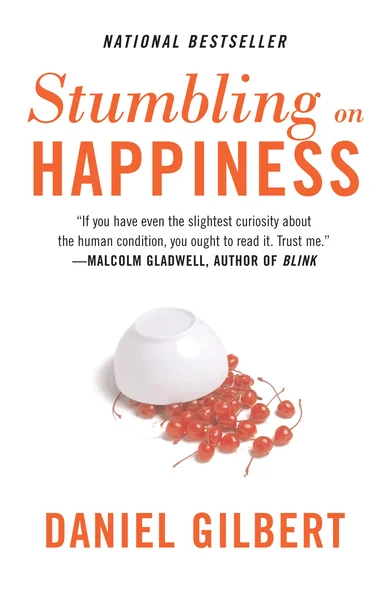
Stumbling on Happiness by Daniel Gilbert Review: A Sharp, Science-Backed Challenge to Self-Knowledge

Stumbling on Happiness is a nonfiction work by Harvard psychologist Daniel Gilbert that dismantles the widely held assumption that people know what will make them happy — a New York Times bestseller translated into more than thirty languages, and one of the most widely discussed works at the intersection of psychology and everyday life in the past two decades.

LuvemBooks Verdict

Best for

Curious general readers with no psychology background who want to understand why their predictions about their own emotional future keep missing the mark — and who are open to a diagnosis rather than a cure.

Worth it if

Worth reading if you're drawn to behavioral economics or cognitive science writing (think Gladwell or Ariely) and want a rigorously researched, witty argument for why the human imagination is a surprisingly unreliable guide to future happiness.

Skip if

Skip it if you're looking for an actionable happiness framework or step-by-step self-help guidance — Gilbert's stated purpose is to expose the problem, not solve it, and the consistently comedic tone may also frustrate readers who prefer a more scholarly register.

What readers & critics say

Greater Good Magazine credits Gilbert with making "a genuinely surprising and engaging argument," noting the book "won't teach you how to become happy, but it will convince you of how difficult that goal is to achieve." Wikipedia records widespread acclaim, quoting The Guardian calling it "a witty, racy and readable study of expectation, anticipation, memory and perception," and documents its status as a New York Times bestseller translated into more than thirty languages. Kirkus Reviews highlights Gilbert's identification of three principal shortcomings of imagination that restrict its usefulness in the realm of foresight.

Won't teach you how to become happy, but it will convince you of how difficult that goal is to achieve.

Greater Good Magazine

A witty, racy and readable study of expectation, anticipation, memory and perception: all bits of scaffolding within the structure of happiness.

The Guardian (via Wikipedia)

Three principal shortcomings restrict imagination's usefulness in the realm of foresight.

Kirkus Reviews

Gilbert presents a fundamental problem: visions of the future, present, and past are inaccurate — and this hinders future happiness.

Shortform
Sources: Greater Good Magazine, Wikipedia, Kirkus Reviews
4.2from 3,786 Amazon ratings— reader ratings, not a LuvemBooks score

Look inside the book

Preview the actual pages, via Google Books
In This Review
  • What Works & What Doesn't
  • What the Book Actually Argues
  • Significance and Place in the Genre
  • What the Book Does Well
  • The Book's Genuine Limitations
  • Who This Book Is For

What Works & What Doesn't

What Works
  • Dismantles the psychology of affective forecasting with a well-structured, six-part argument grounded in cognitive research
  • Explicitly avoids self-help platitudes — Gilbert's stated aim is to diagnose the problem, not sell an easy solution
  • Written for general readers without psychology backgrounds, using simple experiments to illustrate complex reasoning errors
  • A New York Times bestseller translated into more than thirty languages, reflecting exceptionally broad and sustained reader reach
  • Introduces a genuinely useful, counterintuitive finding: that others' lived experience is a more accurate happiness predictor than personal imagination
What Doesn't
  • Offers no actionable framework for improving happiness, which can disappoint readers who come to it via self-help recommendations
  • The consistently comedic tone, while engaging, may feel at odds with readers who prefer a more measured, scholarly register
A persuasive, witty, and genuinely counterintuitive piece of popular psychology, Stumbling on Happiness earns its reputation not by offering a blueprint for happiness but by methodically exposing how poorly equipped the human mind is to imagine its own future.

What the Book Actually Argues

Daniel Gilbert, a Harvard psychologist, builds his central thesis around a single, uncomfortable claim: human beings are systematically bad at predicting what will make them happy — not occasionally or randomly, but in patterned, predictable ways rooted in cognitive bias. According to Wikipedia's account of the book, Gilbert identifies three core failures of imagination. First, the mind adds and removes details when constructing future scenarios, without the person realizing which details are fabricated or missing. Second, imagined futures (and remembered pasts) tend to resemble the present far more than they actually will (or did). Third, people fail to account for what Gilbert calls the "psychological immune system" — the mind's capacity to rationalize and reframe bad outcomes, making them feel considerably less devastating than anticipated. These are not peripheral observations but the structural pillars around which the book's six sections — Prospection, Subjectivity, Realism, Presentism, Rationalization, and Corrigibility — are organized.

Significance and Place in the Genre

Published in 2006 by Knopf, Stumbling on Happiness arrived at a moment when popular psychology was beginning to reach mainstream audiences in earnest, and it helped define what that genre could do. Its translation into more than thirty languages, as documented by Wikipedia, reflects an argument that crossed cultural lines — a testament to the universality of the cognitive patterns Gilbert describes. Crucially, Gilbert himself is explicit, as Penguin Random House records, that this is not a self-help manual promising happiness in steps. That refusal to pander distinguishes it from much of the shelf space it shares. As Gilbert puts it in his own framing: he spent fifteen years researching the question of why people wrongly predict their own happiness, and the book is a report on what that research found — not a prescription, but a diagnosis.

What the Book Does Well

Greater Good Magazine, in its review, credits Gilbert with making a genuinely surprising and engaging argument — noting that the book "won't teach you how to become happy, but it will convince you of how difficult that goal is to achieve." The accessibility of that argument is a documented strength: according to Wikipedia, the book is written for the layperson, deliberately avoiding technical terminology and illustrating its points through simple experiments that exposed common reasoning quirks. Gilbert also introduces a counterintuitive positive finding: that one of the most reliable ways to forecast how a future experience will feel is to ask someone who has already had that experience — rather than relying on one's own imagination. As Greater Good Magazine notes, Gilbert demonstrates that this approach is a far better predictor of personal satisfaction than wishful thinking, even though people resist it because they consider themselves uniquely individual.

The Book's Genuine Limitations

For readers who come to Stumbling on Happiness hoping for actionable guidance, the experience can be frustrating. Gilbert is upfront that the book does not offer a road map to contentment, and some readers who encounter it through self-help recommendations find that its primary output is a well-supported argument for human fallibility rather than tools to overcome it. The wit that makes the prose distinctive — and that reviewers at Greater Good Magazine describe as "goofball brilliance" — is real, but it means the book's tone can occasionally feel more like stand-up than scholarship, which may not suit every reader. Additionally, the book's deep focus on imagination and affective forecasting means that adjacent questions — about structural, social, or circumstantial determinants of happiness — receive less attention; readers looking for breadth across the happiness literature will need to supplement it.

Who This Book Is For

Stumbling on Happiness is designed for curious general readers with no background in psychology who want to understand why their predictions about their own emotional future keep missing the mark. Its six-section architecture moves from the biology of imagination through the subjectivity of happiness, the distortions of realism and presentism, the mechanics of rationalization, and finally to the concept of corrigibility — making it suitable for reading straight through or in focused sections. Readers who enjoy behavioral economics, cognitive science writing, or works by authors such as Malcolm Gladwell or Dan Ariely are the audience Gilbert is writing for, and the documented reception — a New York Times bestseller status and translation into more than thirty languages — confirms that audience found it.

Sources & Further Reading

The key facts and claims in this review are grounded in the retrieved, verified sources listed below.

  1. 1

    Daniel Gilbert, Wikipedia

  2. 2
  3. 3

    greatergood.berkeley.edu

  4. 4
  5. 5
  6. 6
  7. 7
  8. 8
  9. 9
  10. 10
  11. 11
  12. 12