8 min read
4.7
· 54 Amazon ratingsShare This Review

Our review
I'll Be Happy When ...
I'll Be Happy When... by Jared Springer Review: A Self-Help Journey Beyond Entrepreneurial Success
Jared Springer's I'll Be Happy When...: How to Lift the Happiness Curse from Your Life is a self-help book rooted in the author's own entrepreneurial story — a candid account of achieving financial success only to discover that happiness remained elusive, and a practical guide designed to help readers break the cycle of conditional happiness. This review is based on the book's content and available published sources, not hands-on application.
LuvemBooks Verdict
Best for
Entrepreneurially minded readers who recognise the habit of deferring happiness to the next milestone and want a concise, story-led guide to breaking that cycle without abandoning their ambition.
Worth it if
You connect best with lived experience as a vehicle for insight — particularly if you're building a business and want permission to pursue contentment and drive simultaneously rather than sequentially.
Skip if
You're looking for a research-cited, clinically structured self-help program with deep-dive frameworks, as the book's 190-page, memoir-heavy approach functions more as an accessible introduction than an exhaustive practical manual.
What readers & critics say
Independent reviews from major publications are absent from the verified record for this title. The primary reception signals come from Springer's own platform (jaredspringer.com and book.jaredspringer.com), which describes the book as a bestseller that has changed lives across a global coaching audience — claims that should be read in that context.
Sources: jaredspringer.com, book.jaredspringer.comAsk LuvemBooks
Was this helpful?
- Is it worth reading?
- For readers who recognize the "I'll be happy when" pattern in their own lives — particularly those in entrepreneurial or business-building contexts — LuvemBooks finds this a worthwhile and accessible read. Springer's specific, credible biography gives the central argument genuine texture, and the book's positioning as a complement to ambition rather than a rejection of it makes it unusually relevant for driven, goal-oriented readers. That said, those who prefer empirically documented, research-heavy self-help frameworks may find the narrative-driven approach less rigorous than they'd prefer, and readers seeking a comprehensive practical program may need to supplement it with additional resources.
- Similar books
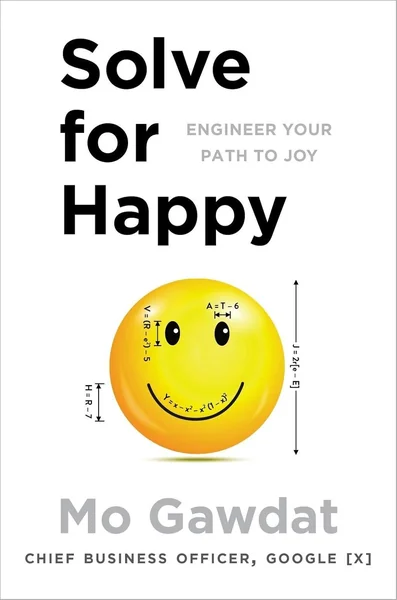
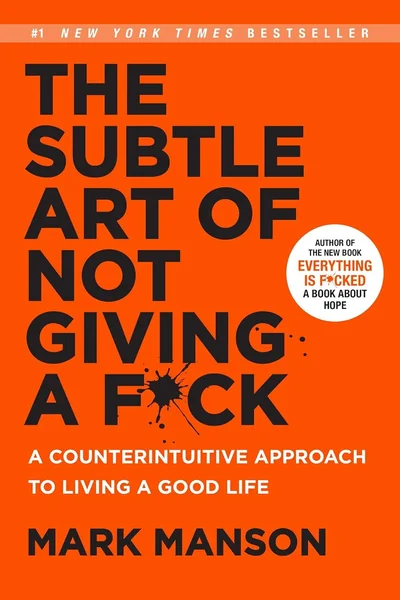
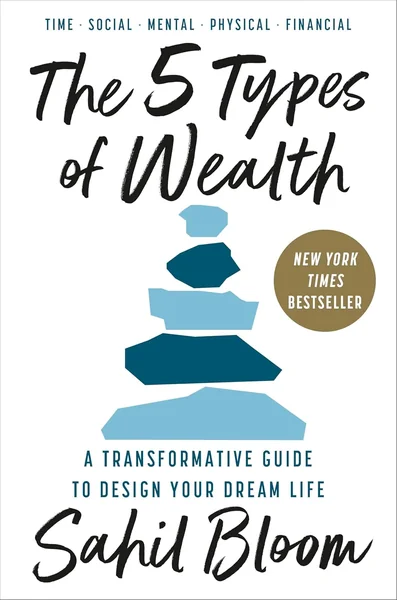
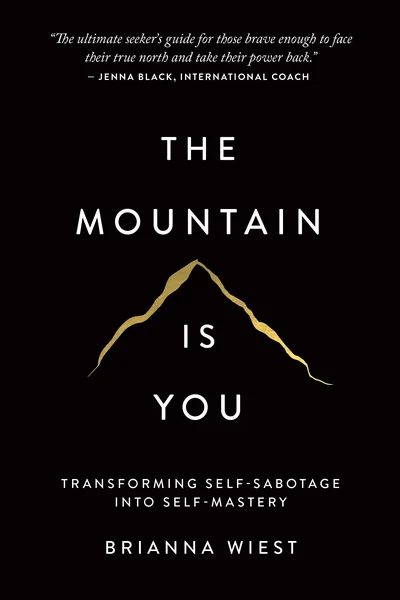
- Readers drawn to I'll Be Happy When... will find strong companions in the curated titles below. Mo Gawdat's Solve for Happy offers a more engineering-minded framework for understanding happiness, while Sahil Bloom's The 5 Types of Wealth broadens the conversation around what a truly fulfilling life looks like beyond financial success. Mark Manson's The Subtle Art of Not Giving a F*ck shares Springer's direct, experience-grounded voice and its pushback against conventional success narratives. For those interested in the philosophical underpinnings of contentment and self-determination, The Courage to Be Disliked by Ichiro Kishimi and Fumitake Koga is a compelling dialogue-based exploration, and Brianna Wiest's The Mountain Is You tackles the inner work of self-sabotage in a similarly accessible register.
- Who should read this?
- I'll Be Happy When... is most squarely aimed at entrepreneurs, business builders, and ambitious professionals who have tied their sense of self-worth to external outcomes and recognise the "I'll be happy when" pattern in themselves. It is also well-suited to anyone — regardless of professional background — who feels stuck in a cycle of deferred joy and is open to a personal-story-led path toward breaking it. Readers who connect best with lived experience as a vehicle for insight, rather than clinical frameworks or academic citations, are the audience this book was clearly written for.
- What are the main themes?
- The central theme is conditional happiness — the ingrained psychological habit of telling oneself that contentment will arrive only after reaching the next goal, promotion, or financial milestone. Springer explores how this pattern becomes self-perpetuating, with the "finish line" continuously shifting even after genuine achievement. The book also engages with the relationship between ambition and well-being, arguing that drive and contentment are not mutually exclusive — a theme that makes it particularly resonant for readers who worry that pursuing inner peace means abandoning their goals.
- How does this connect to 12 Months to $1 Million?
- Springer's entrepreneurial journey — including how he built a million-dollar business starting with twenty dollars and a YouTube education — is detailed in Ryan Daniel Moran's bestselling 12 Months to $1 Million, which amplified Springer's public profile and credibility. I'll Be Happy When... picks up where that financial success story leaves off, exploring the emotional reality that achieving the million-dollar milestone did not bring lasting happiness, and what Springer did about it. The two books together offer a before-and-after picture: one on building the business, the other on reckoning with what that achievement does and doesn't deliver.
- How has the book been received?
- Springer's own platform describes I'll Be Happy When... as a bestseller that has changed lives across a global coaching audience, though LuvemBooks notes these claims originate from the author's own materials and should be read in that context. Independent reviews from major publications are not part of the verified record for this title, which limits the ability to assess broader reception. The book's reach through both print and audiobook formats, alongside Springer's profile boost from his inclusion in Ryan Daniel Moran's 12 Months to $1 Million, suggests a meaningful audience within entrepreneurial and personal development circles.
Summarize this book
Follow up
Synthesized from verified book data & published reviews · How we review
What would you like to know about I'll Be Happy When ...?
Answers come from our editorial notes on this book. If we haven't covered something, we'll say so.
Readers often ask
Our Review
This review covers the book's content, premise and published critical reception, not a first-hand reading.
What the Book Is and What It Argues
The Entrepreneurial Backstory That Drives It
Design and Intended Audience

Reception and Reach
Who Will Get the Most From It — and Who May Want More
Sources & Further Reading
The key facts and claims in this review are grounded in the retrieved, verified sources listed below.
- Cited in this review
- 1
- 2
- 3
- Further reading
- 4
jaredspringer.com
- 5
bookshop.org
- 6
Age & Reading Level
Recommended age
Adult
who it suits
Skip if you prefer heavily research-cited or clinically structured self-help methodology over narrative and experiential frameworks.
Reader reviews
Be one of the first readers to answer.
Read it? Was it right for you?
Books like I'll Be Happy When ...
Curated picks for readers who enjoyed I'll Be Happy When ..., with our reasoning for each match.
If you liked I'll Be Happy When ...