
7 min read
4.0
· 83 Amazon ratingsShare This Review
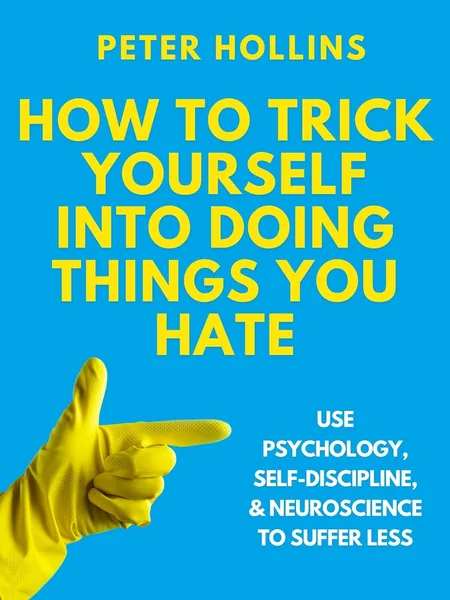
How to Trick Yourself Into Doing Things You Hate by Peter Hollins Review: Practical Psychology for Reluctant Doers
Peter Hollins's self-help guide targets the gap between knowing what needs to be done and actually doing it, drawing on psychology, self-discipline frameworks, and neuroscience to help readers push through aversion and build consistent action — a focused, topic-specific addition to his extensive Live a Disciplined Life series.
LuvemBooks Verdict
Best for
Readers already engaged with productivity self-help who want a compact, psychology-backed playbook for tackling tasks they persistently avoid — particularly those drawn to structured frameworks over generic motivational encouragement.
Worth it if
You recognise the "motion versus action" trap in your own habits and want a concise, framework-driven guide that treats self-discipline as a set of learnable, differentiated skills rather than a fixed character trait.
Skip if
Skip it if you're seeking deep academic engagement with the underlying research, want a single comprehensive volume covering all dimensions of motivation and habit formation, or have already worked through much of Hollins's Live a Disciplined Life series and risk hitting familiar ground.
What readers & critics say
Barnes & Noble's product page positions the book as "the ultimate guide on how to play nicely with your brain," framing unavoidable discomfort as the structural route to achieving goals and emphasising the book's concrete, method-driven chapter topics — including action-oriented decision-making, three specific types of self-discipline, and the psychology of "motion" versus "action."
Sources: Barnes & NobleIn This Review
- What Works & What Doesn't
- What the Book Is and What It Sets Out to Do
- Scope and Structure of the Content
- Hollins's Position in the Self-Help Genre
- Genuine Strengths
- Limitations and Who May Not Be the Audience
What Works & What Doesn't
What Works
- Covers a specific, concrete set of psychological and neuroscientific frameworks rather than generic motivational advice
- Distinguishes between three discrete types of self-discipline, adding structural nuance often absent in the genre
- Addresses the 'motion versus action' trap — a targeted, recognisable productivity problem with practical relevance
- Compact at approximately 190 pages, keeping the focus tight and the entry barrier low
- Stands as a self-contained volume within the Live a Disciplined Life series, accessible without prior entries
What Doesn't
- Brevity means individual frameworks receive focused rather than exhaustive treatment — not suited to readers seeking deep academic grounding
- Readers who have worked through earlier volumes in the series may find some conceptual overlap with prior entries
What the Book Is and What It Sets Out to Do
Scope and Structure of the Content
Hollins's Position in the Self-Help Genre
Genuine Strengths
Limitations and Who May Not Be the Audience
Frequently Asked Questions
Sources & Further Reading
The key facts and claims in this review are grounded in the retrieved, verified sources listed below.
- 1
Related Reviews
Reviews of books we picked for readers who enjoyed How to Trick Yourself Into Doing Things You Hate.


Reader Comments
No comments yet
Be the first to share your thoughts!