7 min read
4.0
· 83 Amazon ratingsShare This Review
How to Trick Yourself Into Doing Things You Hate by Peter Hollins Review: Practical Psychology for Reluctant Doers
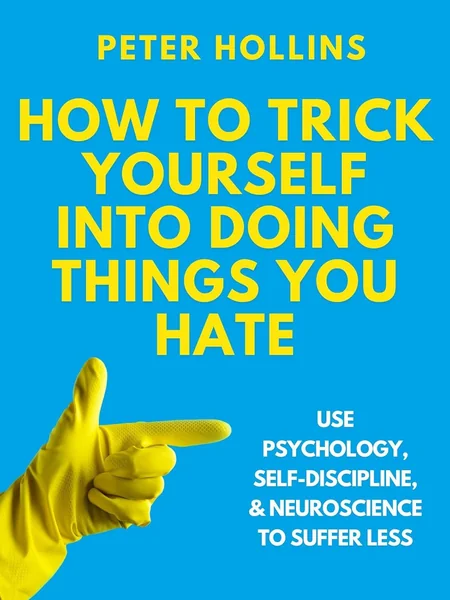
Peter Hollins's self-help guide targets the gap between knowing what needs to be done and actually doing it, drawing on psychology, self-discipline frameworks, and neuroscience to help readers push through aversion and build consistent action — a focused, topic-specific addition to his extensive Live a Disciplined Life series.
LuvemBooks Verdict
Best for
Readers already engaged with productivity self-help who want a compact, psychology-backed playbook for tackling tasks they persistently avoid — particularly those drawn to structured frameworks over generic motivational encouragement.
Worth it if
You recognise the "motion versus action" trap in your own habits and want a concise, framework-driven guide that treats self-discipline as a set of learnable, differentiated skills rather than a fixed character trait.
Skip if
Skip it if you're seeking deep academic engagement with the underlying research, want a single comprehensive volume covering all dimensions of motivation and habit formation, or have already worked through much of Hollins's Live a Disciplined Life series and risk hitting familiar ground.
What readers & critics say
Barnes & Noble's product page positions the book as "the ultimate guide on how to play nicely with your brain," framing unavoidable discomfort as the structural route to achieving goals and emphasising the book's concrete, method-driven chapter topics — including action-oriented decision-making, three specific types of self-discipline, and the psychology of "motion" versus "action."
Sources: Barnes & NobleAsk LuvemBooks
Was this helpful?
- Is it worth reading?
- For readers frustrated by the gap between intention and follow-through, LuvemBooks finds this a well-targeted, practically framed guide that earns its place by being specific where the genre is often vague. The distinction between three types of self-discipline and the focus on concrete traps like the 'motion versus action' illusion give it structural value that generic motivational books skip. The main limitation is depth — at roughly 190 pages covering multiple frameworks, individual topics receive focused rather than exhaustive treatment, so readers after rigorous academic grounding will need to look elsewhere.
- Similar books
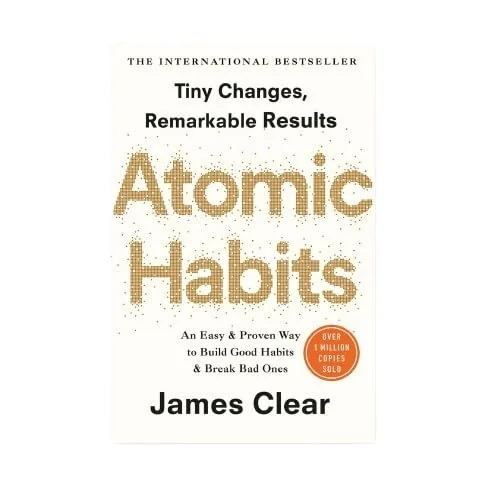
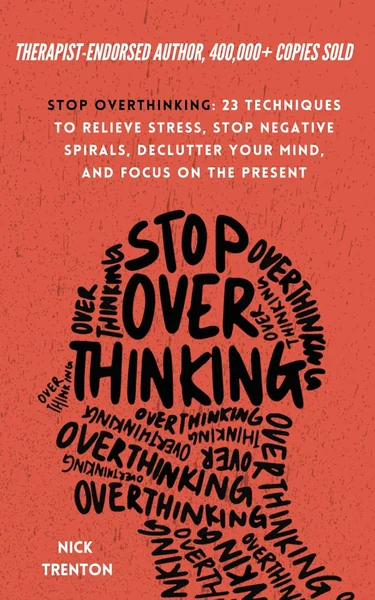
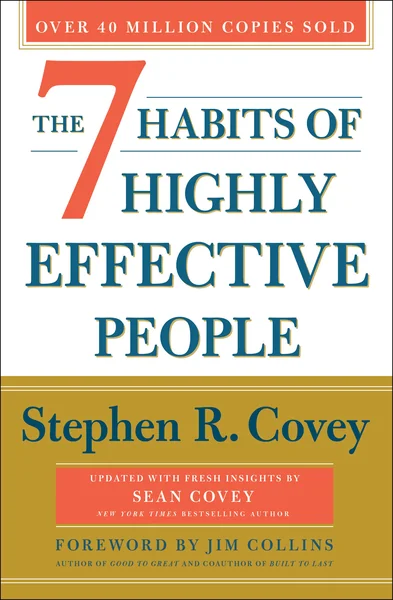
- Readers drawn to this book's psychology-backed, action-first approach will find strong company in James Clear's Atomic Habits, which similarly grounds habit formation in behavioural science rather than motivation alone. For those interested in the decision-making and momentum angle, Mel Robbins's The 5 Second Rule covers related ground on interrupting hesitation, while her The Let Them Theory offers a different lens on personal agency. Nick Trenton's Stop Overthinking targets another adjacent productivity trap — rumination blocking action — and Stephen R. Covey's The 7 Habits of Highly Effective People remains a foundational reference for structured self-discipline frameworks. Admiral William H. McRaven's Make Your Bed provides a brief, concrete take on discipline through consistent small actions.
- Who should read this?
- How to Trick Yourself Into Doing Things You Hate is best suited to adult readers who already recognise their own tendency to procrastinate or prepare endlessly without acting, and who want a psychology- and neuroscience-informed framework for pushing through that aversion. It is a strong fit for anyone new to Hollins's work who wants a compact, standalone entry into the Live a Disciplined Life series, and for productivity readers who find purely motivational self-help too vague. Readers seeking deep academic engagement with the underlying research literature, or those already well-versed in the earlier volumes of the series, may find it covers familiar ground.
- What are the key concepts?
- The book organises its advice around several concrete psychological and neuroscientific frameworks: the argument that self-discipline comprises three distinct types rather than a single binary trait; the 'motion versus action' distinction, which identifies how preparation and planning can masquerade as progress; and the concept of 'destroying the illusion of readiness' — countering the tendency to wait until conditions feel perfect before acting. Hollins also covers dark and bright spots in motivation, and a counter-intuitive 'subtraction' framework, which proposes reducing elements of one's day in order to increase overall productive capacity.
- Where should I start with Peter Hollins?
- Each volume in the Live a Disciplined Life series is framed as a standalone read, so How to Trick Yourself Into Doing Things You Hate works as an entry point without requiring prior entries. As the nineteenth volume, it reflects Hollins's mature, consistent authorial approach — psychology-backed and action-first — so readers new to his work will encounter it at its most refined. Those already familiar with earlier entries may prefer to use this as a topical supplement rather than a starting point, given the potential for some conceptual overlap.
- Is it too shallow or too deep?
- At approximately 190 pages spanning multiple psychological and neuroscientific frameworks, the book deliberately prioritises breadth and accessibility over exhaustive depth — individual concepts receive focused, practical treatment rather than comprehensive academic exploration. LuvemBooks frames this as a feature for most readers: the compact format keeps the entry barrier low and the content tightly targeted. Readers seeking deep engagement with the underlying research literature, however, are not the intended audience and should look to academic sources or longer-form treatments of behavioural psychology.
Summarize this book
Follow up
Synthesized from verified book data & published reviews · How we review
Press Enter to ask. Answers come from our editorial Q&A — start typing to see related questions.
Age & Reading Level
Recommended age
Adult
Reading level
Adult
who it suits
Skip if you're looking for a deep, academically rigorous treatment of the psychology or neuroscience of motivation and self-discipline.
Our Review
What the Book Is and What It Sets Out to Do
Scope and Structure of the Content
Hollins's Position in the Self-Help Genre
Genuine Strengths
Limitations and Who May Not Be the Audience
Sources & Further Reading
The key facts and claims in this review are grounded in the retrieved, verified sources listed below.
- 1
Books like How to Trick Yourself Into Doing Things You Hate
Curated picks for readers who enjoyed How to Trick Yourself Into Doing Things You Hate, with our reasoning for each match.
If you liked How to Trick Yourself Into Doing Things You Hate