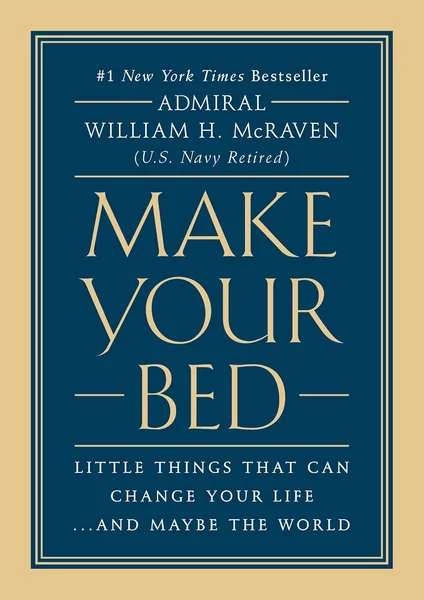
Adapted from Admiral William H. McRaven's viral 2014 University of Texas commencement address, Make Your Bed distills ten principles drawn from his 34-year Navy SEAL career into a concise self-help book published by Grand Central Publishing — a brisk, anecdote-driven guide that resonates strongly with readers seeking direct, military-framed life lessons, though its brevity and narrow experiential lens will not satisfy every audience.
Readers who respond to experience-grounded, no-nonsense advice and want a concise framework for building daily discipline and resilience, particularly those drawn to military leadership or seeking a structured motivational primer they can revisit chapter by chapter.
Worth it if
You value direct, anecdote-anchored lessons over abstraction, and are willing to engage with a framework rooted entirely in elite military culture in exchange for the unusual authority and clarity McRaven brings to each of his ten principles.
Skip if
Readers whose identities or life circumstances sit well outside the hierarchical, military-institutional lens — or anyone seeking nuanced engagement with failure, structural critique, or perspectives beyond a senior white male officer's career — will find the book's universalising claims difficult to absorb and its 144 pages too slim to bridge that gap.
What readers & critics say
Google Books records the book as a #1 New York Times bestseller and reproduces the Wall Street Journal's verdict that it "should be read by every leader in America." Bookreviewsonline.org awards it 4.5 out of 5 stars, calling it a book in which "the most powerful life lessons come from the simplest advice," and eaglenationonline.com describes it as delivering "an eye-opening view of accomplishing a small goal," praising McRaven's breakdown of ten lessons around small daily discipline.
“McRaven's voice carries the same directness on the page as it did at the podium, moving between dry wit and genuine gravity.”
Make Your Bed distills Admiral William H. McRaven's 34-year Navy SEAL career into ten concise, anecdote-driven lessons — each anchored in a specific, named episode from SEAL training or active service — making it one of the more credibility-backed entries in the self-help genre. LuvemBooks finds it most rewarding for readers who can accept the military framework on its own terms: the voice is direct, the structure is clean, and the authority is well-documented. Readers seeking deep exploration or perspectives beyond elite military culture will find the 144-page treatment too brief and too narrow to fully satisfy.
Is it worth reading?
For readers drawn to direct, experience-grounded advice, Make Your Bed delivers ten lessons with unusual clarity and force — the anecdotes are named and placed (Coronado, Afghanistan, Iraq), the voice is unadorned, and McRaven's credentials are inseparable from the persuasive weight of each principle. The chief caveat is scope: at 144 pages, those hoping for deep exploration of any single lesson will find the treatment thin. Readers whose lives fall outside the elite military institutional framework may also find the universalizing claims harder to absorb, since the book presents the SEAL ethos as broadly applicable without qualification.
Similar books
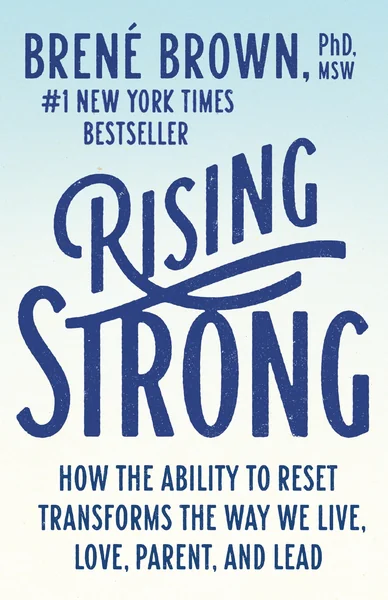
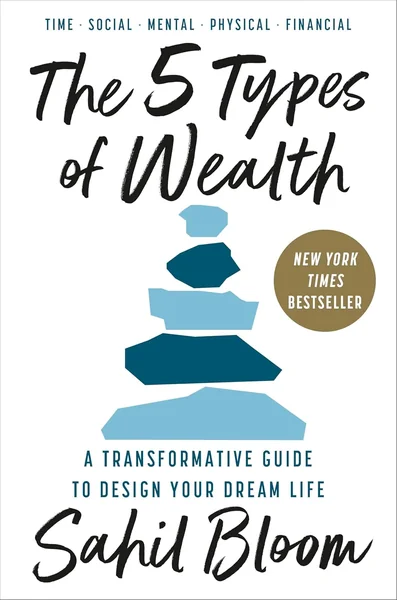
Readers who responded to Make Your Bed's emphasis on small, disciplined habits will find a natural companion in James Clear's Atomic Habits, which builds a research-backed system around the same compounding-action premise. Stephen R. Covey's The 7 Habits of Highly Effective People offers a similarly structured, principle-by-principle approach to personal effectiveness with broader institutional reach. For those drawn to the book's unflinching tone, Robert Greene's The 48 Laws of Power provides another unsentimental, experience-rooted framework. Mel Robbins' The Let Them Theory and Ichiro Kishimi and Fumitake Koga's The Courage to Be Disliked round out the shelf for readers interested in how autonomy and resilience intersect across different cultural frameworks.
Who should read this?
Make Your Bed is best suited to readers who want direct, no-nonsense personal development advice grounded in documented real-world experience rather than abstract theory. It resonates strongly with professionals interested in leadership, veterans and those with an affinity for military culture, and anyone drawn to structured, principle-based frameworks for resilience. Readers seeking deep psychological nuance, diverse voices, or a critique of institutional hierarchies will find the book's exclusive focus on McRaven's military trajectory limiting.
About Admiral William H. McRaven
During thirty-seven distinguished years as a Navy SEAL, Admiral William H. McRaven commanded at every level of special operations, culminating a military career that took him from the most dangerous missions around the globe to the highest echelons of national security leadership.
What are the key lessons?
Make Your Bed presents ten principles, each anchored in a specific episode from SEAL training or active service. The title lesson argues that beginning each day by making your bed establishes a first win and a foundation of order. The teamwork chapter stems from the SEAL practice of paddling a seven-man boat crew, where one underperforming member slows everyone down. A mission behind enemy lines in Afghanistan — where McRaven was stuck in a narrow tunnel and rescued only by a 5-foot-tall teammate — delivers the lesson on measuring people by the size of their heart rather than their stature. The 'sugar cookie' lesson, in which an instructor arbitrarily orders McRaven to roll in wet sand, teaches that life is unfair and perseverance is the only response.
What's the writing style like?
McRaven writes throughout in an unadorned, conversational first-person voice that The Guardian's published excerpt confirms carries the same directness on the page as in the original speech — moving between dry wit and genuine gravity without sentimentality. The style is deliberately free of the inflated rhetoric that weighs down much self-help writing, and the ten-chapter structure makes each principle easy to isolate and return to. The trade-off is brevity: at 144 pages, the book can be read in a single sitting, which some readers will prize and others will find insufficient.
Summarize this book
Is it worth reading?
Who should read this?
About Admiral William H. McRaven
What are the key lessons?
What's the writing style like?
Summarize this book
Adapted from Admiral McRaven's viral May 17, 2014 commencement address to the University of Texas at Austin, Make Your Bed was published by Grand Central Publishing in April 2017 and expands ten life principles from SEAL training into a full self-help volume. Each of the ten chapters is built around one lesson — beginning with the titular habit of making your bed each morning as a first daily win — and illustrated with specific, named episodes from places like Coronado, California, Afghanistan, and Iraq. The governing argument is that small, disciplined actions compound into resilience and purpose, and McRaven's verified biography as a Four-Star Admiral and Commander of all U.S. Special Operations Forces gives that argument unusual weight. The Wall Street Journal, as quoted on Google Books, said it 'should be read by every leader in America,' and the book became a New York Times bestseller.
Synthesized from verified book data & published reviews · How we review
Ask LuvemBooks
What would you like to know about Make Your Bed?
Answers come from our editorial notes on this book. If we haven't covered something, we'll say so.
Readers often ask
Our Review
We review the evidence: published critics, reader verdicts and BookTube reviews, gathered and weighed with AI assistance and edited by LuvemBooks, rather than one reader's first-hand take.
A compact self-help book born from one of the most-watched commencement speeches in recent memory, Make Your Bed translates Admiral McRaven's military-forged convictions into ten lessons designed for civilian life.
What the Book Actually Is and Argues
Make Your Bed originated on May 17, 2014, when Admiral William H. McRaven addressed the graduating class of the University of Texas at Austin, drawing on the university's motto — "What starts here changes the world" — to share the ten principles he absorbed during Navy SEAL training. Published by Grand Central Publishing in April 2017, the book expands that address into a full self-help volume, with each chapter built around one of those ten lessons.
The governing argument is straightforward and unapologetic: small, disciplined actions compound into a life of resilience and purpose. The title lesson sets the tone — McRaven contends that beginning every day by making your bed establishes a first win, a foundation of order from which everything else follows.
The lessons that follow cover teamwork, perseverance in the face of arbitrary hardship, and the willingness to press forward through failure, all illustrated with specific episodes from SEAL training and McRaven's subsequent career as a Four-Star Admiral and Commander of all U.S. Special Operations Forces.
The Specificity That Makes It Work
What separates this book from generic motivational writing is the concrete texture of its anecdotes. McRaven does not traffic in abstraction — he grounds each lesson in an identifiable moment.
The chapter on teamwork, for instance, stems from the SEAL practice of paddling a seven-man boat crew, where one underperforming member slows everyone down and invites collective punishment. The lesson on measuring people by the size of their heart rather than their stature comes from a mission behind enemy lines in Afghanistan, where McRaven found himself stuck in a narrow tunnel and was rescued only because a 5-foot-tall teammate could navigate it.
These are named, placed episodes — Coronado, California; Afghanistan; Iraq — not vague parables. The Guardian's published excerpt of the speech-turned-book demonstrates that McRaven's voice carries the same directness on the page as it did at the podium, moving between dry wit and genuine gravity without sentimentality.
Its Significance and Reception
The book's reach extends well beyond the self-help aisle. According to information from Google Books, Make Your Bed became a New York Times bestseller, and the Wall Street Journal is quoted there as saying it "should be read by every leader in America."
The commencement address on which it is based attracted enormous attention after video of it circulated widely online, giving the book a built-in audience that was already primed for its message before publication. McRaven's credentials — SEAL training, command of the bin Laden raid, oversight of all U.S. Special Operations Forces, and later service as Chancellor of the University of Texas System — lend the lessons an authority that purely civilian self-help authors cannot easily replicate.
That biography is not incidental to the book; it is inseparable from the persuasive weight each lesson carries.
Genuine Strengths
The book's design is deliberately accessible. Its ten-chapter structure maps directly onto the ten lessons of the original speech, making the arc easy to follow and each principle easy to isolate.
McRaven writes in the first person throughout, and his voice — as illustrated in The Guardian's excerpt of the text — is conversational and unadorned, without the inflated rhetoric that burdens much of the genre. The "sugar cookie" lesson, in which a SEAL instructor arbitrarily orders a successfully performing McRaven to roll in wet sand and explains only that "life is unfair," is a characteristic example: the lesson is delivered bluntly, without false comfort, and the anecdote earns its point rather than asserting it.
For readers drawn to direct, experience-grounded advice, that economy of style is a genuine asset.
Who It Serves — and Who It May Frustrate
The book's strengths are also the source of its limitations. At 144 pages, it is slim enough to be read in a single sitting, which some readers will prize and others will find insufficient for the ambitions its subtitle announces.
All ten lessons flow from one specific institutional context — elite military training — and the lessons are filtered entirely through McRaven's own experience as a white male officer in a deeply hierarchical organization. Readers whose lives, identities, or challenges do not map comfortably onto that framework may find the universalizing claims harder to absorb.
The book does not engage with those limits; it presents the SEAL ethos as broadly applicable without qualification. Readers seeking nuance, structural critique, or perspectives from outside the chain of command will need to look elsewhere.
For those willing to accept the framework on its own terms, however, the book delivers its ten lessons with unusual clarity and force.
Sources & Further Reading
The key facts and claims in this review are grounded in the retrieved, verified sources listed below.
descriptions of dangerous military training and combat situations
Skip if you're looking for deep, nuanced self-help that engages with perspectives beyond elite military culture
Admiral William H. McRaven on Make Your Bed
Admiral William H. McRaven reflects on his military career and the life philosophy behind his bestselling book Make Your Bed in an interview on CBS Sunday Morning.
McRaven observes that although he believed leading the Bin Laden raid would be his life's defining act, it primarily led to his viral commencement address and book. He finds that people all over the world recognize him for telling them to make their beds rather than for the military raid.
From our readers
Reader reviews
Be one of the first readers to answer.
Read it? Was it right for you?
Books like Make Your Bed
Curated picks for readers who enjoyed Make Your Bed, with our reasoning for each match.