Skip to content
Reviewed

Read Time

8 min read

Our age bandAdult
Reader rating
4.7 · 1,858 Amazon ratings, as of Nov 2026
reader ratings, not a LuvemBooks score
Curated & edited by

LuvemBooks Editorial

How we create our reviews →
Share This Review
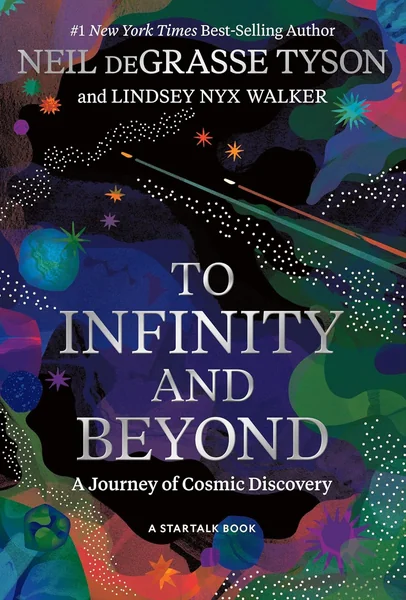
To Infinity and Beyond: A Journey of Cosmic Discovery by Neil deGrasse Tyson, Lindsey Nyx Walker front cover

Our review

To Infinity and Beyond

To Infinity and Beyond Review: Cosmic Discovery (Neil deGrasse Tyson)

by Neil deGrasse Tyson, Lindsey Nyx Walker

Neil deGrasse Tyson and Lindsey Nyx Walker guide readers through the cosmos in this illustrated popular science volume. The book merges astrophysics with Hollywood critiques to explain complex phenomena for curious minds.
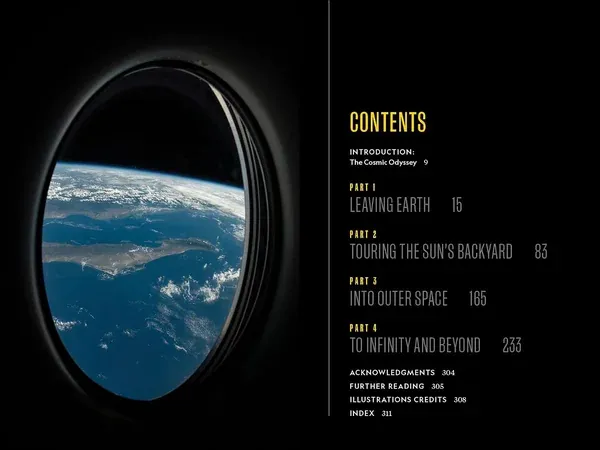
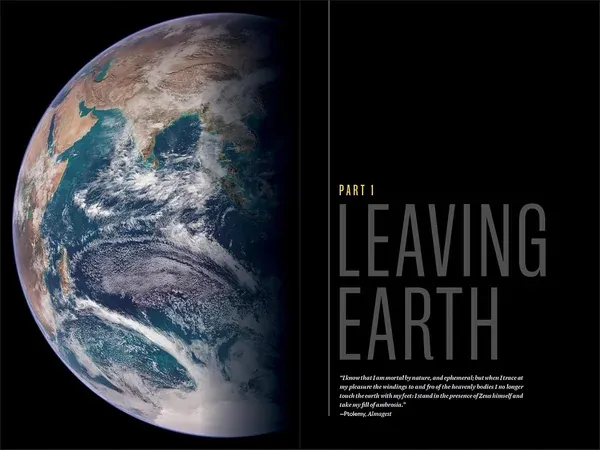
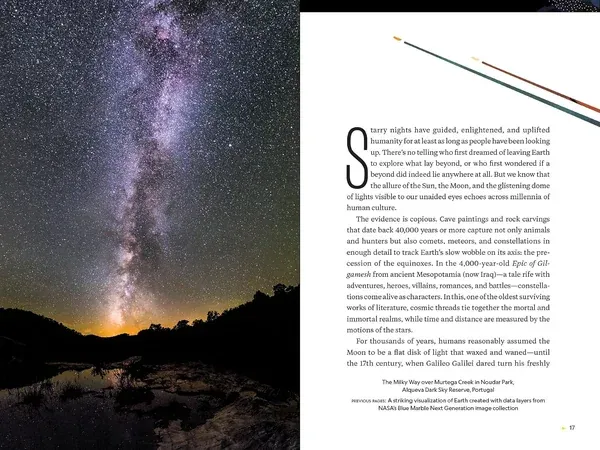
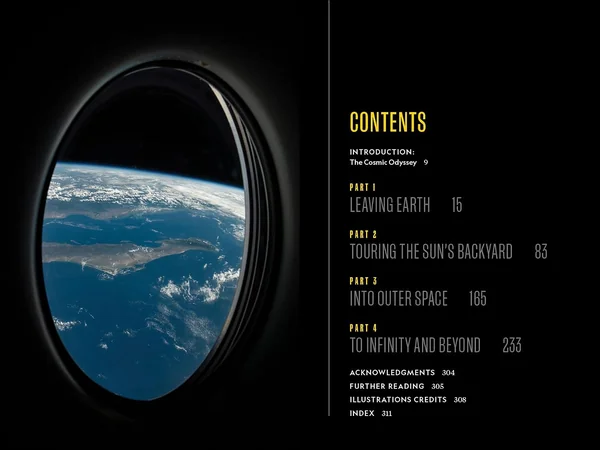
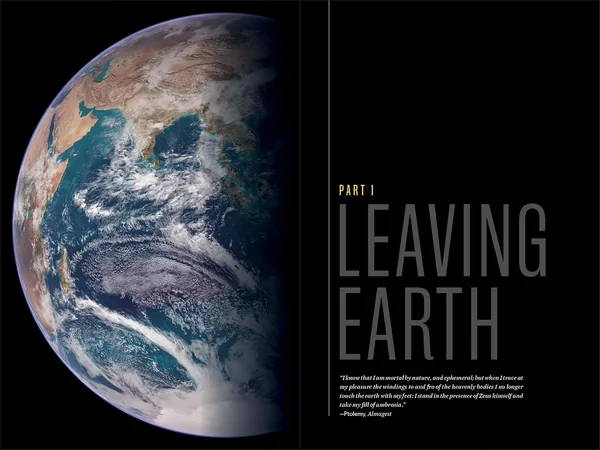
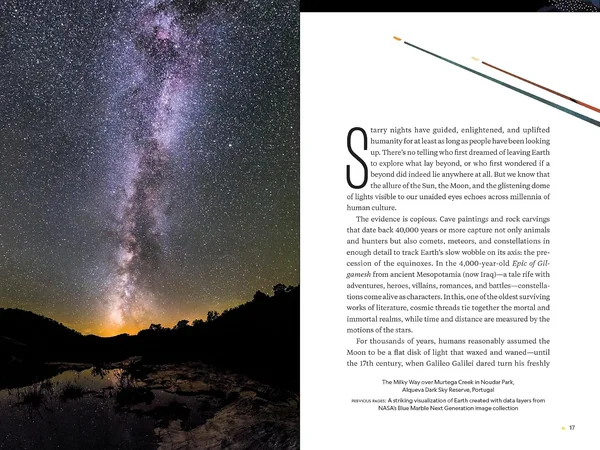
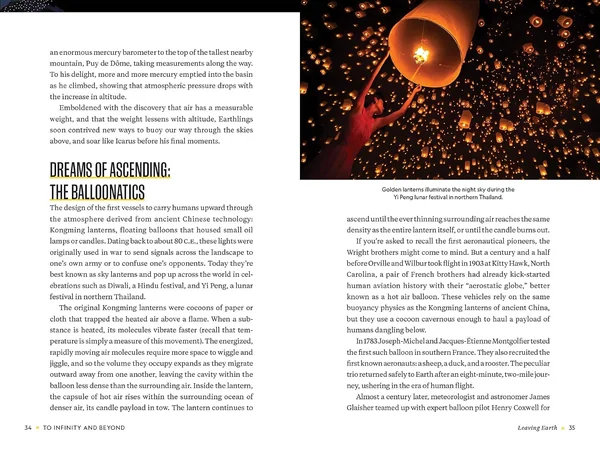
Contents page listing four main sections with page numbers, introduction, and back matter for a cosmic exploration book.Interior spread showing Earth from space on left page with chapter title and opening text on right page.Interior spread featuring a nighttime landscape photograph with the Milky Way galaxy and explanatory text about celestial navigation and astronomy history.Tap to enlarge
Our age band: Adult

LuvemBooks Verdict

Best for

Best for science enthusiasts and casual learners seeking an accessible, visually rich primer that blends cutting-edge astrophysics with pop culture and mythological context.

Worth it if

Worth reading if you want a highly entertaining, picture-heavy guide that demystifies cosmic phenomena through humor and cinematic deconstruction without demanding academic rigor.

Skip if

Skip it if you prefer traditional, linear histories or mathematical proofs, as the frequent detours into Hollywood science fiction and theoretical physics may overwhelm readers seeking straightforward academic analysis.

Where reviewers agree and split

Readers rate it 4.7 on Amazon. The reviews we read that discuss it in depth agree:

  • Positive

    Kirkus Reviews · Press review: optimistic and accessible guide to space exploration

  • Positive

    Dear Author · Book blog: entertaining and comprehensible journey through cosmic mysteries

  • Positive

    Books N Review · Book blog: engaging and accessible guide to cosmic marvels

Overall verdicts are our summary of each review we read, from its headline, rating and conclusion.

Kirkus Reviews praises the book as an optimistic and accessible guide that successfully synthesizes the latest research, while Dear Author highlights its ability to make complex topics like special relativity comprehensible and fun. Books N Review similarly notes that the blend of vivid photography and pop culture references busts Hollywood myths with scientific accuracy.

“This is a book that makes you want to go out and look up at the night sky.”

— Kirkus Reviews
Sources: Kirkus Reviews, Dear Author, Books N Review
4.7from 1,858 Amazon ratings, as of Nov 2026— reader ratings, not a LuvemBooks score

Preview the book

To Infinity and Beyond: A Journey of Cosmic Discovery by Neil deGrasse Tyson, Lindsey Nyx Walker front cover
Contents page listing four main sections with page numbers, introduction, and back matter for a cosmic exploration book.
Interior spread showing Earth from space on left page with chapter title and opening text on right page.
Interior spread featuring a nighttime landscape photograph with the Milky Way galaxy and explanatory text about celestial navigation and astronomy history.
Interior spread featuring an essay on celestial phenomena with an accompanying photograph of illuminated lanterns ascending into a night sky.

Ask LuvemBooks

Was this helpful?

To Infinity and Beyond guides curious readers through the cosmos by blending cutting-edge astrophysics with mythological context and rigorous critiques of Hollywood science fiction tropes. LuvemBooks finds it a highly entertaining, visually rich primer that successfully demystifies the material without demanding academic rigor. Readers seeking a straightforward, linear history or mathematical proofs may find the frequent cinematic detours and dense material overwhelming.
Is it worth reading?
It delivers a primer that demystifies cosmic phenomena through humor and cinematic deconstruction. Critics from Kirkus Reviews praise its optimistic tone. However, readers expecting a traditional textbook approach or straightforward academic analysis may find the frequent detours into Hollywood productions disruptive.
Similar books
Readers who enjoy this blend of hard science and pop culture should also explore A Brief History of Time by Stephen Hawking, which tackles fundamental cosmic questions in a similarly accessible voice. The Science of Interstellar by Kip Thorne offers a deep dive into the physics behind modern sci-fi cinema, while The Demon-Haunted World by Carl Sagan champions scientific skepticism and wonder. For a more visual and narrative-driven experience, fans might also look to Cosmos by Carl Sagan.
Who should read this?
This volume targets curious minds, cosmic conundrum fans, and casual learners seeking an accessible primer. It is particularly well-suited for readers who enjoy exploring astrophysics through a blend of humor, cultural background, and cinematic critique. It points away from those seeking traditional academic textbooks or rigorous analytical frameworks.
What age is it for?
Written for adults, the book requires prior knowledge of advanced concepts that may challenge younger readers. The authors utilize advanced research with a delightful dose of wit, but the abstract ideas and longer text suit confident adult readers rather than children or middle-grade audiences.
What is the reading level?
The text targets an adult audience with prior knowledge in astronomy. It balances rigorous scientific concepts with accessible analogies, making it suitable for confident amateur science readers rather than academic specialists or young students.
Does it critique sci-fi movies?
They cheer on special effects geniuses for accurate details while pointing out amusing flaws in films like Gravity and Interstellar, treating the analysis as a fun, complementary layer.
Summarize this book

Summarize this book

Tyson and Walker trace a path from Earth’s atmosphere to the furthest reaches of the cosmos, blending it with astrophysics. The authors dismantle common tropes using rigorous data while exploring fundamental cosmic questions. Vivid photography and explanatory illustrations punctuate a narrative that moves chronologically while branching into dense scientific concepts.

Follow up

How long does it take to read?
Does the book connect to other media?

Synthesized from verified book data & published reviews · How we review

Ask LuvemBooks

What would you like to know about To Infinity and Beyond?

Answers come from our editorial notes on this book. If we haven't covered something, we'll say so.

Readers often ask

Our Review

We review the evidence: reader verdicts, gathered and weighed with AI assistance and edited by LuvemBooks, rather than one reader's first-hand take.

Premise and Scope

The volume traces a path from Earth’s atmosphere to the furthest reaches of the cosmos. Tyson and Walker explore planetary science alongside the principles of astrophysics.
Readers encounter truths about sunlight, planetary missions, and the nature of black holes. The authors also dismantle common tropes found in Hollywood blockbusters.
This work follows the publication of Tyson’s earlier bestseller, Astrophysics for People in a Hurry. It expands upon his previous bibliography by adopting a more expansive, journey-based format.
The narrative begins with the Big Bang and voyages through parallel worlds. Tyson addresses the spookiest phenomena of the cosmos with authority and humor.
The book asks fundamental questions about the difference between a void and a vacuum. It explores how light can function as both a wave and a particle simultaneously.
The journey moves from the solar system to the farthest reaches of space. Readers travel through space and time alongside the authors.
The text examines the triumphs and bloopers in Hollywood blockbusters. It serves as an entertaining ride through the cosmos.
The authors investigate the shape of the universe and the merger of black holes. They ask whether other worlds sprang into being at the Big Bang.
The book explores the possibility of tweaking the spacetime continuum. It tackles questions about visiting parallel worlds through time travel.

Significance and Structure

The authors draw upon mythology, history, and literature to contextualize scientific concepts. Vivid photographs and explanatory illustrations punctuate the text.
The structure moves chronologically through space exploration while branching into theoretical physics. Tyson and Walker examine data gathered by the Pioneer and Voyager spacecraft.
They also incorporate findings from modern orbital telescopes. The book links to a special mini-season of the StarTalk podcast.
This multimedia connection grounds the text in contemporary science communication. It joins the ranks of New York Times bestselling popular science titles.
The authors bring planetary science down to Earth. They place principles of astrophysics within reach for everyday readers.
The book synthesizes the latest thinking and research on space exploration. It sets out the meaning for humanity through cosmic discovery.
The authors utilize cutting-edge science alongside a delightful dose of wit. The narrative combines astrophysical discoveries with historical references.

Strengths and Approach

Kirkus Reviews highlighted the authors' knack for using anecdotes to explain complex phenomena. The reviewer noted that the tone remains generally optimistic despite addressing daunting subjects.
The book opens a door to the seemingly impossible without overwhelming the reader. DearAuthor praised the seamless blend of astrophysical discoveries and historical references.
The authors maintain clarity while discussing special relativity and time dilation. This approach makes daunting topics comprehensible for science enthusiasts.
Walker brings discipline and passion to her work as a senior producer. Her contributions enrich the discussions with probing questions and historical context.
The authors cheer on special effects geniuses when they get the details right. They also point out amusing flaws in films like Gravity and Interstellar.
Sandra Bullock’s floating bangs serve as a humorous example of cinematic inaccuracies. Maverick surviving an ejection from a fighter traveling at Mach 10 defies physics.
The universe is under no obligation to make sense to you. The authors discuss the theory that nearby supernovae contributed to extinction events.
They explore the mystery of dark energy and the rings of Saturn. The book captures and communicates the latest research results.
It combines captivating anecdotes with multiple colorful astronomical photographs.

Limitations and Audience

Critics actually praise the authors' knack for making complex phenomena comprehensible and fun for a broad audience. Concepts like quantum foam and dark energy require focused attention.
Sources instead frame the Hollywood deconstruction as a fun, complementary layer that enthralls science amateurs rather than overwhelming them. Readers seeking straightforward, linear histories of space exploration might find the detours disruptive.
The text assumes a baseline familiarity with basic astronomical terminology. The volume targets science junkies and fans of cosmic conundrums.
It may frustrate readers expecting a traditional textbook approach. The authors examine each planet in the solar system with novel research material.
They also discuss the real color of the sun and the formation of black holes. The British discoverer of Uranus and the history of Planet X provide historical context.
Supernova shockwaves and extinction events on Earth intrigue the authors. The book covers the lightness of the sun and its fusion nature.
Pluto is now counted as a dwarf planet and Planet X never existed. The authors explore the depths of our own planet's atmosphere.
The text assumes readers have a curiosity about alien life and scientific intricacies.

Is It Worth Reading?

Weighing these reviews, the book succeeds as an engaging introduction to modern astrophysics. The central tension lies in its balance between rigorous science and cinematic entertainment.
It points directly toward fans of curious readers and cinematic science fans. It points away from readers seeking traditional academic textbooks.
The volume complements Tyson’s other popular works by offering a more visual and narrative-driven experience. It is best suited for readers who enjoy exploring cosmic conundrums through a blend of humor and rigorous science.
The text encourages curiosity about the universe's vastness. Readers will likely finish with a renewed desire to observe the night sky.
The authors conclude with optimism about unlimited destinations awaiting humanity. Scientific thinking always leaves the door ajar for the seemingly impossible.
The book makes you want to go out and look up at the night sky. Buzz Lightyear would be proud.
The authors note that things once considered beyond plausibility are now commonplace. The volume provides a mind-opening excursion into the universe's marvels.
It enthralls science amateurs and those eyes of the curious. The journey concludes with a celebration of humanity's boundless potential.
Readers will leave with a lasting appreciation for the cosmos.

Sources & Further Reading

The key facts and claims in this review are grounded in the retrieved, verified sources listed below.

  1. 1
  2. 2
  3. 3
  4. 4
  5. 5
  6. 6
  7. 7

Age & Reading Level

Our age band

Adult

Our age band groups books for browsing; it isn't an age a review gave.

Best for: Adults — requires a baseline familiarity with astronomical terminology and theoretical physics concepts.

Skip if you prefer traditional, linear histories of space exploration or mathematical proofs

From our readers

Reader reviews

No LuvemBooks readers have answered yet.

Read it? Was it right for you?

Discussion

Reader comments