10 min read
4.7
· 5,572 Amazon ratingsShare This Review
An Immense World by Ed Yong Review: Award-Winning Science Writing at Its Finest
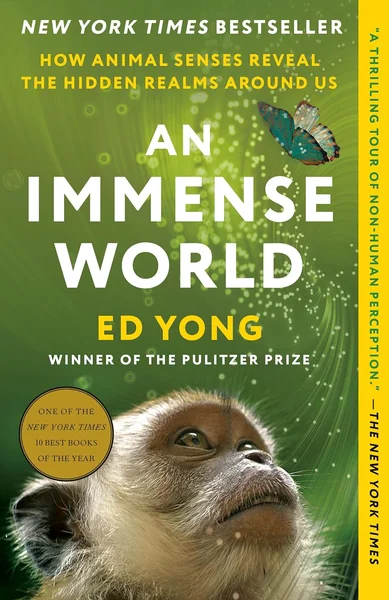
Ed Yong's An Immense World is a work of narrative nonfiction that explores the radically different ways animals perceive the world through their senses — from the magnetic navigation of sea turtles to the electrical communications of river fish — organised around the concept of the Umwelt, the unique sensory bubble each creature inhabits. Originally published in 2022 and reissued by Random House Trade Paperbacks in 2023, the book won the Andrew Carnegie Medal for Excellence in Nonfiction and the Royal Society Science Book Prize, was named one of The New York Times's ten best books of 2022, and appeared on Barack Obama's list of favourite books of the year. Critics called it "thrilling," critics called it "dazzling," and Oprah Daily named it "one of this year's finest works of narrative nonfiction." It stands as one of the most celebrated popular-science books of recent years.
LuvemBooks Verdict
Best for
Readers curious about biology, animal behaviour, ecology, or the philosophy of mind who want serious, rigorously researched science delivered through narrative storytelling rather than textbook exposition — and who will find genuine wonder in discovering how radically different the world looks, sounds, and feels to other creatures.
Worth it if
The premise — that every animal inhabits its own unique sensory reality, and that humans can only ever glimpse those realities from the outside — strikes you as both scientifically fascinating and philosophically rich enough to sustain nearly 480 pages of exploration.
Skip if
You prefer popular science that delivers confident, declarative conclusions about animal consciousness, or tightly focused single-subject narratives rather than a wide-ranging encyclopaedic survey of species and sensory systems.
What readers & critics say
An Immense World has accumulated an unusually broad sweep of institutional and critical recognition: according to en.wikipedia.org, it won both the 2023 Andrew Carnegie Medal for Excellence in Nonfiction and the 2023 Royal Society Science Book Prize, and was selected for The New York Times's "10 Best Books of 2022." Bookmarks.reviews praised Yong for having "synthesized and compellingly presented a spectacular amount of scientific information," calling the achievement "magnificent."
“Surprised at so many moments… speaks to his exceptional gifts as a storyteller.”
— nytimes.comAsk LuvemBooks
Was this helpful?
- Is it worth reading?
- For readers drawn to popular science, animal behaviour, ecology, or the philosophy of mind, An Immense World delivers at an unusually high level — critics called it 'dazzling' and 'thrilling,' and the convergence of the Carnegie Medal, the Royal Society Science Book Prize, and a New York Times top-ten designation is rare even within the upper tier of science writing. Oprah Daily described Yong's reporting as 'layered, seasoned with vivid scenes from laboratories and in the field,' and critical coverage consistently praised the book's 'perfect balance of scientific rigor and personal awe.' The one honest caveat is scope: at nearly 480 pages covering dozens of species and sensory systems, readers who prefer tightly focused, single-subject narrative nonfiction may occasionally feel the encyclopaedic breadth weighing against momentum. For curious generalists and science enthusiasts alike, however, it is among the most celebrated popular-science books published in recent years.
- Who should read this?
- An Immense World is designed for readers who want serious science delivered without the weight of a textbook — those curious about biology, animal behaviour, ecology, or the philosophy of mind who want those subjects braided together through narrative and individual character. Critically, the book functions across a wide spectrum of prior knowledge: it does not require a science background and does not condescend to readers who bring one. It is particularly well-suited to anyone captivated by how the living world works from the inside out, and to readers who enjoy popular science by authors like Jonathan Balcombe or Frans de Waal.
- Similar books
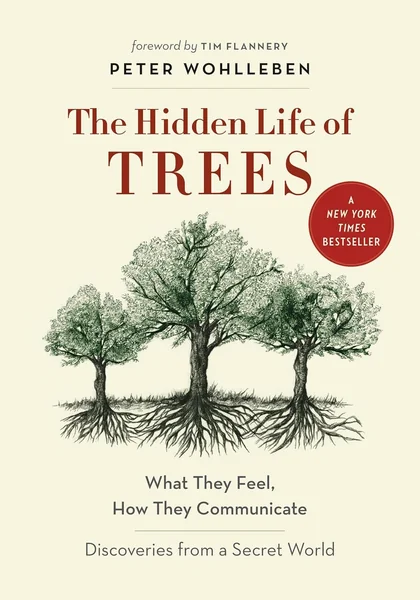
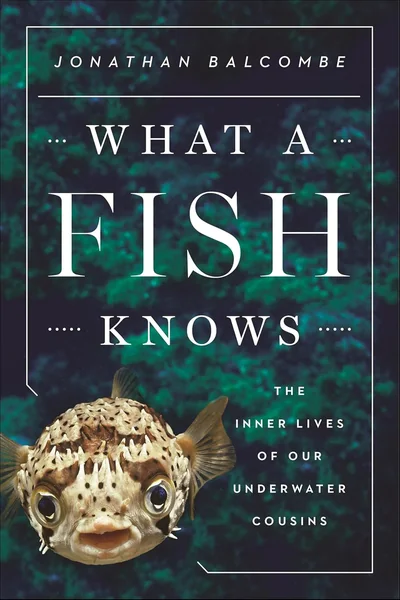
- Readers who responded to An Immense World's sense of wonder about animal inner lives will find similar rewards in several books on our shelves. Jonathan Balcombe's What a Fish Knows: The Inner Lives of Our Underwater Cousins covers the surprisingly rich cognitive and sensory world of fish with a comparable blend of science and advocacy. Peter Wohlleben's The Hidden Life of Trees: What They Feel, How They Communicate applies the same instinct — looking for hidden experience in the living world — to the forest, asking whether trees sense, communicate, and remember. Thomas McNamee's The Inner Life of Cats: The Science and Secrets of Our Mysterious Feline Companions brings a similar curiosity about non-human experience closer to home. For readers who want to stay with Ed Yong specifically, his earlier book I Contain Multitudes: The Microbes Within Us and a Grander View of Life applies the same narrative rigour and sense of wonder to the microbial world.
- About Ed Yong
- Edmund Soon-Weng Yong is a British-American science journalist and author.
- What awards did it win?
- An Immense World won both the 2023 Andrew Carnegie Medal for Excellence in Nonfiction and the 2023 Royal Society Science Book Prize — two of the most prestigious honours in English-language nonfiction and science writing respectively. The New York Times named it one of its ten best books of 2022, a distinction echoed by the Wall Street Journal, Time, People, Slate, and Publishers Weekly. Kirkus Reviews named it one of the best nonfiction books of the century, and it appeared on Barack Obama's list of favourite books of the year. This convergence of critical, popular, and institutional recognition is unusual even within the upper tier of science writing.
- How philosophical does it get?
- Philosophy of mind runs as a genuine and unresolved thread throughout An Immense World, not merely as window-dressing. Yong engages directly with Thomas Nagel's foundational essay 'What Is It Like to Be a Bat?' — the argument that subjective experience may be permanently inaccessible from the outside — and refuses to paper over the limits this places on scientific knowledge of animal consciousness. As Yong writes, 'A scientist's explanations about other animals are dictated by the data she collects, which are influenced by the questions she asks, which are steered by her imagination, which is delimited by her senses.' The book is, at its edges, a meditation on the limits of knowledge as much as a catalogue of zoological discovery — a quality that makes it intellectually richer but may sit uncomfortably with readers who want their popular science more declarative.
Summarize this book
Follow up
Synthesized from verified book data & published reviews · How we review
Press Enter to ask. Answers come from our editorial Q&A — start typing to see related questions.
Age & Reading Level
Recommended age
Adult
Reading level
Adult
who it suits
Skip if you want popular science that delivers confident conclusions about animal consciousness rather than an honest reckoning with what remains scientifically unresolved.
Our Review
What the Book Is and What It Argues
Scale and Significance
Strengths: Rigor, Range, and Restraint with Jargon
A Genuine Limitation: The Bounds of What Science Can Confirm
Who This Book Is For
Sources & Further Reading
The key facts and claims in this review are grounded in the retrieved, verified sources listed below.
- Cited in this review
- 1
en.wikipedia.org
- 2
- Further reading
- 3
Ed Yong, Wikipedia
- 4
- 5
edyong.me
- 6
- 7
- 8
penguinrandomhouse.com
Books like An Immense World
Curated picks for readers who enjoyed An Immense World, with our reasoning for each match.
If you liked An Immense World