
8 min read
4.7
· 13,679 Amazon ratingsShare This Review
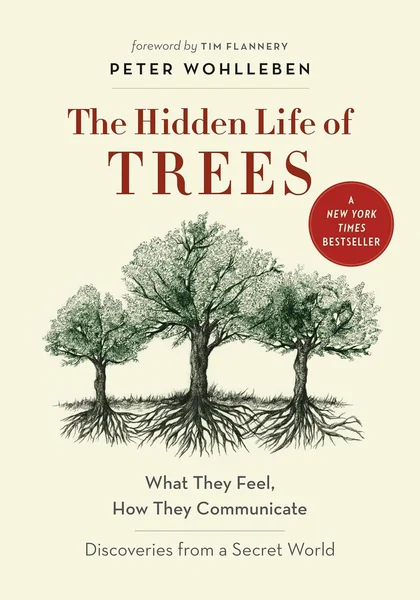
The Hidden Life of Trees by Peter Wohlleben Review: A Landmark Work of Popular Nature Science
Peter Wohlleben's The Hidden Life of Trees, originally published in Germany as Das geheime Leben der Bäume and released in English by Greystone Books in 2016, makes a quietly revolutionary argument: that forests are social networks, and that trees communicate, nurture their young, share resources with the sick, and warn one another of danger. A New York Times, Washington Post, and Wall Street Journal bestseller, it is one of the defining works of popular nature science of the past decade, and its reach has only grown since its first English-language edition.
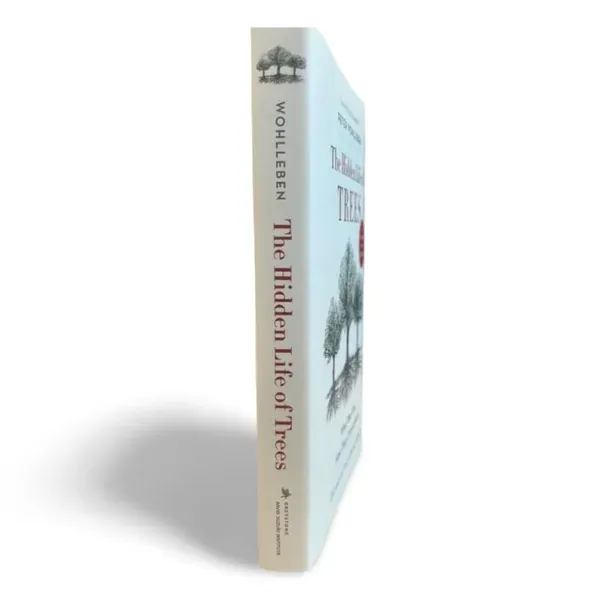
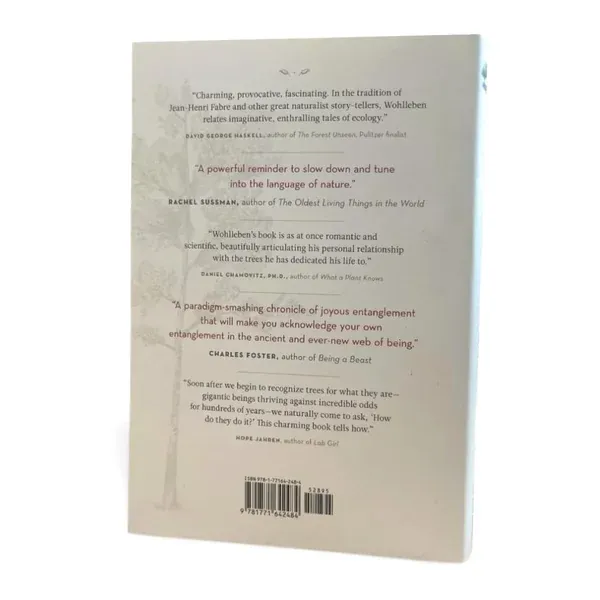 Tap to enlarge
LuvemBooks Verdict
Best for
Curious general readers — walkers, nature lovers, or anyone drawn to writers like Robin Wall Kimmerer or Robert Macfarlane — who want an accessible, wonder-driven introduction to how forests function as interconnected social communities.
Worth it if
You're willing to meet Wohlleben's anthropomorphizing language as a deliberate bridge into complex ecological science rather than a demand for strict literal precision — the cumulative portrait of the forest as a cooperative, communicating community is genuinely illuminating on those terms.
Skip if
Readers with a specialist background in biology or ecology who want a rigorously qualified, academically framed treatment of mycorrhizal networks and tree behaviour will likely find the metaphor-heavy, popular-science register frustrating rather than enlightening.
What readers & critics say
The Guardian's review describes the book as "eye-opening," noting that Wohlleben draws on decades of experience as a forester to reframe trees as "wondrous organisms, as complex as any animal" and "social beings." The ESA Journals (Ecological Society of America) acknowledge it became a bestseller "not without generating considerable controversy," pointing to ongoing scientific debate around its claims — a tension the book's own popular framing invites.
“Wohlleben draws on decades of experience as a forester — his aim is to let us see forests not just as 'lumber factories' but as wondrous organisms, as complex as any animal.”
— The GuardianAge & Reading Level
Recommended age
Adult
Reading level
Adult
who it suits
Skip if you want a rigorously technical or academically qualified treatment of forest ecology rather than an accessible, metaphor-driven popular-science account.
In This Review
- What Works & What Doesn't
- What the Book Actually Argues
- Significance and Reception
- Strengths: Science Made Vivid and Accessible
- Genuine Limitations
- Who This Book Is For
What Works & What Doesn't
What Works
- A New York Times, Washington Post, and Wall Street Journal bestseller with a substantial and well-documented award record, including the Indie Choice Award for Nonfiction Book of the Year
- Makes complex ecological science — including tree communication and resource-sharing behavior — accessible through vivid, human-scale analogies
- A rich supporting cast: translator Jane Billinghurst, a foreword by Tim Flannery, and an afterword by forest ecologist Suzanne Simard lend the volume additional depth and scientific context
- Chapter structure — covering topics from 'Friendships' to 'Tree School' to 'United We Stand, Divided We Fall' — allows readers to engage with specific subjects while building toward a unified argument
- Praised by The New York Review of Books as a work that 'breaks entirely new ground' in how it presents the inner life of forests
What Doesn't
- The anthropomorphizing framing — describing trees as experiencing love, friendship, and social bonds — is a deliberate rhetorical choice that some scientifically cautious readers may find stretches beyond what the underlying research strictly supports
- Readers seeking a rigorously technical or academically qualified treatment of forest ecology may find the book's accessible, metaphor-driven style too popular in register
What the Book Actually Argues

Significance and Reception

Strengths: Science Made Vivid and Accessible
Genuine Limitations
Who This Book Is For
Frequently Asked Questions
Sources & Further Reading
The key facts and claims in this review are grounded in the retrieved, verified sources listed below.
- Cited in this review
- 1
- 2
- Further reading
- 3
Peter Wohlleben, Wikipedia
- 4
peterwohllebenbooks.com
- 5
- 6
greystonebooks.com
- 7
- 8
Related Reviews
Reviews of books we picked for readers who enjoyed The Hidden Life of Trees.



Reader Comments
No comments yet
Be the first to share your thoughts!