

8 min read
4.6
· 863 Amazon ratingsShare This Review
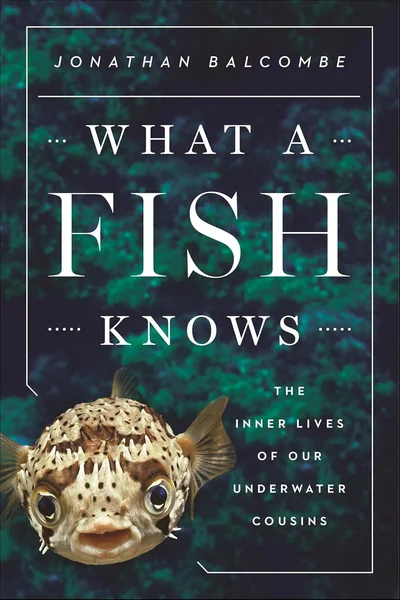
What a Fish Knows by Jonathan Balcombe Review: A Myth-Busting Dive Into Fish Intelligence
Jonathan Balcombe's What a Fish Knows, a New York Times bestseller published by Scientific American / Farrar, Straus and Giroux, is a science-driven popular nonfiction work that systematically dismantles the idea that fishes are unfeeling, cognitively simple creatures, marshaling the latest ethological research to reveal their capacity for perception, feeling, thought, social bonds, and even tool use.
LuvemBooks Verdict
Best for
General readers — aquarists, anglers, marine conservationists, or anyone curious about animal cognition — who want an accessible but rigorously sourced introduction to the science of fish sentience and behavior.
Worth it if
Worth reading if you want a broad, well-organized survey of the latest ethological research on fish perception, feeling, memory, and social life, delivered with the narrative momentum of good popular science rather than a dry textbook.
Skip if
Skip it if you're seeking a purely descriptive zoological deep-dive on a single species or ecosystem — the book's sweeping scope across thirty thousand-plus species means individual topics receive limited space, and its closing sections are frankly conservationist rather than neutrally descriptive.
What readers & critics say
Literary Review called the book "cogent, salutary and substantial," describing it as "impressively rooted in science" and wearing its learning lightly, per literaryreview.co.uk. EcoLit Books found each section "more interesting and engaging than the last," judging it difficult to think of another title more important to the oceans and the earth's ecosystem, per ecolitbooks.com.
Sources: Literary Review, EcoLit Books, Scuba Scribbles, Reef2Reef, The StoryGraphAge & Reading Level
Recommended age
Adult
Reading level
Adult
1 content note · who it suits
Content to know about
Skip if you want a purely descriptive zoological survey without ethical advocacy or conservationist conclusions.
In This Review
- What Works & What Doesn't
- What the Book Actually Is and Argues
- Scope, Scale, and the Myth-Busting Mission
- Strengths: Storytelling Grounded in Science
- A Genuine Limitation: Advocacy Inflects the Analysis
- Who This Book Is For and Why It Matters
What Works & What Doesn't
What Works
- A New York Times bestseller grounded in the latest ethological research, covering fish perception, feeling, thought, social bonds, breeding, and suffering in distinct, well-organized chapters
- Critics praised Balcombe's ability to combine the 'vivacious energy of a cracking good storyteller' with deep scientific sourcing, making complex animal behavior research accessible to general readers
- Tackles a wide range of specific, named misconceptions — the three-second memory myth, fish pain denial, assumptions about social simplicity — with concrete field research rather than generalities
- Backed by a bibliography of cited literature (pages 239–270) and an index, giving popular-science readers a pathway into the underlying research
- Broad in scope, covering more than thirty thousand species across diverse habitats from tide pools to the deep ocean, showing the range and diversity of fish life
What Doesn't
- Balcombe writes from an explicit animal-welfare perspective, and the book's closing sections are frankly conservationist in intent — readers expecting a purely descriptive zoological account may find the ethical advocacy more prominent than anticipated
- The book's wide scope across thirty thousand-plus species means individual topics and ecosystems receive limited depth before the narrative moves on, which may frustrate readers seeking sustained focus on a single group or habitat
What the Book Actually Is and Argues
Scope, Scale, and the Myth-Busting Mission
Strengths: Storytelling Grounded in Science
A Genuine Limitation: Advocacy Inflects the Analysis
Who This Book Is For and Why It Matters
Frequently Asked Questions
Sources & Further Reading
The key facts and claims in this review are grounded in the retrieved, verified sources listed below.
- Cited in this review
- 1
- 2
- Further reading
- 3
Jonathan Balcombe, Wikipedia
- 4
- 5
- 6
- 7
- 8
- 9
- 10
us.macmillan.com
Related Reviews
Reviews of books we picked for readers who enjoyed What a Fish Knows.

Reader Comments
No comments yet
Be the first to share your thoughts!