At a glance
Be one of the first readers to answer.
Read it? Was it right for you?
About the Author
Dan Abnet3 books reviewed
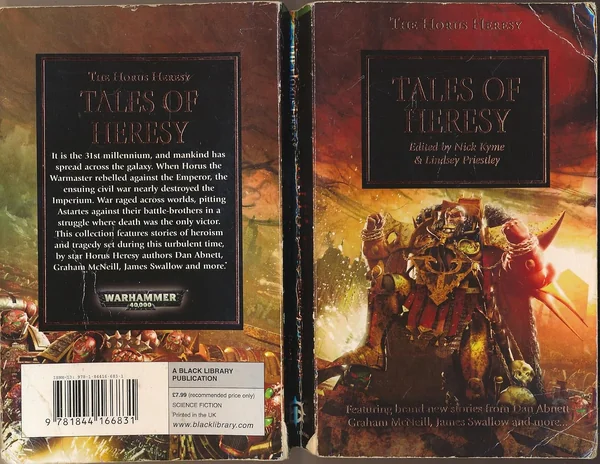
Tales of Heresy
by Dan Abnet
LuvemBooks Verdict
Best for: Horus Heresy series readers who want to explore corners of the lore — the Sisters of Silence, the War Hounds' primarch, the philosophical stakes of the Great Crusade — that the main novels don't have room to address.
Worth it? Skip it? Read the full verdict →Ask LuvemBooks
Was this helpful?
- Is it worth reading?
- For readers already invested in the Horus Heresy series, Tales of Heresy earns attention as an essential companion piece that fills meaningful narrative gaps the main novels do not address. Thriftbooks reviewers describe the collection as 'fantastic' overall, noting that no story is without merit and that it weaves together 'a more complete tapestry than the one occupied by the canonical HH novels.' The uneven quality inherent to multi-author anthologies is present — one or two stories feel tangential to the main arc — but the anthology's tonal variety and the contributions of established authors like Abnett, McNeill, and Swallow make it a strong addition for dedicated fans. Newcomers to the Warhammer 40,000 universe, however, will find the context-light stories harder to engage with.
- Similar books
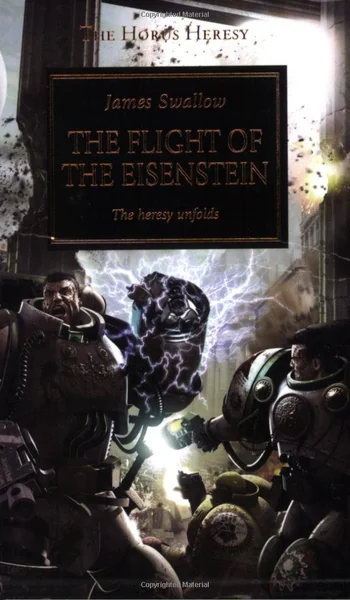
- Readers who enjoy Tales of Heresy will find natural next reads among other Horus Heresy titles. Graham McNeill's False Gods is the second novel in the main sequence and shares the series' focus on the early corruption of Horus and the Legions. James Swallow's The Flight of the Eisenstein follows a single Space Marine's desperate flight to warn the Emperor — a focused, character-driven counterpart to the anthology's breadth. For those drawn to Dan Abnett's contributions, Eisenhorn offers another corner of the Warhammer 40,000 universe in Abnett's distinctive style. Aaron Dembski-Bowden's The First Heretic and Graham McNeill's A Thousand Sons are also frequently cited alongside Tales of Heresy as deep-dives into specific Legions and the ideological fractures driving the Heresy.
- Who should read this?
- Tales of Heresy is squarely aimed at readers already invested in the Horus Heresy series and the Warhammer 40,000 universe — those who recognise the Space Marine Legions, the primarchs, and the broader context of the Imperium of Man will get the most out of its seven stories. Fans wanting to explore corners of the Heresy the main novels don't address — including the Sisters of Silence and the philosophical tensions of the Great Crusade's final days — will find it a rewarding companion piece. It is not a suitable entry point for readers unfamiliar with the setting, and those seeking a continuous, driving narrative rather than an anthology of standalone stories may prefer the main sequence novels.
- How does this compare to other Abnett books?
- Tales of Heresy differs from Dan Abnett's solo Horus Heresy entries — such as Horus Rising and Legion, both reviewed on LuvemBooks — in that Abnett contributes only one story ('Blood Games') rather than authoring the entire volume. Where Horus Rising establishes the series' foundations with a full novel's worth of character development, Tales of Heresy uses the anthology format to broaden scope across seven authors. Thriftbooks reviewers note that Abnett 'keeps coming up with new angles and different parts of the overall story,' suggesting his contribution here maintains the inventiveness of his solo work within the constraints of the shorter form.
- What makes 'The Last Church' notable?
- Graham McNeill's 'The Last Church' is singled out for venturing into philosophical territory rarely explored in the Horus Heresy main sequence. Rather than focusing on military action, it engages with the ideological stakes of the Great Crusade's final days — the tension between the Emperor's secular vision and older systems of belief. It represents the anthology's capacity to use the short-story format for thematic range that full novels in the series rarely pursue.
- What is unique about 'After Desh'ea'?
- Matthew Farrer's 'After Desh'ea,' the anthology's closing story, centres on the War Hounds Space Marine Legion and their newly discovered primarch. The narrative's central challenge is distinctive: before the War Hounds can follow their primarch into battle, they must find a way to reach his sanity — without ever raising a hand against him. This premise sets it apart from the straightforward military action that dominates much of the broader series, and it is highlighted by sources as one of the anthology's standout entries.
Summarize this book
Follow up
Synthesized from verified book data & published reviews · How we review
Press Enter to ask. Answers come from our editorial Q&A — start typing to see related questions.
Editorial Review
Tales of Heresy is the tenth entry in the New York Times bestselling Horus Heresy series, a seven-story anthology set during the Great Crusade and the Horus Heresy, written by Dan Abnett, Mike Lee, Anthony Reynolds, James Swallow, Gav Thorpe, Graham McNeill, and Matthew Farrer. It earns attention as an essential companion piece that fills narrative gaps and expands the cast of the broader series.
Read the Full ReviewBooks like Tales of Heresy
Curated picks for readers who enjoyed Tales of Heresy, with our reasoning for each match.


If you liked Tales of Heresy