
At a glance
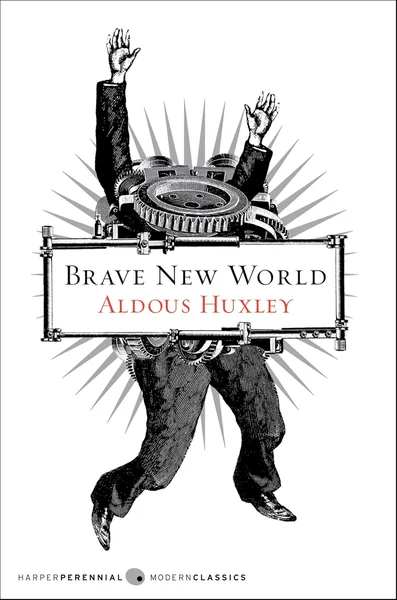
Brave New World
LuvemBooks Verdict
Best for: Readers drawn to novels of ideas — particularly those curious about how dystopian fiction interrogates freedom, technology, and social control — who want to understand the canonical counterpart to Orwell's Nineteen Eighty-Four.
Worth it? Skip it? Read the full verdict →Ask LuvemBooks
Was this helpful?
- Is it worth reading?
- For readers drawn to ideas-driven literary fiction, Brave New World is a genuinely essential read — its ranked status as number 5 on the Modern Library's 100 Best Novels in English of the 20th century reflects a critical consensus built over nearly a century. The novel's central argument — that stability purchased through the elimination of freedom and personal responsibility constitutes its own form of tyranny — has only sharpened in relevance as biotechnology, algorithmic conditioning, and pharmaceutical mood management have moved from speculation to reality. The caveat is equally clear: readers seeking plot momentum or psychologically rounded characters will encounter a novel that is more philosophical debate than emotional drama, with Bernard Marx, Lenina Crowne, and John the Savage functioning primarily as positions in an argument rather than fully realised individuals.
- Similar books
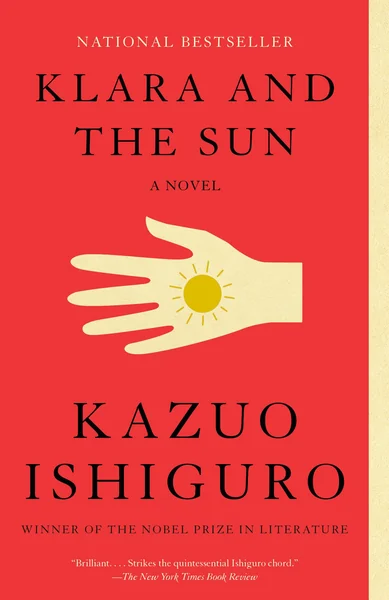
- Readers who respond to Brave New World's vision of technological civilisation reshaping human experience will find rich companions in the wider dystopian and speculative canon. George Orwell's Nineteen Eighty-Four is the most natural pairing — a complementary and in some ways starker vision in which the state rules by pain rather than pleasure. Margaret Atwood's The Handmaid's Tale and Yevgeny Zamyatin's We — a direct influence on both Huxley and Orwell — extend the tradition in distinct directions. For a more contemporary take on technology and what it means to be human, Kazuo Ishiguro's Klara and the Sun offers a quietly devastating meditation that shares Huxley's concern with engineered beings and the erasure of authentic experience.
- Who should read this?
- Brave New World is best suited to patient, intellectually engaged adult readers — or mature, advanced older teens — who are drawn to novels of ideas rather than character-driven emotional drama. It rewards readers already curious about the intersection of technology, freedom, and social control, and is particularly well matched to those who have read or plan to read Orwell's Nineteen Eighty-Four, since the two novels illuminate each other. Readers seeking psychologically deep protagonists or propulsive plotting should be aware that Bernard Marx, Lenina Crowne, and John the Savage function primarily as philosophical positions rather than fully developed individuals.
- What are the main themes?
- The novel's central theme is the price of stability: the World State achieves social cohesion by eliminating freedom, personal responsibility, and authentic human experience — replacing them with soma, conditioning, and enforced promiscuity. Huxley also raises the question of eugenics with directness that has kept the novel controversial, presenting the biological engineering of a human hierarchy as both a character-level challenge to John the Savage and a systemic moral catastrophe. A further thread concerns the relationship between technology and meaning: the World State's reproductive technology, hypnopaedia, and Pavlovian conditioning are not isolated conceits but interlocking parts of a single social logic, and the novel's Shakespearean irony — drawn from Miranda's speech in The Tempest — frames the entire critique of engineered contentment.
- About Aldous Huxley
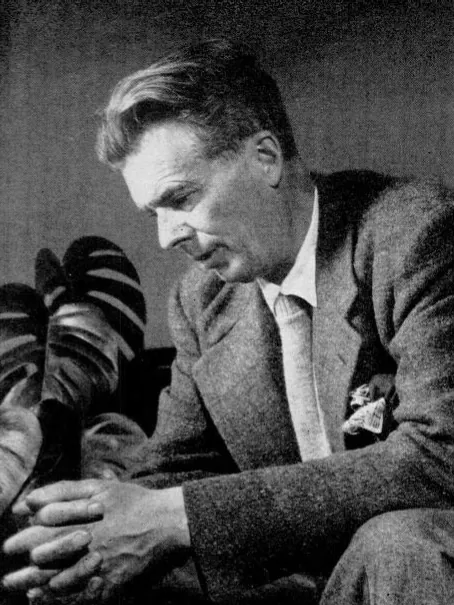
- Aldous Leonard Huxley was an English writer and philosopher.
- Why has it been banned or challenged?
- Brave New World has appeared on the American Library Association's list of the top 100 banned and challenged books of the decade every decade since that list began in 1990, making it one of the most persistently challenged novels in the English language. The provocations are multiple: the novel depicts enforced sexual promiscuity as a tool of state control, presents the biological engineering of a human caste hierarchy with unsettling neutrality, and confronts eugenics directly. Its sustained presence in school curricula — which keeps it in the hands of younger readers — has amplified the controversy throughout its publishing history.
- How does this compare to Huxley's other work?
- Brave New World sits at the centre of Huxley's career as his most celebrated and formally recognised work, but it is best understood as the opening statement of a lifelong intellectual project. He revisited its arguments in Brave New World Revisited (1958), reassessing how closely his 1932 predictions had been borne out, and his final novel Island (1962) offered a deliberate utopian counterpoint — an attempt to imagine what a society that got the balance right might look like. LuvemBooks has also reviewed The Perennial Philosophy, which represents a different dimension of Huxley's thought: the mystical and philosophical rather than the satirical.
Summarize this book
Follow up
Synthesized from verified book data & published reviews · How we review
Press Enter to ask. Answers come from our editorial Q&A — start typing to see related questions.
Age & Reading Level
Recommended age
Ages 16+
Reading level
Adult
4 content notes · who it suits
Content to know about
Best for: Adults / mature 16+ — frank treatment of state-mandated promiscuity, eugenics, and Huxley's deliberately elevated, philosophically dense prose suit older and adult readers.
Skip if you're looking for character-driven emotional drama or propulsive plotting.
Editorial Review
First published in 1932, Aldous Huxley's Brave New World remains one of the most celebrated and challenged dystopian novels in the English language — ranked number 5 on the Modern Library's list of the 100 Best Novels in English of the 20th century, and a perennial fixture on banned-books lists. Set in a future World State where citizens are biologically engineered into a rigid caste hierarchy and kept compliant through psychological conditioning and the pleasure-drug soma, the novel uses protagonist John the Savage to expose the hidden violence beneath a society engineered for contentment.…
Read the Full ReviewBooks like Brave New World
Curated picks for readers who enjoyed Brave New World, with our reasoning for each match.
If you liked Brave New World
Why It’s Trending
Brave New World Feels More Relevant Than Ever in 2026
Readers keep returning to Huxley's 1932 dystopia because its vision of engineered happiness, social stratification, and compliance-by-comfort hits uncomfortably close to home right now. It's one of those books that seems to find its audience in every generation — and this one is no exception.