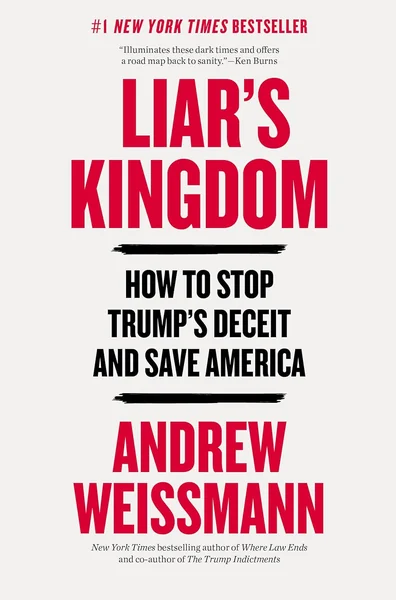
Andrew Weissmann, NYU Law professor and veteran federal prosecutor, argues in Liar's Kingdom that America's susceptibility to politicians' deliberate electoral lies is not an inevitable feature of democracy but a correctable flaw in the legal system — and he offers a concrete, comparative framework for fixing it. This review covers the book's content, structure, and published reception; it does not reflect hands-on application of its proposals.
Readers with a background interest in constitutional law or federal prosecution who want a concise, expert-driven legal argument for structural reforms to prevent electoral deception — and are open to an explicitly anti-Trump framing.
Worth it if
You want specific, actionable legal proposals — including a constitutional amendment — backed by international precedent and the firsthand authority of a senior Mueller investigation prosecutor, delivered in a focused, readable format.
Skip if
You are looking for a politically neutral, comprehensive historical account of political lying in America, or you find the core remedy — a constitutional amendment — too politically unrealistic to engage with seriously.
What readers & critics say
Kirkus Reviews highlights Weissmann's use of international comparisons — including Germany's Holocaust denial law and Brazil's imprisonment of Jair Bolsonaro — as central to the book's argument. The Guardian reports that Weissmann argues politicians must be held accountable when their lies damage democracy, framing the book as a call for new law to address political deception. The book debuted as an instant #1 New York Times bestseller, as noted by both Hachette Book Group and Barnes & Noble.
“Germany's law that punishes Holocaust denial, Brazil's imprisonment of Trump ally Jair Bolsonaro — Weissmann draws on examples of other countries, to say nothing of most individual American states.”
Liar's Kingdom is a focused legal treatise by Andrew Weissmann — NYU Law professor and veteran Mueller investigation prosecutor — arguing that America's vulnerability to electoral lies is a correctable structural flaw, not an inherent democratic condition. Grounded in international precedent and concrete legal proposals, including a constitutional amendment to disqualify deliberate election deniers from office, the book is a must for readers who want actionable reform arguments rather than familiar diagnosis. The key caveat: its explicit anti-Trump framing and ambitious prescriptions will resonate most with readers already sympathetic to its premise.
Is it worth reading?
For readers who have followed Weissmann's journalism, his Substack newsletter Behind the Headlines, or his earlier work on the Mueller investigation, Liar's Kingdom delivers the fuller, book-length treatment that shorter formats cannot accommodate. Its core strength — flagged by both the publisher and Kirkus Reviews — is the willingness to move from diagnosis to specific, actionable proposals with professional precision, rather than stopping at cataloguing abuses. The key caveat is that its explicit anti-Trump framing and the political ambition of a constitutional amendment will test the patience of readers skeptical about feasibility or seeking neutral legal scholarship.
Who should read this?
Liar's Kingdom is best suited to readers who want a concrete legal roadmap for democratic reform rather than a general account of political deception in America. Followers of Weissmann's Substack newsletter Behind the Headlines or his prior Mueller investigation memoir will find this the natural long-form complement to his public commentary. It is also well-matched to law students, policy professionals, and civically engaged general readers who are already sympathetic to the premise that deliberate electoral lies require structural legal remedies — not merely political ones.
Similar books
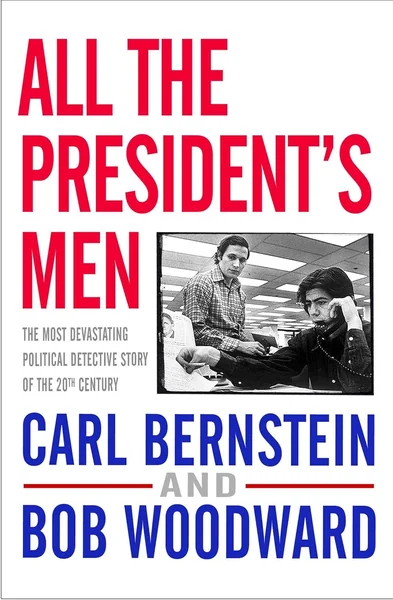
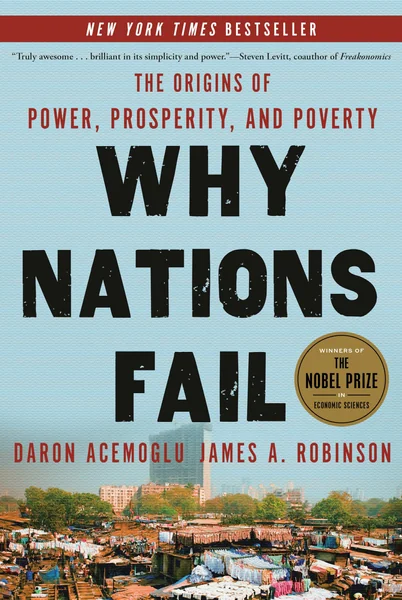
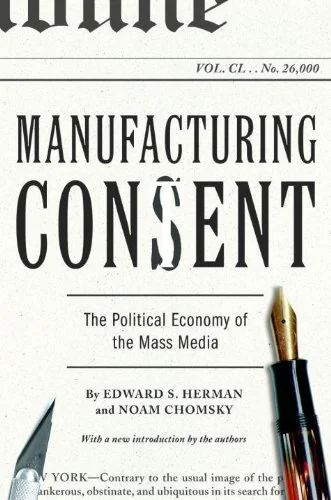
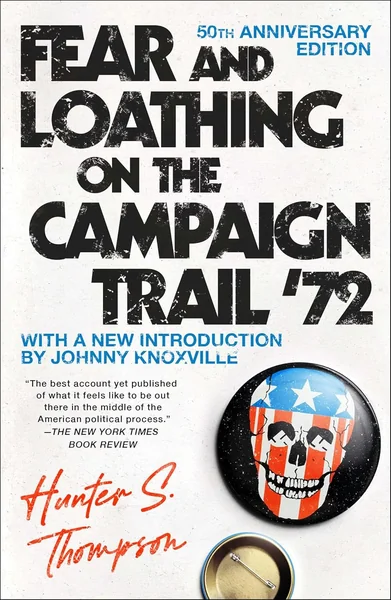
Readers drawn to Liar's Kingdom will find strong company in several related works. Bob Woodward and Carl Bernstein's All the President's Men is the foundational account of how investigative scrutiny can expose political deception at the highest levels of U.S. government. Edward S. Herman and Noam Chomsky's Manufacturing Consent: The Political Economy of the Mass Media examines the structural mechanisms by which political falsehoods are propagated and normalized — a useful systemic complement to Weissmann's legal analysis. Daron Acemoglu and James A. Robinson's Why Nations Fail: The Origins of Power, Prosperity, and Poverty offers a broader comparative framework for understanding how institutional failures — the same vulnerability Weissmann diagnoses in American election law — can undermine democratic governance. Hunter S. Thompson's Fear and Loathing on the Campaign Trail '72 provides a viscerally reported counterpoint: a ground-level account of political manipulation and disillusionment that contextualizes the long history of dishonesty in American electoral politics.
What are the main themes?
The book's central themes are democratic fragility, the limits of free speech when speech is weaponized to undermine elections, and the potential for legal reform to close structural gaps in American law. Weissmann's comparative thread — running from Germany's Holocaust denial law to Brazil's imprisonment of Jair Bolsonaro and his invocation of Brazilian law holding that 'the right to truthful information in elections supersedes an unfettered right to free speech when deliberate falsehoods are made that threaten the democratic order' — frames electoral integrity as a legal and institutional problem, not merely a political or cultural one. A secondary theme is the gap between diagnosis and remedy in political commentary: Weissmann explicitly positions Liar's Kingdom as a work that moves beyond cataloguing abuses to charting a concrete legal path forward.
Why is Weissmann qualified to write this?
Weissmann served as a senior member of Special Counsel Robert Mueller's investigation — an experience he detailed in his New York Times bestseller Where Law Ends: Inside the Mueller Investigation — and co-authored The Trump Indictments: The Historic Charging Documents With Commentary with Melissa Murray, also a New York Times bestseller. He currently teaches criminal and national security law and procedure at NYU School of Law and holds a J.D. from Columbia Law School. His Substack newsletter, Behind the Headlines, has drawn more than 100,000 followers. That resume shapes Liar's Kingdom's register: the book reads as the work of a practitioner and educator who has spent years inside the machinery of federal prosecution, not a polemicist working from the outside.
What are the book's weaknesses?
By design, Liar's Kingdom is a focused, concise work — readers seeking exhaustive historical or sociological context around political lying in America will find a targeted intervention rather than a comprehensive survey. Its proposed remedies, notably a constitutional amendment, are highly ambitious, and readers skeptical of their political feasibility may find the prescriptive sections aspirational to the point of frustration. Finally, the book's explicit anti-Trump framing means it is advocacy rather than neutral legal scholarship, which will limit its audience to those already sympathetic to its premise.
Summarize this book
Is it worth reading?
Who should read this?
What are the main themes?
Why is Weissmann qualified to write this?
What are the book's weaknesses?
Summarize this book
Andrew Weissmann's Liar's Kingdom contends that American democracy's susceptibility to politicians who lie about elections — including Donald Trump — stems from a specific structural gap in U.S. law that leaves deliberate electoral falsehoods largely unpunished. Drawing on his experience as a senior Mueller investigation prosecutor and his expertise in criminal and national security law at NYU, Weissmann builds a comparative case using international frameworks from Germany and Brazil, then proposes a constitutional amendment that would disqualify candidates who perpetrate intentional election denial from seeking office for a defined period. The publisher frames it as a 'playbook for stopping politicians like Trump from holding office in the future — and for saving our democracy,' and describes the result as a slim, elegant treatise rather than a sprawling survey.
Synthesized from verified book data & published reviews · How we review
Ask LuvemBooks
What would you like to know about Liar's Kingdom?
Answers come from our editorial notes on this book. If we haven't covered something, we'll say so.
Readers often ask
Our Review
We review the evidence: published critics, reader verdicts and BookTube reviews, gathered and weighed with AI assistance and edited by LuvemBooks, rather than one reader's first-hand take.
A sharp, reform-minded legal treatise, Liar's Kingdom makes the case that the rules, not just the leaders, need to change.
What the Book Argues
At the center of Liar's Kingdom is a diagnosis and a prescription. Weissmann contends that the United States' vulnerability to politicians who lie about elections — including Donald Trump — is rooted in a specific structural gap in American law, one that leaves deliberate electoral falsehoods largely unpunished and those who peddle them free to seek office again.
The publisher's synopsis frames the book as a "playbook for stopping politicians like Trump from holding office in the future — and for saving our democracy." Weissmann's remedy is not merely rhetorical: he proposes a constitutional amendment that would disqualify candidates who perpetrate intentional election denial from running for elected office for a defined period of years.
The Comparative Legal Framework
A significant portion of the book's argument is built on international precedent. Weissmann looks beyond U.S. Borders to countries that have already confronted the crisis of democratic destabilization through political deception.
Reviewers note that the book examines Germany's law punishing Holocaust denial and Brazil's imprisonment of Jair Bolsonaro — who, like Trump, denied his electoral loss and was implicated in an attempt to overturn it. Brazilian law, as Weissmann cites it, holds that "the right to truthful information in elections supersedes an unfettered right to free speech when deliberate falsehoods are made that threaten the democratic order."
Weissmann also draws on the approaches of individual American states, building a comparative mosaic that informs his proposed federal reforms. This cross-jurisdictional scaffolding distinguishes the book from narrower partisan commentary and gives its proposals an empirical grounding.
Weissmann's Credentials and Voice
Weissmann brings unusual authority to this subject. He served as a senior member of Special Counsel Robert Mueller's investigation — detailed in his earlier New York Times bestseller Where Law Ends: Inside the Mueller Investigation — and co-authored The Trump Indictments: The Historic Charging Documents With Commentary with Melissa Murray, itself a New York Times bestseller.
He currently teaches criminal and national security law and procedure at NYU School of Law and holds a J.D. From Columbia Law School. His Substack newsletter, Behind the Headlines, has drawn more than 100,000 followers.
That resume shapes the book's register: Liar's Kingdom reads as the work of a practitioner and educator who has spent years inside the machinery of federal prosecution, not a polemicist working from the outside. The publisher describes the book as a "slim, elegant treatise," signaling an intent to inform and persuade rather than simply to inflame.
Genuine Strengths
The book's core strength, as the publisher and Kirkus Reviews both indicate, is its willingness to offer specific, actionable proposals rather than stopping at diagnosis. Where much political commentary on the Trump era catalogues abuses without charting a legal path forward, Weissmann's background equips him to move from problem to remedy with professional precision.
The comparative approach — holding American law up against international frameworks that have already grappled with electoral deception — gives the argument a texture that purely domestic legal analysis would lack. For readers who have followed Weissmann's journalism and public commentary, the book delivers the fuller, book-length treatment that shorter formats cannot accommodate.
Limitations and Audience Considerations
By design, Liar's Kingdom is a focused, concise work — the publisher's own description underscores its brevity. Readers seeking exhaustive historical or sociological context around political lying in America will find this a targeted intervention rather than a comprehensive survey.
The book's proposals — including a constitutional amendment — are ambitious by any measure, and readers skeptical that such structural reforms are achievable in the current political climate may find the prescriptive sections aspirational in a way that tests their patience. Additionally, because the book is explicitly framed around Trump and the specific pathologies of his political movement, readers looking for a politically neutral treatment of disinformation law will find this work takes a clear and unambiguous position from the outset.
Sources & Further Reading
The key facts and claims in this review are grounded in the retrieved, verified sources listed below.
Skip if you want a politically neutral or comprehensive historical account of electoral deception in America rather than a focused legal case for specific anti-Trump reforms.
Andrew Weissmann on Liar's Kingdom
Andrew Weissmann discusses his book Liar's Kingdom in conversation with Lawrence O'Donnell at 92NY.
International Precedents for Disqualifying Deceitful Politicians
Weissmann points to Brazil's legal framework—which barred Jair Bolsonaro from running for office after he lied about election results and incited insurrection—as a compelling model for democratic accountability.
The Discrepancy Between Business and Political Lies
Weissmann explains that the genesis of his book was the stark contrast between corporate executives prosecuted for deceit, such as in Enron, and politicians facing zero legal consequences for lying about election integrity.
From our readers
Reader reviews
Be one of the first readers to answer.
Read it? Was it right for you?
Books like Liar's Kingdom
Curated picks for readers who enjoyed Liar's Kingdom, with our reasoning for each match.