8 min read
4.6
· 1,405 Amazon ratingsShare This Review

Our review
Fear and Loathing on the Campaign Trail '72
Fear and Loathing on the Campaign Trail '72 by Hunter S. Thompson Review: Gonzo Journalism's Defining Political Masterwork
Half a century after its original publication, Hunter S. Thompson's Fear and Loathing on the Campaign Trail '72 endures as a cornerstone of American political journalism — a raw, funny, and ferocious account of the 1972 presidential race that one review called "the best account yet published of what it feels like to be out there in the middle of the American political process." This review covers the book's content, context, and published reception; it does not reflect hands-on application or use.
LuvemBooks Verdict
Best for
Readers drawn to American political history, literary journalism, or Hunter S. Thompson's career who want to understand the 1972 presidential race through the most viscerally immersive — if deliberately unorthodox — account ever written about it.
Worth it if
You want to experience the emotional texture and exhausting reality of a presidential campaign as lived from the inside, and you're comfortable with a narrator who uses exaggeration, fury, and self-implication as deliberate journalistic tools rather than liabilities.
Skip if
You're looking for a neutral, factually reliable documentary record of the 1972 election — Thompson's Gonzo method intentionally blurs fact and fictionalization, and the episodic structure born from serialized deadline dispatches makes for uneven reading if you need chronological rigor.
What readers & critics say
Wikipedia notes the book is widely considered a hallmark of campaign journalism that helped establish Thompson as a major political observer, despite — or because of — its unconventional blend of vulgarity, humorous exaggeration, and blurred fact and experience. Not Even Past credits Thompson's "clarity and wit" with firmly establishing the work as a celebrated piece of political journalism and its author as an icon of American literature, while Kirkus Reviews recognized from the outset Thompson's singular "eye for gnostic drill" and "ear for byzantine bullshit" as he trained his pen on every event and aspirant across the campaign trail.
“Armed only with an eye for gnostic drill, an ear for byzantine bullshit, and a pen aimed pointedly at the political gonads of every event and aspirant who crossed his mad path.”
— Kirkus ReviewsAsk LuvemBooks
Was this helpful?
- Is it worth reading?
- For readers interested in American political history, the evolution of journalism as a form, or Hunter S. Thompson's career, the answer is a clear yes. Simon & Schuster's publisher materials describe it as one of the bestselling campaign books of all time, and its durability across five decades places it alongside a small handful of titles that have genuinely redefined how political reporting can be written. The New York Times Book Review weighed in favorably, and the book is widely considered a hallmark of campaign journalism. The key caveat is that the Gonzo framework makes it an unreliable straight factual record — readers should approach it as a landmark work of literary nonfiction rather than a neutral historical document.
- Similar books
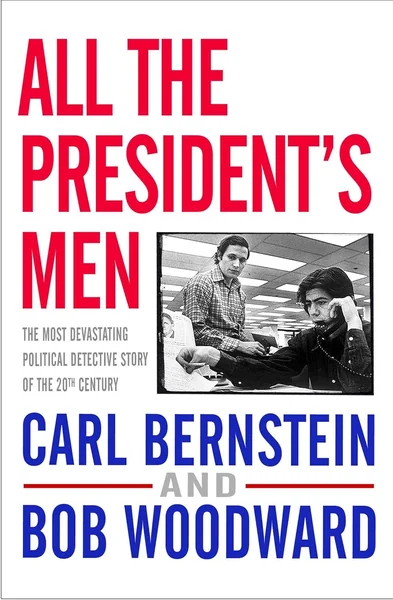
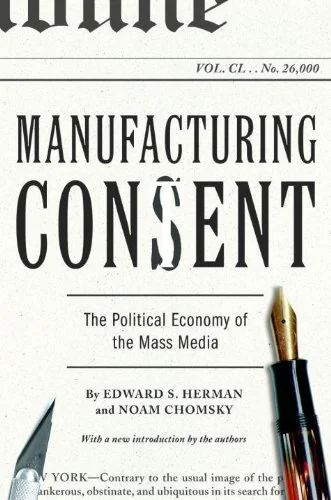
- Readers drawn to Fear and Loathing on the Campaign Trail '72 will find natural companions in several directions. Bob Woodward and Carl Bernstein's All the President's Men covers the same Nixon era from a very different angle — rigorous investigative journalism rather than Gonzo performance, but equally essential to understanding the period. For a broader critique of how media shapes political reality, Edward S. Herman and Noam Chomsky's Manufacturing Consent is a landmark analytical work. Alexis de Tocqueville's Democracy in America offers a foundational, sweeping examination of American political culture that rewards readers who want historical depth behind their politics. Timothy Crouse's The Boys on the Bus, while not currently in the LuvemBooks catalogue, was written as a direct companion piece about press coverage of the same 1972 campaign and is frequently read alongside Thompson's account.
- Who should read this?
- The book is designed for anyone interested in American political history, the evolution of journalism as a form, or the broader arc of Hunter S. Thompson's career. It will resonate especially with readers who want to understand not just the mechanics of a campaign but its texture and toll — the exhaustion, dark comedy, and moral fury that conventional reporting filters out. Literary nonfiction readers who value voice over neutrality will find one of the most distinctive writers in twentieth-century American journalism at the height of his political engagement. Readers who approach it primarily as a primary source for the 1972 election should be aware of, and comfortable with, its Gonzo framework.
- About Hunter S. Thompson
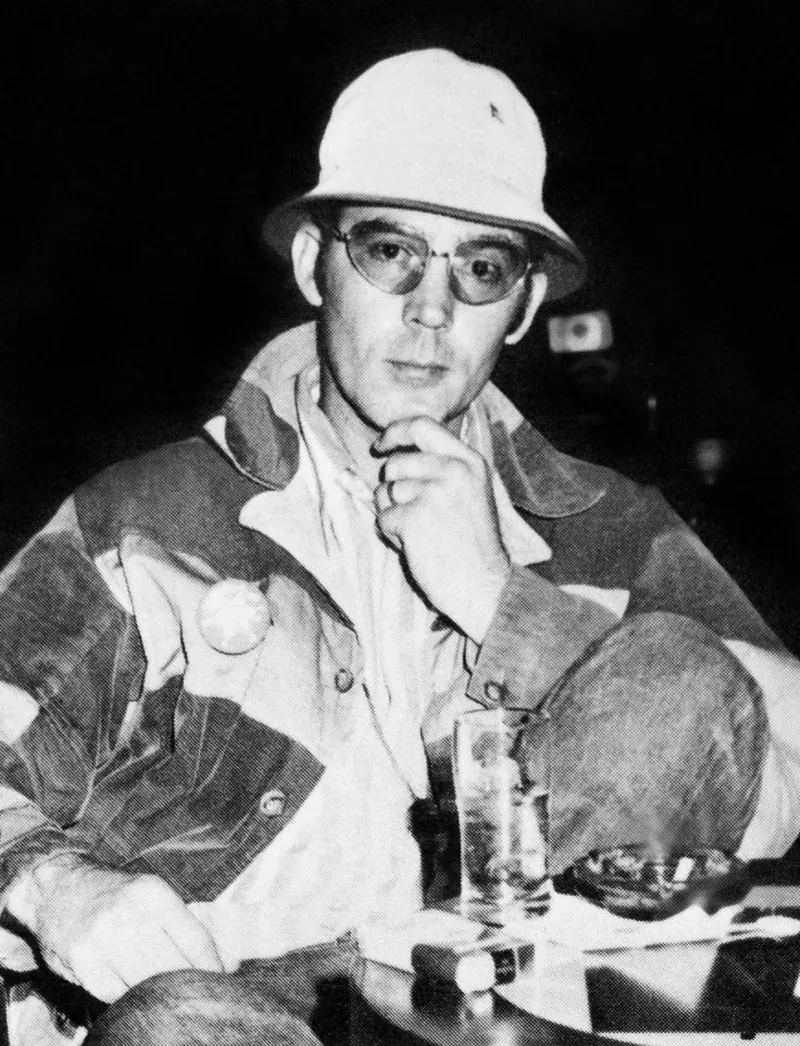
- Hunter Stockton Thompson was an American journalist and author, regarded as a pioneer of New Journalism along with Gay Talese, Truman Capote, Norman Mailer, Joan Didion, and Tom Wolfe.
- What are the main themes?
- The book's central themes are the gap between American political idealism and the brutal reality of how campaigns are actually won and lost, the personal and psychological cost of sustained political engagement, and the complicity and limitations of the press in covering power. Thompson's Gonzo method also makes the nature of journalistic truth itself a persistent undercurrent — the book is as much an argument about how political reality gets constructed and reported as it is a chronicle of 1972. The arc from McGovern's insurgent primary campaign to his catastrophic defeat by Nixon gives these themes a tragic structure that accumulates weight across the book's episodic dispatches.
- What is the book's place in journalism history?
- Few campaign books occupy the cultural territory this one does. Simon & Schuster describes it as one of the bestselling campaign books of all time, and Wikipedia's reception summary notes that despite — or because of — Thompson's unconventional use of vulgarity, humorous exaggeration, and the blurring of fact and experience, it is considered a hallmark of campaign journalism that helped establish Thompson as a major political observer. It arrived alongside Timothy Crouse's The Boys on the Bus (1973), a companion piece that critically analyzed mainstream press coverage of the same campaign; together, the two books set the terms for how the '72 race has been understood ever since. Half a century of critical durability, capped by a 50th-anniversary reprint, confirms its standing as a genuine redefinition of how political reporting can be written.
Summarize this book
Follow up
Synthesized from verified book data & published reviews · How we review
Press Enter to ask. Answers come from our editorial Q&A — start typing to see related questions.
Our Review
What the Book Actually Is
Place in American Political Journalism
Strengths: Voice, Access, and Emotional Honesty

Genuine Limitations
Who This Edition Is For
Sources & Further Reading
The key facts and claims in this review are grounded in the retrieved, verified sources listed below.
- Cited in this review
- 1
shakespeareandcompany.com
- 2
- Further reading
- 3
Hunter S. Thompson, Wikipedia
Age & Reading Level
Recommended age
Ages 16+
Reading level
Adult
2 content notes · who it suits
Content to know about
Best for: Adults / mature 16+ — pervasive drug and alcohol use, strong profanity, and satirical exaggeration throughout require a reader comfortable with unreliable narration and mature content
Skip if you want a neutral, strictly factual documentary account of the 1972 election.
Reader reviews
Be one of the first readers to answer.
Read it? Was it right for you?
Books like Fear and Loathing on the Campaign Trail '72
Curated picks for readers who enjoyed Fear and Loathing on the Campaign Trail '72, with our reasoning for each match.
More by Hunter S. Thompson


If you liked Fear and Loathing on the Campaign Trail '72