Skip to content
Reviewed

Read Time

8 min read

Our age bandAdult
Reader rating
4.7 · 245 Amazon ratings, as of Nov 2026
reader ratings, not a LuvemBooks score
Curated & edited by

LuvemBooks Editorial

How we create our reviews →
Share This Review
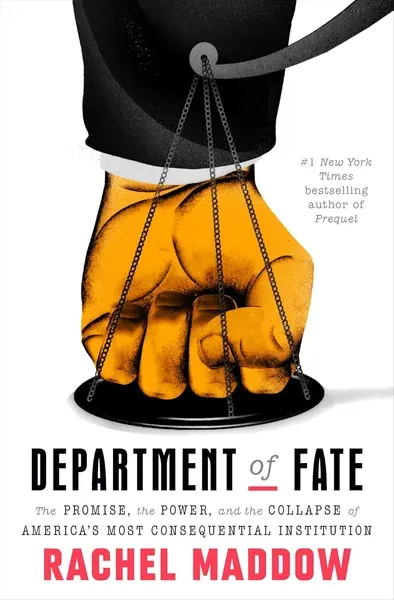
Department of Fate: The Promise, the Power, and the Collapse of America's Most Consequential Institution by Rachel Maddow front cover

Review

Department of Fate

Department of Fate by Rachel Maddow Review: A History of Justice

Rachel Maddow charts the Justice Department’s 150-year trajectory, arguing its actions fundamentally shaped American democracy. While its sweeping scope satisfies readers seeking a robust critique of federal power, its dense detail may test those wanting a leaner analysis.

Our age band: Adultpolitical polarization · historical corruption

LuvemBooks Verdict

Best for

Readers who seek a robust critique of federal power will appreciate how the book charts the Justice Department’s 150-year trajectory to show how its actions fundamentally shaped American democracy.

Worth it if

Worth reading if you appreciate a partisan critique of American legal history paired with concrete structural reforms.

Skip if

Skip it if you find Maddow’s familiar cable-news framing and heavy historical volume demanding.

Where reviewers agree and split

Readers rate it 4.7 on Amazon. The reviews we read that discuss it in depth agree:

  • Positive

    Kirkus Reviews · Press review: praises caustic style and revelatory historical detail

  • Positive

    The Burton Book Review · Book blog: celebrates meticulously researched and beautifully written history

Overall verdicts are our summary of each review we read, from its headline, rating and conclusion.

Kirkus Reviews and The Burton Book Review both praise the work for its caustic prose, framing it as a compelling chronicle of the Justice Department’s century-long political entanglements. The Burton Book Review highlights its scope, noting how the book expands from a political indictment into a wide-ranging exploration of class, race, and democratic erosion.

“delightfully caustic, even Twainian”

— Kirkus Reviews
Sources: Kirkus Reviews, The Burton Book Review, QZ, The New York Times Book Review
4.7from 245 Amazon ratings, as of Nov 2026— reader ratings, not a LuvemBooks score

Ask LuvemBooks

Was this helpful?

Rachel Maddow’s Department of Fate charts the Justice Department’s 150-year trajectory, arguing its actions fundamentally shaped American democracy. While its sweeping scope satisfies readers, its dense detail and familiar partisan framing may test those wanting a leaner analysis. It is best suited for readers comfortable with Maddow’s unapologetic tone who want a comprehensive examination of federal power and structural reform.
Is it worth reading?
Readers who appreciate a critical examination of American legal history paired with concrete structural reforms will find it highly rewarding. Kirkus Reviews praises Maddow’s caustic prose and revelatory historical detail, while The Burton Book Review celebrates the work as meticulously researched and beautifully written. However, readers may find the tone too familiar and the volume of detail demanding.
Similar books
Readers interested in the structural evolution of the republic will find Fukuyama’s The Origins of Political Order a compelling peer for its examination of institutional development. Michael Lewis’s Blockers offers a parallel look at deep-state dynamics and bureaucratic resistance, while Andrew Weissmann’s Liar's Kingdom provides a modern counterpart focused on halting political decline. The work also sits alongside Bob Woodward’s chronicling of federal power, such as in All the President's Men and The Final Days, though it distinguishes itself with a broader perspective.
Who should read this?
The book is for readers interested in federal power who are comfortable with Maddow’s tone. It will resonate strongly with those concerned about modern political decline and interested in how law intersects with American identity. Conversely, it may frustrate readers seeking a shorter political overview or a strictly neutral academic text.
How is the audiobook experience?
The Burton Book Review specifically highlights the book's audio format, describing it as a genuine pleasure to experience on audio. The work is characterized as history with a pulse and a purpose, suggesting that Maddow’s narrative gift translates effectively to the spoken word. Listeners can expect a performance that matches the meticulous research and polished prose found in the print edition.
What concrete reforms does the author propose?
Maddow concludes that the department’s long-forgotten purpose remains vital to the republic and calls for specific legislative actions to restore its original mission. The Burton Book Review highlights her prescription for Congress to bar former campaign workers from serving at the Department, require a two-thirds Senate vote for political appointments, and strengthen the Office of the Inspector General. These measures aim to re-democratize the republic and insulate legal enforcement from partisan cycles.
Does it present a simple decline narrative?
No. The text challenges the expectation of a simple declension narrative about Trumpian corruption, instead presenting a complex history of abuse and occasional justice. QZ notes that the book does not present a straightforward account of decline, framing the Justice Department as a politicized institution across its entire 150-year history. The narrative highlights that the department was steered by patriotism and public service as often as by lust for power.
Summarize this book

Summarize this book

Rachel Maddow traces the Justice Department from its 1870 founding through the early part of Donald Trump’s second term, arguing that the institution’s decisions influenced American democracy. The text highlights a mix of heroism and treachery, noting that the department was steered by patriotism and self-sacrifice as often as by lust for power and corruption. Ultimately, Maddow frames this narrative as a necessary rescue effort for a battered republic.

Follow up

What time period does it cover?
Who are the main historical figures discussed?

Synthesized from verified book data & published reviews · How we review

Ask LuvemBooks

What would you like to know about Department of Fate?

Answers come from our editorial notes on this book. If we haven't covered something, we'll say so.

Readers often ask

Editorial Review

We review the evidence: reader verdicts, gathered and weighed with AI assistance and edited by LuvemBooks, rather than one reader's first-hand take.

What Department of Fate Covers
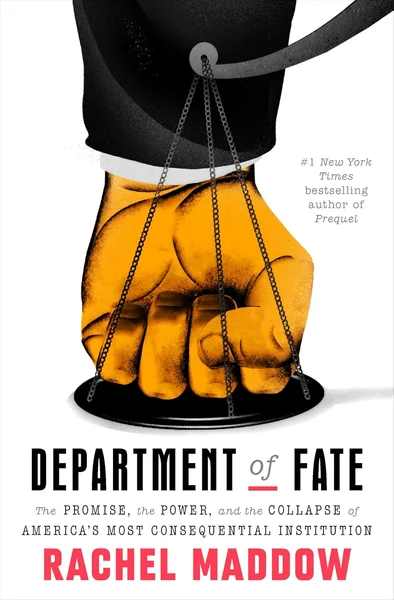
Department of Fate: The Promise, the Power, and the Collapse of America's Most Consequential Institution by Rachel Maddow front cover
Rachel Maddow traces the Justice Department from its 1870 founding through the first part of Donald Trump’s second term in Department of Fate: The Promise, the Power, and the Collapse of America's Most Consequential Institution. The book examines how the institution determined American political freedoms, economic winners and losers, and the application of equal protection under the law.
Maddow moves through the rise of the KKK, the Red Scare, civil rights violence, railroad barons crushing unions, cabinet scandals, the Reagan Administration, and the administration of Donald Trump. She argues that federal prosecutors repeatedly turned into a political tool, harassing individuals the executive branch viewed as enemies.
Maddow traces the department's role in the riotous chaos of the Red Scare. She details how railroad barons crushed unions through federal intervention and legal maneuvering.
The text examines cabinet scandals that reportedly make Watergate look like Mister Rogers’ Neighborhood. It also analyzes the faux erudite lawlessness of the Reagan Administration under Attorney General Ed Meese.
The text highlights specific historical figures who attempted to uphold the department's mission. It details Attorney General Amos T. Akerman’s courageous prosecution of murdering Klansmen in South Carolina during the 1860s.
It also covers John Doar’s fight against a newly emboldened KKK in Alabama a century later. Conversely, the book catalogs attorneys general who abused the office for personal or political gain.
Richard Olney cozied up to railroad magnates and jailed labor organizer Eugene V. Debs. Harry Daugherty used the office to line his own pockets under Presidents Warren G. Harding and Calvin Coolidge.

Why the History Matters

The book positions the Justice Department as America’s most consequential institution. It asserts that the department’s decisions about who to target and for what crimes dictated the course of the nation more than any other government action.
The narrative highlights a mix of heroism and treachery, noting that the department was steered by patriotism and self-sacrifice as often as by lust for power and corruption. It challenges the expectation of a simple declension narrative about Trumpian corruption, instead presenting a complex history of abuse and occasional justice.
Maddow argues that the department has consistently fixed the path of the nation’s political swings. Its political masters have determined which causes will succeed or fail and which people will thrive or be beaten down.
The institution ultimately reflects the broader class and racial conflicts in American history. Maddow’s analysis extends beyond federal prosecution to encompass the depth of those ongoing societal fractures.
The author concludes that the department’s long-forgotten purpose remains vital to the republic. She calls on Congress to beef up the Office of the Inspector General to restore its original mission.
The book frames this institutional history as a necessary rescue effort for a battered democracy. The text implies that the fate of the republic remains tied to the integrity of its legal enforcement mechanisms.

Strengths of the Narrative

The Kirkus Reviews praises Maddow’s “delightfully caustic, even Twainian” prose. The publication notes her “novelist’s skill for revelatory detail and a historian’s sharp eye for continuities.”
The Burton Book Review highlights the combination of deep archival research and narrative gift. It specifically points out the book's concrete prescription at the end, which proposes that Congress bar former campaign workers from serving at the Department, require a two-thirds Senate vote for political appointments, and strengthen the Office of the Inspector General.
QZ notes that the book does not present a straightforward account of decline. It frames the Justice Department as a politicized institution across its 150-year history.
The New York Times Book Review describes the work as a head-spinning chronicle of federal prosecution. The review notes that the text expands from a political indictment into a wide-ranging exploration of class and racial conflict.
The Burton Book Review calls the work history with a pulse and a purpose. It describes the book as meticulously researched, beautifully written, and a genuine pleasure to experience on audio.

Limitations and Audience

The book spans more than 150 years and covers several United States Attorneys General. The Burton Book Review describes it as a "big book in every sense" covering a cast of heroes and villains.
Some readers may find the sheer volume of historical detail and the breadth of the timeline demanding. The narrative relies heavily on Maddow’s established voice and perspective, which may feel familiar to regular viewers of her cable show.
The text does not shy away from partisan language, characterizing former officials as "narrow-minded and partisan hacks" or loyal and faithful parrots. Readers seeking a detached, purely academic account might find the tone too familiar.
The author directly addresses the collapse into thug rule under the Trump Administration. This framing ensures the book will resonate strongly with readers concerned about modern democratic erosion.
The narrative focuses heavily on the intersection of law, politics, and American identity. Readers who prefer detached, purely academic accounts might find the partisan framing too aggressive.

Is Department of Fate Worth Reading?

Weighing these reviews, the tension between meticulous archival research and a sharp, partisan critique defines the reception. The book delivers a clear, urgent argument about the fragility of democratic institutions through a sweeping historical lens.
It is best suited for readers who want a comprehensive examination of federal power and are comfortable with Maddow’s unapologetic tone. It may frustrate those seeking a shorter political overview or a detached political science text.
The book stands alongside other major works of institutional history that examine the intersection of law, politics, and American identity. Readers interested in the structural evolution of the republic will find the archival depth rewarding.
The text offers a robust critique of federal power through a sweeping historical lens. It provides a clear path for re-democratizing the republic through structural reform.

Sources & Further Reading

The key facts and claims in this review are grounded in the retrieved, verified sources listed below.

  1. Cited in this review
  2. 1
  3. Further reading
  4. 2
  5. 3
  6. 4
  7. 5
  8. 6
  9. 7
  10. 8
  11. 9
  12. 10
  13. 11

Age & Reading Level

Our age band

Adult

Our age band groups books for browsing; it isn't an age a review gave.

Content to know about

political polarization
historical corruption
democratic erosion

Skip if you're looking for a detached, purely academic account of federal power

From our readers

Reader reviews

No LuvemBooks readers have answered yet.

Read it? Was it right for you?

Books like Department of Fate

Curated picks for readers who enjoyed Department of Fate, with our reasoning for each match.

If you liked Department of Fate
Discussion

Reader comments