Skip to content
Reviewed

Read Time

7 min read

Our age bandAdult
Reader rating
4.4 · 1,348 Amazon ratings, as of Nov 2026
reader ratings, not a LuvemBooks score
Curated & edited by

LuvemBooks Editorial

How we create our reviews →
Share This Review
Blockers: Rebels in the Deep State by Michael Lewis front cover

Review

Blockers

Blockers: Rebels in the Deep State by Michael Lewis Review: A Warning on Public Service

Michael Lewis profiles six federal civil servants who resisted the early dismantling efforts of the Department of Government Efficiency, framing their struggle as a bureaucratic thriller. The book contrasts the complex realities of government machinery with the destructive stereotypes held by its attackers. Readers seeking a cohesive political argument may find the narrative fragmented, but those interested in the immediate human cost of administrative dismantling will find the profiles compelling.

Our age band: Adultpolitical cynicism · institutional decay

LuvemBooks Verdict

Best for

Readers seeking a compelling, character-driven examination of bureaucratic survival and the real-world impact of government dismantling will find Lewis's individual profiles deeply illuminating.

Worth it if

Worth reading if you want a tightly reported, thriller-paced account of the immediate operational fallout from the Department of Government Efficiency.

Skip if

Skip it if you are looking for a unified political argument or a definitive blueprint for administrative reform, as the episodic structure leaves the narrative unresolved.

Where reviewers agree and split

Readers rate it 4.4 on Amazon. The reviews we read that discuss it in depth split on some points:

  • Positive

    The Guardian · Press review: praises Lewis's skill at explaining complex bureaucracy

  • Negative

    Turn and Work · Book blog: criticizes lack of cohesion and satisfying thesis

    Overall verdicts are our summary of each review we read, from its headline, rating and conclusion.

    The Guardian praises Lewis's ability to cut through bureaucratic complexity and help readers understand their importance, while The New York Times calls the book an engrossing and enraging exploration of state realities. Conversely, Turn and Work criticizes the volume for lacking a satisfying thesis, arguing the individual stories fail to synergize into a cohesive whole.

    “knack for finding an angle that cuts through the complexity”

    — The Guardian

    “engrossing and enraging new book”

    — The New York Times
    Sources: The Guardian, Turn and Work
    4.4from 1,348 Amazon ratings, as of Nov 2026— reader ratings, not a LuvemBooks score

    Ask LuvemBooks

    Was this helpful?

    In Blockers: Rebels in the Deep State , Michael Lewis profiles six federal officials who resisted the early dismantling efforts of the Department of Government Efficiency, framing their struggle as a bureaucratic thriller. The Guardian praises Lewis's knack for finding an angle that cuts through complexity, while the book effectively contrasts the fictional idea of the state with its intricate realities. Readers seeking a cohesive view may find the narrative fragmented, but those interested in the immediate human cost of administrative action will find the character studies deeply illuminating.
    Is it worth reading?
    The book delivers a tightly reported, thriller-paced account of the direct consequences from the Department of Government Efficiency. The Guardian highlights Lewis's skill at isolating individual stories that illuminate institutional decay, making the profiles compelling for readers focused on institutional endurance. However, the loose segmented approach may frustrate those expecting a tightly wound thesis, and the cynical conclusion leaves the antagonists achieving their objectives without a satisfying counter-arc.
    Similar books
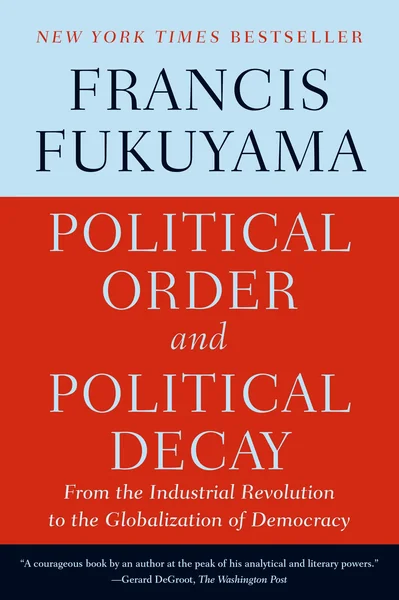
    Readers who enjoyed this examination of institutional endurance may also appreciate The Final Days by Bob Woodward and Carl Bernstein, Liar's Kingdom by Andrew Weissmann, and Political Order and Political Decay by Francis Fukuyama. While Lewis's earlier work, The Fifth Risk, documented the apathy of a previous transition, this volume shifts focus to officials driven by malicious intent rather than simple neglect.
    Who should read this?
    This book is best suited for readers seeking a compelling, character-driven exploration of institutional endurance and the real-world impact of government dismantling. It will resonate with those interested in the direct consequences of the Department of Government Efficiency and the specific tactics used by government workers to resist. It may disappoint readers looking for a definitive political blueprint or a redemptive conclusion to administrative battles.
    What age is it for?
    This book is written for adults, as its focus on complex bureaucratic processes, political cynicism, and systemic failure requires mature comprehension. The narrative deals with heavy themes of government restructuring and systemic errors that are best understood by an adult audience.
    What are the main themes?
    The book explores systemic failure, the operational impact of government restructuring, and the clash between dedicated government workers and officials with vague directives. It contrasts the theoretical model of the state with its actual operations, questioning what society does when the concept of public service loses its value.
    How does this compare to The Fifth Risk?
    Lewis returns to the machinery of government following his previous book, which documented the apathy of the first Trump transition. This volume examines officials motivated by deliberate harm, as core functions of the American government slowly disintegrate under a group of junior aides with a directive to cut budgets and staff.
    Summarize this book

    Summarize this book

    Lewis chronicles the early clashes between government workers and the Department of Government Efficiency, framing the conflict as a thriller of institutional endurance. The narrative begins at the United States Institute of Peace before moving to the IRS, the NIH, and the National Institute of Standards and Technology. By profiling six officials who refused the dismissive label of "Blocker," the book highlights the operational impact of government restructuring and the complex machinery of the American government.

    Follow up

    Which agencies are featured?
    What is the central conflict?
    How is the story structured?

    Synthesized from verified book data & published reviews · How we review

    Ask LuvemBooks

    What would you like to know about Blockers?

    Answers come from our editorial notes on this book. If we haven't covered something, we'll say so.

    Readers often ask

    Editorial Review

    We review the evidence: reader verdicts, gathered and weighed with AI assistance and edited by LuvemBooks, rather than one reader's first-hand take.

    Michael Lewis chronicles the early clashes between federal civil servants and the Department of Government Efficiency, framing the conflict as a thriller of bureaucratic survival. Readers seeking a cohesive political argument may find the narrative fragmented, but those interested in the immediate human cost of administrative dismantling will find the profiles compelling.
    Blockers: Rebels in the Deep State by Michael Lewis front cover
    Blockers: Rebels in the Deep State by Michael Lewis front cover

    The Premise and the Players

    The book examines the early days of Trump’s Department of Government Efficiency and the public servants it specifically targeted during the second administration, focusing on the immediate aftermath of the 2024 election. Lewis profiles six officials who refused to accept the dismissive label of "Blocker," a term used to characterize holdovers who obstructed the administration's aggressive agenda.
    The narrative begins at the United States Institute of Peace before moving to the IRS, the NIH, and the National Institute of Standards and Technology. Lewis introduces figures such as Lavingia, who worked to improve the IRS computer systems without needing financial compensation.
    The central conflict pits these dedicated workers against a wave of young officials armed with vague directives and a mandate to slash budgets and staff.

    Lewis’s Narrative Approach

    Lewis returns to the machinery of government following his earlier work, The Fifth Risk, which documented the apathy of the first Trump transition and the disruption caused by a new team almost completely uninterested in their jobs. This volume shifts focus to officials driven by malicious intent rather than simple neglect, as the core functions of the American government slowly disintegrate.
    The Guardian highlights Lewis's "knack for finding an angle that cuts through the complexity." The Living Lib characterizes the resulting text as a thriller featuring unlikely rebels confronting power-drunk villains.
    Lewis frames the officials behind DOGE as trapped by a stereotyped view of how the federal government operates, leading to an exodus of devoted public servants.

    Strengths and Readability

    Readers will find Lewis excels at isolating individual stories that illuminate the broader consequences of institutional decay, such as the recent wave of explosive diarrhoea across the US. The Guardian notes that the book contrasts the fictional idea of the state with its complex realities, making it harder to get people to focus on the machinery of the state.
    The Living Lib praises the book for asking what society does when the concept of public service loses its value. Lewis uses these individual profiles to illustrate how a lack of preparation and an overweening arrogance harm the case for genuine reform.

    Structural Limitations and Pacing

    Despite the strength of the individual vignettes, the book struggles to synthesize them into a unified narrative that justifies its book-length format. Turn and Work argues that the stories fail to synergize, resulting in a text where the antagonists achieve their objectives without a satisfying counter-arc.
    Turn and Work criticizes the work for offering no new ideas beyond a cynical observation that the system is broken. The Guardian acknowledges that bureaucracies are inherently difficult to make interesting, yet suggests Lewis largely overcomes this challenge by finding the people who make the machinery work.
    Readers expecting a tightly wound thesis may find the loose episodic structure frustrating.

    Is Blockers Worth Reading?

    The reception of Blockers reveals a clear divide regarding its structural cohesion and its ultimate success as a standalone political work. The Guardian views the book as an engrossing and enraging look at the slow disintegration of core government functions and the systemic errors of the current administration.
    Turn and Work dismisses the volume as a second-rate follow-up that reads better as a collection of magazine long-form pieces. The book is best suited for readers who want to understand the immediate operational fallout of DOGE and the specific tactics used by civil servants to resist.
    It will likely disappoint those seeking a definitive political blueprint or a redemptive conclusion to the administrative battles it describes.

    Sources & Further Reading

    The key facts and claims in this review are grounded in the retrieved, verified sources listed below.

    1. Cited in this review
    2. 1
    3. Further reading
    4. 2

      Michael Lewis, LuvemBooks

    5. 3
    6. 4
    7. 5
    8. 6
    9. 7

    Age & Reading Level

    Our age band

    Adult

    Our age band groups books for browsing; it isn't an age a review gave.

    Content to know about

    political cynicism
    institutional decay

    Skip if you're looking for a unified political argument or a definitive blueprint for administrative reform

    From our readers

    Reader reviews

    No LuvemBooks readers have answered yet.

    Read it? Was it right for you?

    Books like Blockers

    Curated picks for readers who enjoyed Blockers, with our reasoning for each match.

    Discussion

    Reader comments