
Michael Lewis
1
Books ReviewedAsk LuvemBooks about Michael Lewis
- Where should I start?
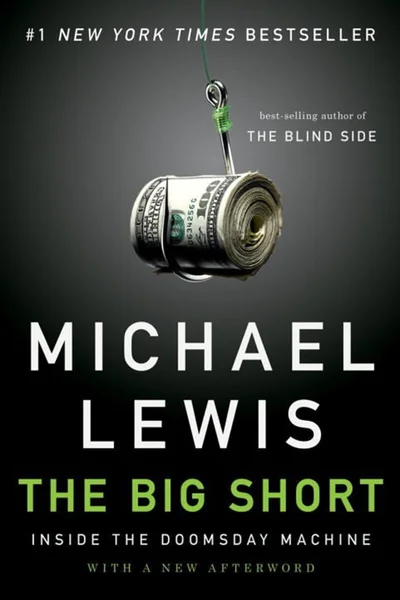
- If you're new to Michael Lewis, The Big Short is an excellent entry point and the title we've reviewed on LuvemBooks. It holds a reader rating of 4.8/5 on Amazon across 18 ratings, which reflects how effectively it balances genuine financial detail with human drama. Lewis introduces you to a cast of real-world characters — outsiders and contrarians — who predicted the 2008 mortgage crisis, making a sprawling economic disaster feel immediate and personal.
- What's their writing style?
- Lewis writes narrative nonfiction that is heavily character-driven — he typically anchors a large structural or institutional story in the specific experiences of a small group of people, often outsiders or skeptics. His prose is direct and clear, with a dry wit that keeps the tone from becoming academic, even when the subject matter is technically dense. He relies on deep reporting and tends to reconstruct scenes and dialogue in a way that reads more like literary journalism than conventional business writing.
- Books we've reviewed
- We've reviewed one Michael Lewis title on LuvemBooks so far: The Big Short, his account of the 2008 housing market collapse told through the traders who predicted it, which carries a reader rating of 4.8/5 on Amazon from 18 ratings.
- What genre does Michael Lewis write?
- Michael Lewis writes narrative nonfiction, with a strong focus on Business and Economics. His books are grounded in real events and real people, but he structures them with the momentum and character development more typical of literary fiction. Within that broad category, he specialises in stories about financial systems, institutional behavior, and the individuals who challenge or are crushed by them.
- What should I read after The Big Short?
- If The Big Short resonated with you, Flash Boys is a natural follow-up — it applies the same character-driven investigative approach to high-frequency trading and the question of whether modern stock markets are rigged. For something with a different subject but a similar structural lens, The Premonition examines the U.S. public health system's failures during the COVID-19 pandemic with the same mix of insider access and systemic critique.
Who is Michael Lewis?
Follow up
Synthesized from verified book data & published reviews · How we review
Press Enter to ask. Answers come from our editorial Q&A — start typing to see related questions.
Authors Like Michael Lewis

Edward S. Herman
Edward Samuel Herman was an American economist, media scholar and social critic.
1 book reviewed

Steven D. Levitt
Steven David Levitt is an American economist and co-author of the best-selling book Freakonomics and its sequels.
1 book reviewed

Stephen J. Dubner
Stephen Joseph Dubner is an American author, journalist, and podcast and radio host.
1 book reviewed
Simon Singh
Simon Lehna Singh, is a British popular science author and theoretical and particle physicist.
1 book reviewed

SuperSummary
SuperSummary is a subscription-based educational resource company founded in 2008 and based in San Francisco, United States. It publishes in-depth study guides featuring summaries, analyses, and expert insights on themes, characters, symbols, and more. With a library of over 10,000 titles, SuperSummary produces guides for works across a wide range of subjects and genres.
1 book reviewed
Mark Williams
Clifton Mark Williams (born 12 October) is a New Zealand literary scholar and editor. He co-edited the *Anthology of New Zealand Literature* (Auckland University Press, 2012) with Jane Stafford. He is also associated with works on Irish history and Celtic myths, as well as co-editing *The Mindful Way through Depression* alongside John Teasdale, Zindel Segal, and Jon Kabat-Zinn.
2 books reviewed