9 min read
4.6
· 1,096 Amazon ratingsShare This Review

Our review
The Final Days
The Final Days by Bob Woodward and Carl Bernstein Review: A Riveting, Contested Nixon Endgame
The Final Days is a 1976 non-fiction book by Bob Woodward and Carl Bernstein — the Pulitzer Prize–winning duo behind All the President's Men — chronicling Richard Nixon's last months in the White House, from the departure of Haldeman and Ehrlichman through Nixon's August 9, 1974 resignation. Newsweek called it "an extraordinary work of reportage on the epic political story of our time," and its New York Times bestseller status confirmed its cultural reach, though its anonymous-sourcing methodology drew pointed scrutiny from the start.
LuvemBooks Verdict
Best for
Readers who want an immersive, scene-by-scene account of the Nixon White House in collapse — especially those already familiar with All the President's Men and prepared to engage critically with anonymous-source reconstruction as a methodology.
Worth it if
Worth reading if you want one of the most extensively reported inside narratives of a presidency in crisis, and you're willing to weigh the dramatic granularity against the inherent limits of anonymous sourcing throughout.
Skip if
Skip it if you need a transparently sourced historical record — the fly-on-the-wall narrative style and blanket anonymity make it impossible to independently assess whose accounts are reliable and whose are self-serving.
What readers & critics say
Kirkus Reviews, in its original 1976 review, acknowledged the book's dramatic power but questioned how much of its reconstructed narrative — composed of direct quotes and desk-side detail — could actually be credited, given that no source is substantiated in any assessable way; Kirkus also flagged a notable omission: no clear account of whether Ford promised Nixon a pardon before the resignation. The Storygraph reader reception reflects ongoing admiration for the sheer density of detail and narrative Woodward and Bernstein packed into their account of Nixon's final months.
“The calculated unveiling — headlines in the daily press, excerpts in Newsweek — maximized exposure at the expense of the drama, even the limited 'truth' of the book.”
— Kirkus ReviewsAsk LuvemBooks
Was this helpful?
- Is it worth reading?
- For readers drawn to political history and narrative non-fiction, The Final Days delivers an immersive, granular account of how a presidency collapsed from the inside — one that Newsweek called 'an extraordinary work of reportage on the epic political story of our time.' Its cultural footprint alone marks it as essential Watergate literature: its scenes were vivid enough to inspire Saturday Night Live parody sketches featuring Dan Aykroyd as Nixon and John Belushi as Kissinger. The key caveat, raised by Kirkus Reviews at the time of publication, is that the book's anonymous-sourcing methodology means readers cannot independently assess the reliability of individual accounts, and a notable gap — whether Gerald Ford promised Nixon a pardon before the resignation — was never clearly filled. LuvemBooks recommends it as landmark reportage best engaged with critical awareness rather than as a transparently verified historical record.
- Similar books
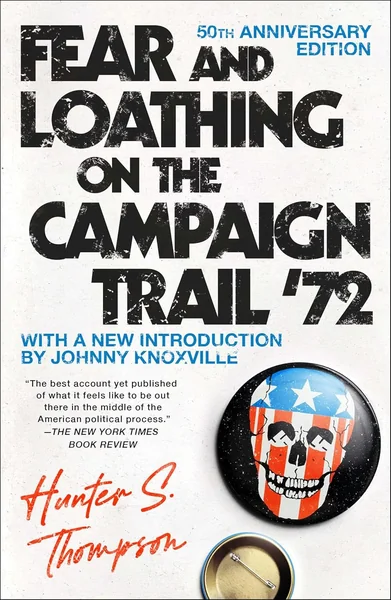
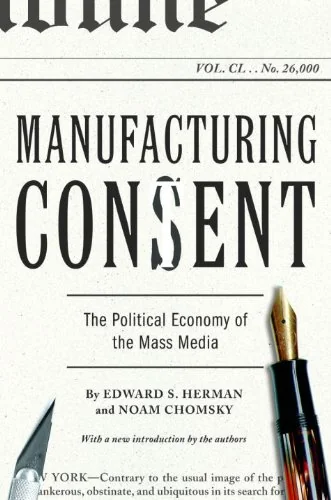
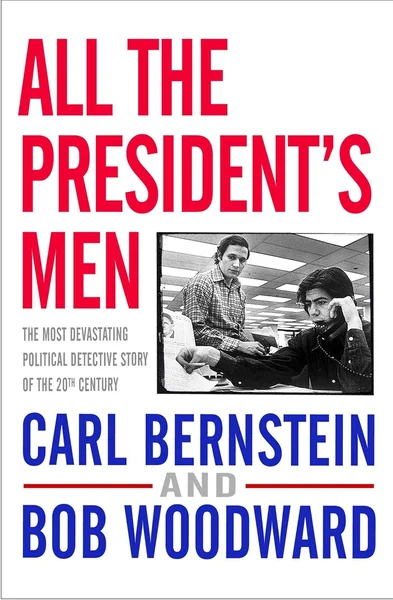
- Readers who find The Final Days compelling have several strong next reads. Woodward and Bernstein's own All the President's Men provides the essential companion context, following their live reporting on the Watergate break-in that preceded the White House collapse depicted here. Hunter S. Thompson's Fear and Loathing on the Campaign Trail '72 offers a contemporaneous, gonzo-journalism perspective on the political landscape that produced Nixon's final term. For readers interested in the broader dynamics of political power and media, Manufacturing Consent by Edward S. Herman and Noam Chomsky examines how mass media shapes political narratives — a useful lens for thinking critically about the sourcing debates surrounding The Final Days itself. Andrew Weissmann's Liar's Kingdom brings a more recent prosecutorial perspective to the question of executive accountability and political deception.
- Who should read this?
- The Final Days is best suited to adult readers with an interest in political history, American journalism, and the Watergate era specifically. It rewards readers who appreciate narrative non-fiction of high ambition — those willing to engage with reconstructed scenes and weigh the sourcing debates that come with them. Historians and journalism students will find it essential as a case study in anonymous-source political reporting, while general readers curious about how Nixon's presidency ended from the inside will find it deeply immersive. It is less suited to readers seeking a transparently documented, traditionally footnoted historical account.
- How does this compare to All the President's Men?
- All the President's Men, published in 1974, follows Woodward and Bernstein's live, first-person reporting on the Watergate break-in as they worked the story for The Washington Post. The Final Days, published in 1976, is a deliberate complement: it shifts perspective entirely inside the Nixon White House, reconstructing events the authors did not personally witness through 394 interviews conducted after the fact. Where All the President's Men is a journalism procedural with the authors at its center, The Final Days is a fly-on-the-wall political narrative centered on Nixon, Kissinger, Haig, and the administration's final unraveling — and it carries correspondingly greater methodological complexity, given its reliance on anonymous reconstruction rather than contemporaneous reporting.
- How was the book reported?
- After Nixon's resignation, Woodward and Bernstein took a leave of absence from The Washington Post and spent roughly two years on the project, hiring research assistants Scott Armstrong and Al Kamen. Together the team conducted 394 interviews with people involved in the events described. As the book's foreword explains, sources were granted anonymity but their accounts were treated as on the record, and no detail was included unless confirmed by at least two separate sources — J. Fred Buzhardt, for example, sat for eight extensive interviews. The resulting narrative adopts a 'fly on the wall' style, presenting reconstructed scenes and direct quotes as if the authors had been present, a methodology that has drawn scrutiny from historians and critics ever since.
- What's the book's cultural legacy?
- The Final Days was a publishing event from the start: pre-publication excerpts ran in Newsweek, which called it 'an extraordinary work of reportage on the epic political story of our time,' and it became a New York Times bestseller. Its cultural reach extended well beyond publishing — in the late 1970s, Saturday Night Live ran a recurring sketch based on scenes from the book, with Dan Aykroyd as Nixon, John Belushi as Kissinger, Chevy Chase as David Eisenhower, and Gilda Radner as Julie Nixon Eisenhower. That a work of political non-fiction could generate that level of sketch-comedy saturation speaks to how deeply it penetrated the public imagination, and it endures alongside All the President's Men as a foundational text of Watergate literature.
Summarize this book
Follow up
Synthesized from verified book data & published reviews · How we review
What would you like to know about The Final Days?
Answers come from our editorial notes on this book. If we haven't covered something, we'll say so.
Readers often ask
Our Review
This review covers the book's content, premise and published critical reception, not a first-hand reading.
What the Book Actually Covers
The Reporting Method Behind the Narrative
Cultural Reach and Lasting Significance
Where Kirkus Found It Wanting
Who This Book Is For — and Who Should Read It Critically
Sources & Further Reading
The key facts and claims in this review are grounded in the retrieved, verified sources listed below.
- 1
en.wikipedia.org
- 2
kirkusreviews.com
- 3
bobwoodward.com
- 4
newbookrecommendation.com
- 5
- 6
app.thestorygraph.com
- 7
- 8
books.google.com
Age & Reading Level
Recommended age
Adult
who it suits
Skip if you want a traditionally footnoted, transparently sourced historical record of the Nixon presidency rather than an anonymously sourced narrative reconstruction.
Reader reviews
Be one of the first readers to answer.
Read it? Was it right for you?
Books like The Final Days
Curated picks for readers who enjoyed The Final Days, with our reasoning for each match.

If you liked The Final Days