Skip to content
Reviewed

Read Time

7 min read

Our age bandAdult
Reader rating
4.6 · 1,079 Amazon ratings, as of Nov 2026
reader ratings, not a LuvemBooks score
Curated & edited by

LuvemBooks Editorial

How we create our reviews →
Share This Review
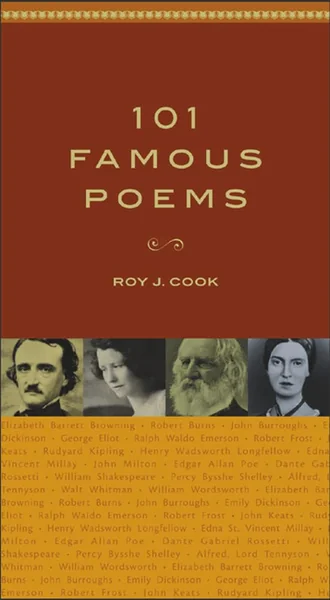
101 Famous Poems by Roy J. Cook front cover

Our review

101 Famous Poems

101 Famous Poems by Roy J. Cook Review: A Canonical Anthology

Originally published in 1916 and reissued in 2003, this anthology compiles 101 poems from major English-language writers. Compiled by Roy J. Cook, it offers a broad survey of canonical verse alongside comprehensive indexing. It remains a practical gateway for students and casual readers seeking established literary standards.
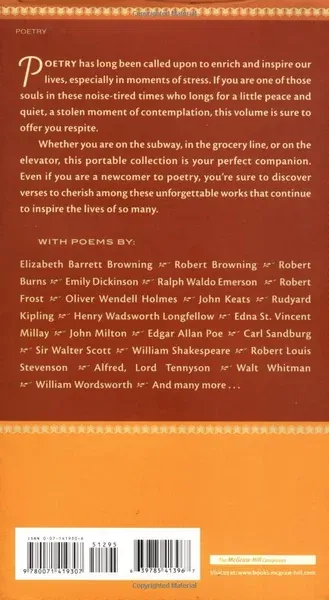

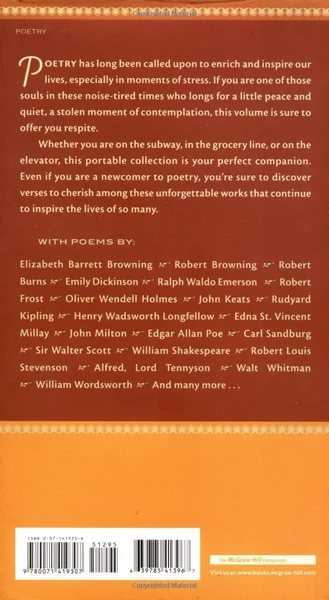
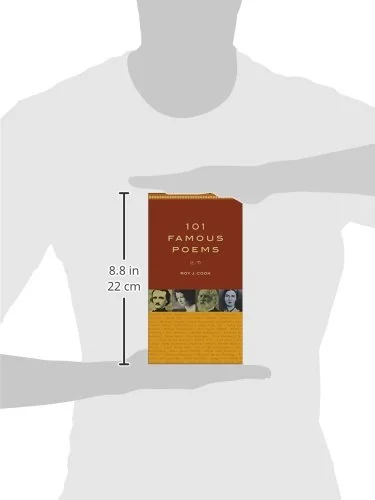
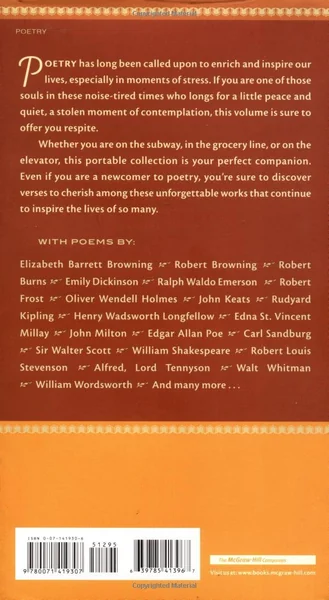
Back cover with a synopsis, a list of featured poets, and a barcode at the bottom.Front cover showing title, author, and author portraits, held by a grey silhouette with height measurements.Tap to enlarge
Our age band: Adult

LuvemBooks Verdict

Best for

Readers who seek a straightforward collection of canonical English poetry will find this anthology's comprehensive cross-referencing and broad survey of major writers to be a practical gateway.

Worth it if

Worth reading if you want a reliable, cross-referencable collection of widely recognized verses without scholarly commentary or modern interpretations.

Skip if

Skip it if you seek contemporary voices, deep literary analysis, or modern critical apparatus to accompany the classic texts.

Margot-Quotes Magazine on Margot Quotes rates the volume 2/3, noting its focus on foundational works like Poe’s and Leigh Hunt’s verses. Readers on LibraryThing praise the 'wonderful selection of poems from classic authors' while Classical CM Education highlights the utility of its author index and accompanying poet portraits.

Sources: margot-quotes.livejournal.com, librarything.com, classicalcmeducation.com
4.6from 1,079 Amazon ratings, as of Nov 2026— reader ratings, not a LuvemBooks score

Preview the book

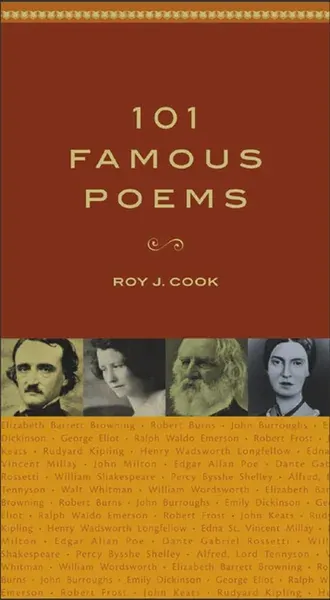
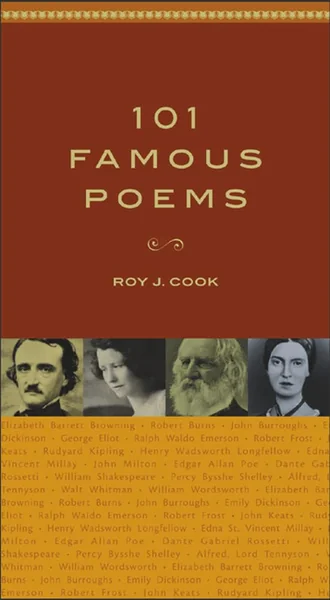
101 Famous Poems by Roy J. Cook front cover
Back cover with a synopsis, a list of featured poets, and a barcode at the bottom.
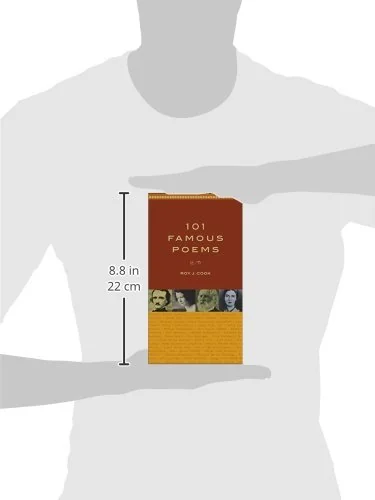
Front cover showing title, author, and author portraits, held by a grey silhouette with height measurements.

Ask LuvemBooks

Was this helpful?

101 Famous Poems by Roy J. Cook serves as a broad, utilitarian anthology of canonical English-language verse, originally compiled in 1916 and reissued in 2003. Its comprehensive indexing by title, author, and first line makes it a highly practical reference tool for general readers seeking established literary standards. Worth it as a reliable gateway into classic poetry for those who prioritize accessibility over scholarly analysis.
Is it worth reading?
It is worth reading if you need a reliable, cross-referencable collection without heavy commentary. The anthology succeeds as a functional toolkit for classroom use or personal reference, though it intentionally leaves interpretive work to the reader. The scope is limited by its early twentieth-century origins.
Similar books
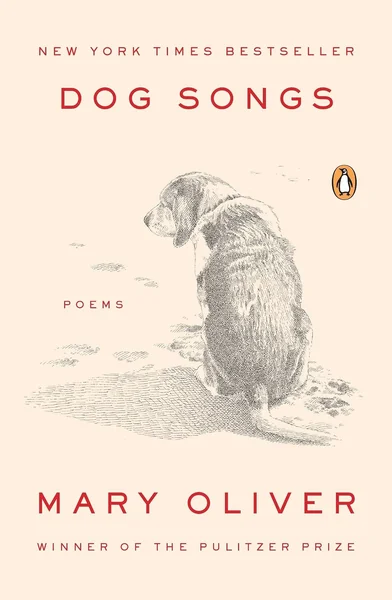
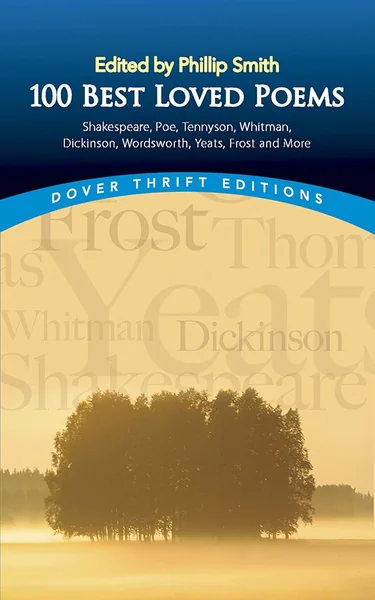
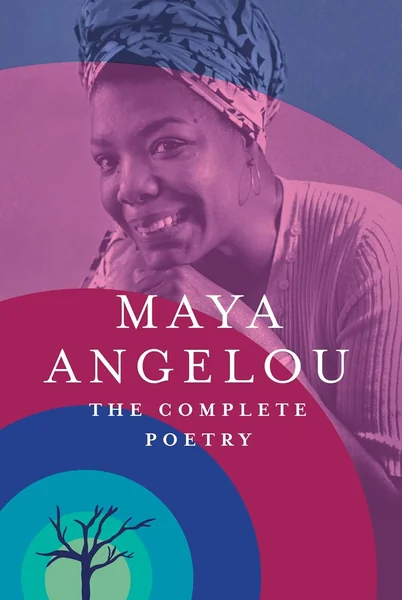
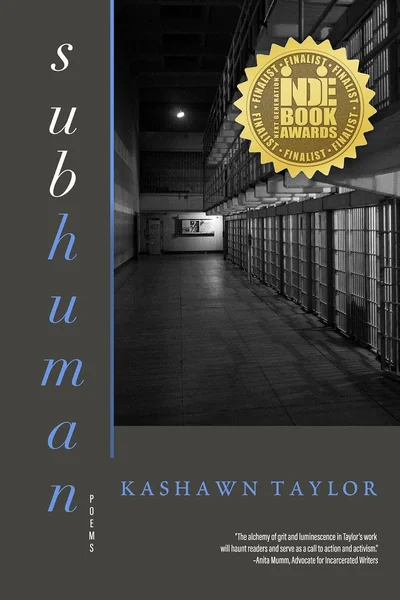
For readers seeking comparable collections, Mary Oliver's Dog Songs: Poems offers a focused, contemporary anthology, while Philip Smith's 100 Best-Loved Poems provides a similarly accessible survey of widely enjoyed works. Those interested in a broader, definitive collection might explore Maya Angelou's The Complete Poetry. Kashawn Taylor's Subhuman: Poems is included for readers who prefer modern, non-canonical voices, though it differs significantly in tone and era.
Who should read this?
This anthology is best suited for students, educators, and casual readers who want a straightforward resource for English poetry. It is ideal for those who prefer the poems themselves over academic critique or modern reinterpretations. Readers looking for thematic curation will likely find it too narrow.
What age is it for?
Written for adults, this anthology is appropriate for anyone interested in poetry. The content consists of classic English poetry, and while some themes reflect historical contexts, the primary consideration is reading comprehension and interest in the subject matter rather than age-restricted content.
What are the main themes?
The collection explores foundational themes of the English poetic canon, including divine and human love, the passage of time, solitude, and the beauty of nature. Poems like Leigh Hunt's Abou Ben Adhem delve into spiritual devotion, while Ella Wheeler Wilcox's Solitude meditates on facing life's hardships alone. The anthology serves as a general overview rather than a focused thematic study.
Is there an audiobook version?
Readers should check current retailer listings for specific narrators and runtime details. The text is primarily intended for visual study and quick reference rather than auditory consumption.
Summarize this book

Summarize this book

Compiled by Roy J. Cook and originally published in 1916, this anthology gathers 101 poems from major English-language writers. It functions primarily as an archive rather than a curated thematic journey, featuring works by authors like William Shakespeare, Edgar Allan Poe, and Robert Frost. The collection relies on a straightforward organizational method to aid navigation.

Follow up

What specific poems are included?
How is the book structured?

Synthesized from verified book data & published reviews · How we review

Ask LuvemBooks

What would you like to know about 101 Famous Poems?

Answers come from our editorial notes on this book. If we haven't covered something, we'll say so.

Readers often ask

Our Review

We review the evidence: published reviews and reader verdicts, gathered and weighed with AI assistance and edited by LuvemBooks, rather than one reader's first-hand take.

A long-standing anthology originally published in 1916 and reissued in 2003, this collection offers a broad survey of English-language verse that remains highly useful for students and casual readers alike.
The anthology compiles 101 poems from major English-language writers, tracing a lineage back to an original 1916 release. Compiled by Roy J. Cook and published by McGraw-Hill Education in 2003, the volume spans centuries of literary history.
It features foundational works by William Shakespeare, Robert Frost, Percy Bysshe Shelley, and Edna St. Vincent Millay. Margot-Quotes Magazine notes that the contributors range from Sir Walter Scott and Alice Cary to Ralph Waldo Emerson and Frank L. Stanton.
The anthology prioritizes breadth, gathering verses that established the English poetic canon during the nineteenth and early twentieth centuries. Henry Wadsworth Longfellow's "The Building of the Ship" appears as a narrative detailing the construction of a vessel as a symbol of the United States.
Ella Wheeler Wilcox's "Solitude" offers a meditation on facing life's hardest moments alone. James Whitcomb Riley's "Knee-Deep in June" appears as a reflection on the quiet beauty of relaxation.
Leigh Hunt's "Abou Ben Adhem" explores themes of divine and human love through a dream sequence. Poe's "The Bells" occupies a significant portion of the text, detailing the shifting emotions evoked by silver, golden, and brazen bells.

Editorial Design and Structure

The collection is fully indexed by title, author, and first line to aid navigation. Readers can locate specific pieces without difficulty, whether searching for Edgar Allan Poe or John Milton.
The volume relies on a straightforward organizational method to manage its extensive catalog of works. Roy J. Cook's compilation approach prioritizes accessibility over academic critique, presenting the poems in their original forms.
The comprehensive indexing system allows users to bypass chronological limitations and locate specific verses instantly. This structural choice transforms the book into a practical reference tool rather than a linear reading experience.
Educators and students benefit from the clear layout, which facilitates quick cross-referencing during study sessions. The absence of extensive annotations keeps the focus entirely on the source text itself.
Readers seeking scholarly commentary must look elsewhere, as the design intentionally leaves interpretive work to the audience.
Back cover with a synopsis, a list of featured poets, and a barcode at the bottom.

Critical Reception and Value

Retailer descriptions and independent reviews frame the book as a functional reference rather than a modern critical edition. The Margot Quotes review highlights the sheer range of contributors, noting names such as Alfred Tennyson and George Eliot alongside more familiar voices.
The retailer listing on Apple Books positions the volume as an introduction for those new to poetry or students assigned the text in literature classes. It emphasizes the historical practice of memorization, suggesting that studying these rhythmic patterns can expand the mind.
This broad accessibility remains its defining characteristic across available summaries. Critics and summaries consistently point to the volume's utility for classroom environments.
The indexing system allows educators and learners to cross-reference works efficiently. It functions as a sturdy archive of familiar verses rather than a curated thematic journey.
Readers looking for deep literary analysis will find the text relies on the poems' inherent strength rather than external commentary.
Front cover showing title, author, and author portraits, held by a grey silhouette with height measurements.

Is It Worth Reading?

Weighing the available commentary, the anthology serves best as a foundational toolkit rather than a literary deep dive. Its strength lies in its indexing and its curation of widely recognized verses, making it a practical resource for classroom use or personal reference.
Readers seeking modern critical apparatus or contemporary poetry will find the scope limited by its 1916 origins and 2003 reprint. However, for anyone looking to encounter the canonical works of Shakespeare, Poe, or Longfellow in a single, organized volume, it delivers on its promise of accessibility.
The collection remains a steady companion for those wishing to revisit established literary standards. It does not attempt to rewrite the canon but rather preserves it in a compact format.
The lack of contemporary voices is a deliberate reflection of its compilation date. Students and casual readers will appreciate the straightforward presentation of the material.
The anthology succeeds as a reliable gateway into classic English literature. Its enduring presence in print underscores its continued relevance for introductory poetry studies.

Sources & Further Reading

The key facts and claims in this review are grounded in the retrieved, verified sources listed below.

  1. Cited in this review
  2. 1
  3. Further reading
  4. 2
  5. 3
  6. 4
  7. 5
  8. 6
  9. 7

Age & Reading Level

Our age band

Adult

Our age band groups books for browsing; it isn't an age a review gave.

From our readers

Reader reviews

No LuvemBooks readers have answered yet.

Read it? Was it right for you?

Discussion

Reader comments