7 min read
Share This Review
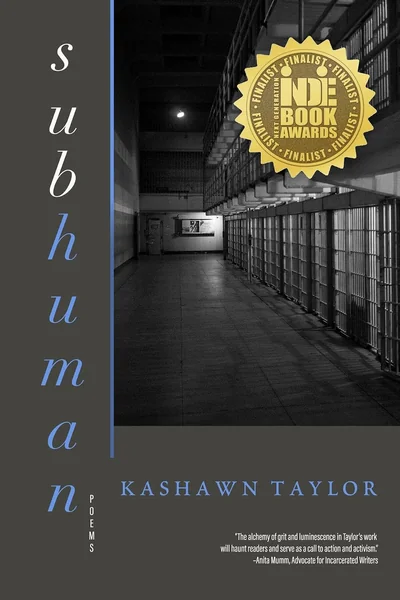
subhuman: Poems by Kashawn Taylor Review: A Debut Collection of Incarceration, Identity, and Refusal
Subhuman: Poems is Kashawn Taylor's debut full-length poetry collection, published by Wayfarer Books in March 2025. Written during Taylor's incarceration, the collection documents the physical, emotional, and spiritual toll of imprisonment through the perspective of a Black, queer man navigating life behind bars. This review is based on the collection's content as described by its publisher and published sources, and on reception from named literary outlets — not hands-on reading.
LuvemBooks Verdict
Best for
Readers already engaged with contemporary poetry who are drawn to socially urgent, intersectional work — particularly those interested in queer Black voices, prison literature, and writing that documents systemic injustice from the inside.
Worth it if
You seek lyric poetry that fuses unflinching personal testimony with political indictment, and you value the concentrated intensity of a debut voice that has already earned placement in Poetry magazine and praise from established poets.
Skip if
You prefer expansive, multi-part narrative arcs or want a substantial existing body of long-form critical reviews to consult before committing — the collection's compact ~80-page scope is deliberate, and the critical discourse around it is still in its early stages.
What readers & critics say
Wayfarer Books' own platform describes the collection as a work through which "Taylor refuses to be erased," noting his voice is "already making waves in the literary world" following features in Poetry magazine (wayfarermagazine.com). The University of Connecticut's English department confirmed the collection's March 2025 release by Wayfarer Books and the Poetry magazine placement, situating Taylor as a notable alumnus voice (english.uconn.edu).
Sources: Wayfarer Magazine, UConn English DepartmentAsk LuvemBooks
Was this helpful?
- Is it worth reading?
- For readers drawn to socially urgent contemporary poetry — work that documents systemic injustice from the inside rather than the outside — Subhuman: Poems offers a perspective that is both rare and rigorously crafted. Publisher and literary sources describe the collection as combining unflinching honesty with lyrical craft, and early recognition including a Poetry magazine placement and Darcie Dennigan's blurb signals that the work has cleared meaningful editorial bars even before wide critical review. The main caveat is that the broader critical discourse is still forming around this debut, so readers seeking a wealth of long-form critical assessments will find those limited for now.
- Similar books
- Readers who connect with Subhuman: Poems will find strong company in the curated titles shown below. Reginald Dwayne Betts's Felon similarly interrogates incarceration and Black identity through formally assured lyric poetry, while Patricia Smith's Incendiary Art delivers a searing, politically charged reckoning with race and violence in America. Danez Smith's Homie and Britteney Black Rose Kapri's Black Queer Hoe both centre queer Black voices in ways that speak directly to Taylor's intersectional project, and Tracy K. Smith's Wade in the Water offers another example of contemporary American poetry that fuses lyric interiority with urgent social witness. None of these curated titles are currently in the LuvemBooks catalogue, but all are widely available through major booksellers.
- Who should read this?
- Subhuman: Poems is most directly addressed to readers already engaged with contemporary American poetry — particularly those drawn to work that documents systemic injustice from the inside, and to those interested in queer Black voices in the current literary landscape. The collection also speaks to readers of prison literature, activists and educators focused on mass incarceration, and anyone seeking lyric interiority alongside political indictment. Readers who want hopeful or redemptive arcs, or those looking for expansive multi-part narrative structures, may find the collection's deliberately compressed scope and unflinching tone a challenging fit.
- What are the main themes?
- The central themes of Subhuman: Poems converge on imprisonment as a systematic process of erasure — stripping away identity, dignity, and humanity from those it confines. Taylor examines this across physical, emotional, and spiritual dimensions, with the intersecting vulnerabilities of Black identity and queer experience shaping how those losses are registered. The collection also engages with mass incarceration as a systemic crisis disproportionately affecting Black and brown communities, and with the documented heightened risks of violence and discrimination faced by LGBTQ+ individuals in prison settings. Running through these political concerns is a quieter counter-movement: the carving out of space for survival, imagination, and art even within conditions of extreme constraint.
- What is Taylor's literary background?
- Despite writing from within incarceration, Kashawn Taylor brings a formally trained and widely published background to Subhuman: Poems. He holds a BA in English and Psychology and an MA in English and Creative Writing, and his work has appeared across a range of respected outlets including The Indiana Review, the Prison Journalism Project, Querencia Press, Fugitives and Futurists, and The Shore Poetry — a wide editorial range for a writer still building a public profile. His poem "These Headphones Should Be Free" appeared in the April 2025 issue of Poetry magazine, one of the most significant platforms in American poetry, signalling that his debut arrives with credible institutional recognition already in place.
- How does this fit into prison literature?
- Wayfarer Books situates Subhuman: Poems explicitly within the ongoing crisis of mass incarceration in America, a system that disproportionately impacts Black and brown communities, and the collection joins a longer tradition of prison literature that includes writers from imprisoned or formerly imprisoned voices across American literary history. What distinguishes Taylor's contribution is the layering of queer testimony onto that tradition — the collection documents not only the general conditions of imprisonment but the specific, intersecting vulnerabilities faced by a Black, queer man behind bars. The title's directness — Subhuman — also places the work in conversation with a tradition of incarcerated writing that refuses to accept the dehumanising terms imposed by punitive systems.
Summarize this book
Follow up
Synthesized from verified book data & published reviews · How we review
Press Enter to ask. Answers come from our editorial Q&A — start typing to see related questions.
Age & Reading Level
Recommended age
Adult
Reading level
Adult
3 content notes · who it suits
Content to know about
Best for: Adults / mature older teens — the collection's unflinching documentation of incarceration, racial erasure, and the specific vulnerabilities of a queer Black man in prison calls for a mature readership.
Skip if you are looking for hopeful or redemptive narrative arcs and prefer poetry that holds space for resolution.
Our Review