8 min read
Share This Review

Our review
The Unowed Universe by Tobias M. Kohl Review: Ambitious Science-Grounded Philosophy for Today
The Unowed Universe: A 21st-Century Philosophy Grounded in Science by Tobias M. Kohl is a sweeping philosophical work published by Table Bot Editions in April 2026, in which Kohl — an independent researcher holding a PhD in molecular biology with a background in pharmaceutical R&D — constructs a science-informed metaphysical framework that engages the philosophy of science, naturalized Kantian epistemology, and broader questions about the nature of reality. At 692 pages, it is a demanding, book-length argument rather than a survey, designed for readers willing to follow a sustained and technically ambitious inquiry.
 Tap to enlarge
LuvemBooks Verdict
Best for
Readers with existing grounding in both philosophy (particularly Kantian epistemology and philosophy of science) and the physical sciences who are drawn to ambitious, system-building works that treat empirical findings — especially from physics and biology — as genuinely shaping philosophical conclusions rather than as illustration.
Worth it if
Worth engaging with if you're interested in what a scientifically disciplined, cross-traditional philosophical framework looks like when built from outside the professional academy — particularly around the question of what Kantian epistemology can survive contact with modern physics.
Skip if
Skip it if you're a general reader without background in philosophy or the physical sciences, a specialist philosopher expecting deep engagement with the granular state of professional debates, or a digital reader who depends on Kindle accessibility features like Word Wise or X-Ray.
What readers & critics say
No substantive critical reviews of this specific title were found in the retrieved sources. Associated material on PhilArchive confirms the book's core thesis — the naturalization of Kantian epistemology developed in Chapter 4 — and notes that the philosophical argumentation was developed through iterative dialogue with an AI assistant, a methodology the author acknowledges openly.
Sources: PhilArchiveAsk LuvemBooks
Was this helpful?
- Is it worth reading?
- For readers in philosophy of science, or scientists drawn to foundational metaphysical and epistemological questions, The Unowed Universe offers something genuinely uncommon: a philosophical framework that keeps scientific results substantively in view rather than invoking scientific terminology as window dressing. The empirically trained perspective Kohl brings from his molecular biology PhD and pharmaceutical R&D career is rarely found in philosophical treatments of metaphysics, and the book's cross-traditional engagement with both analytic and continental philosophy broadens its conceptual toolkit in ways most contemporary works in either lineage cannot match. The principal caveat is that this is not a work for the casually curious — the 692-page argument presupposes real background in both philosophy and the physical sciences, and specialist philosophers may find points where engagement with the professional literature falls short of the granular state of current debates.
- Similar books
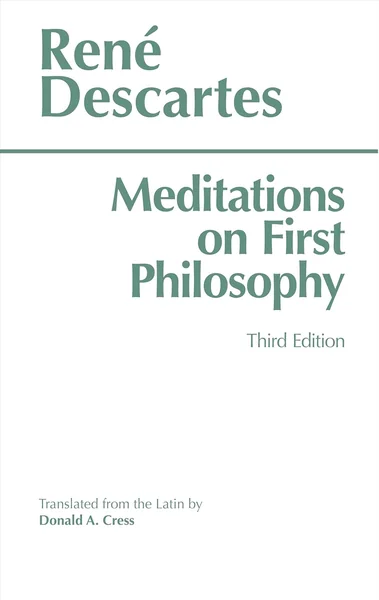
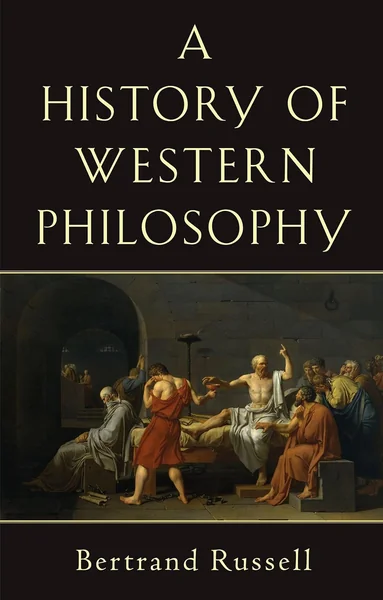
- Readers drawn to The Unowed Universe's engagement with foundational philosophical questions will find useful companions in several works rendered on this page. Immanuel Kant's Critique of Pure Reason is the direct ancestor of Kohl's project — the text whose epistemology and a priori geometry The Unowed Universe sets out to naturalize. René Descartes' Meditations on First Philosophy offers a foundational entry point into the epistemological questions about the structure of knowledge that Kohl revisits through a scientific lens. Bertrand Russell's The Problems of Philosophy provides an accessible but rigorous overview of the same core questions about reality and knowledge. For readers who want philosophical breadth in a single volume, Will Durant's The Story of Philosophy traces the tradition Kohl is engaging. Simon Blackburn's Think: A Compelling Introduction to Philosophy is the most accessible gateway into the analytic philosophical vocabulary the book draws on.
- Who should read this?
- The Unowed Universe is most squarely aimed at readers in philosophy of science and at scientists — particularly those with a background in physics or biology — who are drawn to foundational questions about the nature of reality and the limits of knowledge. Readers already versed in Kantian epistemology and familiar with how general relativity reshaped geometry's philosophical status will be best positioned to follow the argument. Those with an interest in cross-traditional philosophy — willing to move between analytic and continental frameworks — will find the book's conceptual range especially rewarding. General readers without prior grounding in both philosophy and the physical sciences are not the intended audience, and the book makes no concession to accessibility.
- How does the book use science philosophically?
- The Unowed Universe's most distinctive feature is its commitment to keeping scientific results genuinely in view rather than treating them as occasional ornaments to an argument that proceeds independently of them. The treatment of general relativity and Kantian geometry is the clearest example: rather than dismissing Kant wholesale or defending him uncritically, Kohl uses Einstein's demonstration that space curves in the presence of mass and energy — making geometry empirical rather than innate — as a diagnostic tool to identify precisely what in Kant can be salvaged and what cannot. This approach, letting the science actually reshape philosophical conclusions, distinguishes the work from philosophy that merely invokes scientific terminology without engaging scientific content.
- What should I know about how it was published?
- The Unowed Universe was published in April 2026 by Table Bot Editions, Kohl's own imprint — placing it outside the mainstream academic publishing apparatus entirely. The review notes this is directly relevant to how specialist readers will approach the book: professional philosophers in metaphysics or epistemology may scrutinize the depth of engagement with professional literature more carefully than they would with a university press title. The author also openly acknowledges that some of his philosophical argumentation was developed through iterative dialogue with an AI assistant, a methodology documented in associated papers on PhilArchive.
- How difficult is this book to read?
- The Unowed Universe is a demanding text by any measure. At 692 pages, it is a sustained, technically ambitious argument rather than a survey, and it moves between philosophy of science, Kantian epistemology, and broader metaphysics in ways that presuppose meaningful prior background in both philosophy and the physical sciences. The review is explicit that general readers or those new to either field will find the argument difficult to follow. Digital readers face an additional friction: the Kindle Print Replica format does not support enhanced typesetting, Word Wise, X-Ray, or Page Flip, limiting the navigability that a text of this length and density would normally benefit from.
Summarize this book
Follow up
Synthesized from verified book data & published reviews · How we review
Press Enter to ask. Answers come from our editorial Q&A — start typing to see related questions.
Age & Reading Level
Recommended age
Adult
Reading level
Adult
who it suits
Skip if you are looking for an accessible introduction to philosophy or science without deep prior background in both fields.
Our Review
What the Book Is and What It Argues
An Unusual Author Profile
Scope, Structure, and Engagement with Existing Debates
Genuine Strengths
Limitations and Who May Struggle
Sources & Further Reading
The key facts and claims in this review are grounded in the retrieved, verified sources listed below.
- 1
edinburghuniversitypress.com
- 2
philpapers.org
- 3
philarchive.org
Books like The Unowed Universe
Curated picks for readers who enjoyed The Unowed Universe, with our reasoning for each match.
If you liked The Unowed Universe