

8 min read
4.7
· 1,986 Amazon ratingsShare This Review
The Four Loves by C. S. Lewis Review: A Timeless Christian Philosophical Inquiry into Love
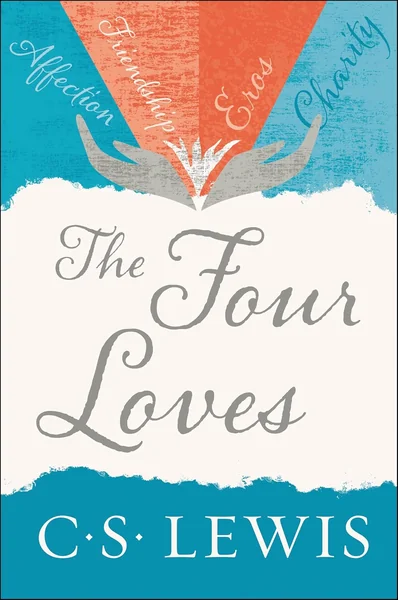
First published in 1960 and rooted in a series of 1958 radio talks, The Four Loves is C. S. Lewis's philosophical and theological examination of human love, structured around four Greek categories — Affection (storge), Friendship (philia), Eros, and Charity (agape) — and the ways each both reflects and falls short of divine love.
LuvemBooks Verdict
Best for
Readers drawn to Christian philosophy and the ethics of relationship who want a structured, accessible framework for examining the full range of human loves — from everyday affection to the theological ideal of charity.
Worth it if
You are willing to engage with Lewis's explicitly Christian theological premises on their own terms, or are at least curious about the intellectual tradition he represents — the philosophical scaffolding of Need-love versus Gift-love rewards thoughtful engagement even beyond those premises.
Skip if
You are looking for a rigorous academic treatment of the classical Greek tradition on love, or approach the text without any interest in Christian theology — the argument's elevation of Charity as the highest love is inseparable from Lewis's faith commitments in a way that may frustrate secular readers.
What readers & critics say
Kirkus Reviews praised the work at publication as "written with a deep perception of human beings and a background of excellent scholarship," noting Lewis's proposal that all loves are ultimately a search for, and sometimes a denial of, the love of God. The book's Wikipedia entry confirms its enduring status as a work of Christian and philosophical inquiry grounded in thought experiments, and notes that its radio-broadcast origins were themselves controversial for their candor about sex — a marker of Lewis's willingness to engage directly with difficult territory.
“Written with a deep perception of human beings and a background of excellent scholarship.”
— Kirkus ReviewsAge & Reading Level
Recommended age
Adult
Reading level
Adult
who it suits
Skip if you want a secular philosophical treatment of love with no theological framework or Christian premises.
In This Review
- What Works & What Doesn't
- What the Book Actually Is
- The Central Argument and Its Architecture
- Significance and Place in the Canon
- Genuine Strengths
- Limitations and Ideal Audience
What Works & What Doesn't
What Works
- Structured taxonomy of four distinct loves — Affection, Friendship, Eros, and Charity — gives readers a clear and memorable framework for examining human relationships
- Grounds abstract philosophical distinctions (Need-love vs. Gift-love, Need-pleasures vs. Appreciative love) in concrete, recognizable human examples
- Engages honestly with the dangers and distortions each love is capable of, including possessive parental love and the perils of Eros, rather than offering an idealized account
- Compact at 191 pages, making a dense philosophical and theological subject accessible without requiring specialist background
- Rooted in Lewis's characteristic project of making Christian ideas intellectually rigorous and available to a general audience
What Doesn't
- The explicitly Christian theological framework — particularly the elevation of Charity as the highest love — is inseparable from the argument, limiting its full purchase for readers who do not share those premises
- The essayistic, thought-experiment approach means the treatment of each love varies in depth, and readers seeking rigorous academic engagement with the broader classical tradition may find the scope insufficient
What the Book Actually Is
The Central Argument and Its Architecture
Significance and Place in the Canon
Genuine Strengths
Limitations and Ideal Audience
Frequently Asked Questions
Sources & Further Reading
The key facts and claims in this review are grounded in the retrieved, verified sources listed below.
- Cited in this review
- 1
en.wikipedia.org
- 2
barnesandnoble.com
- 3
openlibrary.org
- Further reading
- 4
C. S. Lewis, Wikipedia
- 5
epubbooks.com
- 6
nathaneberline.com
- 7
- 8
newbookrecommendation.com
Related Reviews
Reviews of books we picked for readers who enjoyed The Four Loves.
Reader Comments
No comments yet
Be the first to share your thoughts!