8 min read
4.6
· 2,802 Amazon ratingsShare This Review
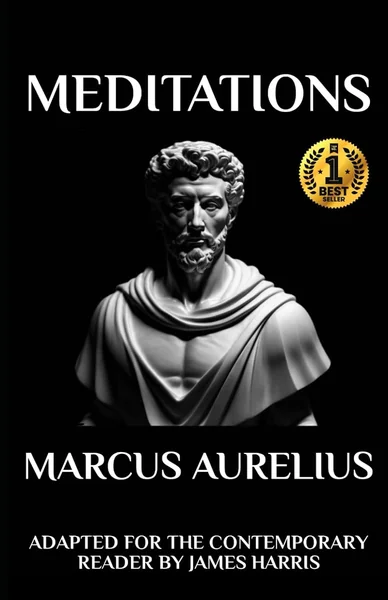
Marcus Aurelius - Meditations: Adapted for the Contemporary Reader by Marcus Aurelius & James Harris Review: Ancient Stoic Wisdom, Modernized for Today
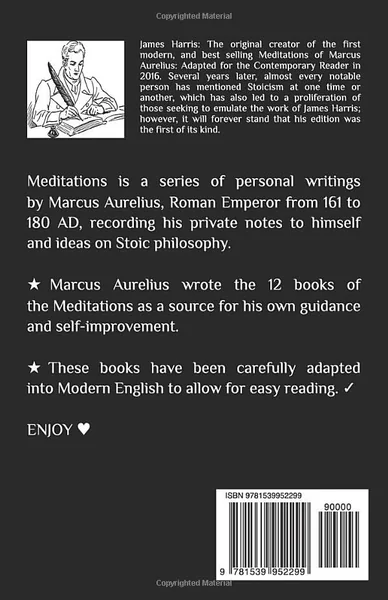
James Harris's adaptation of Marcus Aurelius's Meditations brings one of antiquity's most revered philosophical texts into a form designed for modern readers, preserving the private Stoic reflections of a Roman emperor while reshaping the language for contemporary accessibility — a worthy entry point for those new to Stoic philosophy, though readers seeking scholarly rigor may prefer a traditional critical edition.
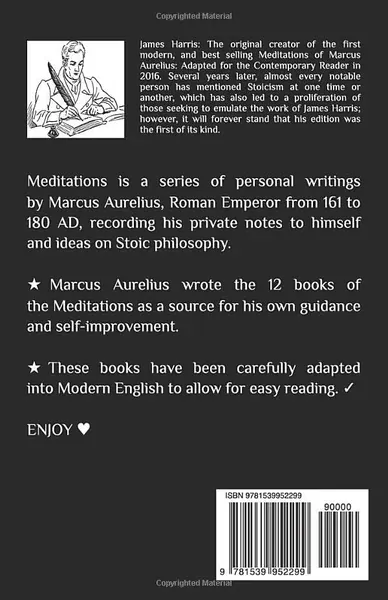 Tap to enlarge
LuvemBooks Verdict
Best for
First-time readers of Marcus Aurelius who are drawn to Stoicism through contemporary self-improvement culture and want to engage with the Meditations without the friction of archaic translation language.
Worth it if
You are new to Stoic philosophy and want an accessible, modernised entry point into Marcus Aurelius's private reflections on virtue, resilience, and self-discipline without the demands of a scholarly critical edition.
Skip if
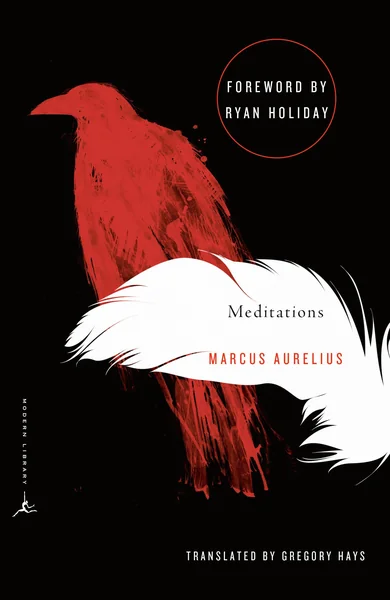
You already have a grounding in Stoic thought or are studying Marcus Aurelius academically — established critical editions such as Gregory Hays's or C. Gill's Oxford translation will serve you far better, offering the textual rigour, scholarly introduction, and philosophical annotation this self-published adaptation does not provide.
What readers & critics say
Wikipedia notes that the Meditations stands as "one of the most important sources for the modern understanding of ancient Stoic philosophy," while the Stanford Encyclopedia of Philosophy describes it as offering readers "a unique opportunity to see how an ancient person — indeed an emperor — might try to live a Stoic life." Kirkus Reviews, reviewing a separate modern translation of the same work, praised such contemporary renderings for making "Marcus' advice hit home in an English of unaffected dignity," characterising the Meditations as "a classic work of philosophical advice, rendered into our vivid modern vernacular."
“A classic work of philosophical advice, rendered into our vivid modern vernacular.”
— Kirkus ReviewsAsk LuvemBooks
Was this helpful?
- Is it worth reading?
- For readers new to Stoicism or to Marcus Aurelius, Harris's adaptation is a genuinely useful entry point: it removes the archaic language barrier that can make older translations feel remote, and it preserves the full breadth of all twelve books. The underlying text remains one of the most significant philosophical documents from antiquity — Wikipedia's reception overview identifies it as 'one of the most important sources for the modern understanding of ancient Stoic philosophy.' Those who already have a grounding in Stoic thought, or who are approaching Marcus Aurelius as part of serious philosophical study, will find established critical editions — such as Gregory Hays's translation or C. Gill's Oxford University Press edition — more rewarding, given this adaptation's lack of scholarly apparatus.
- Similar books
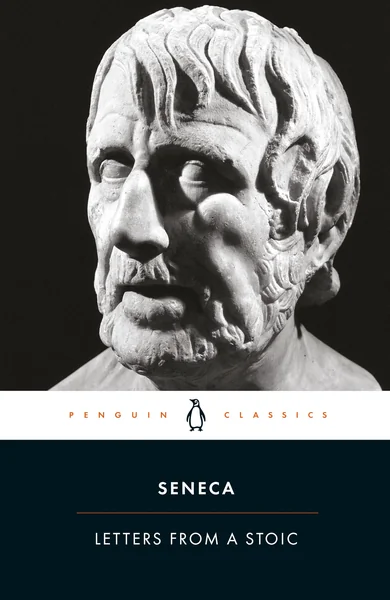
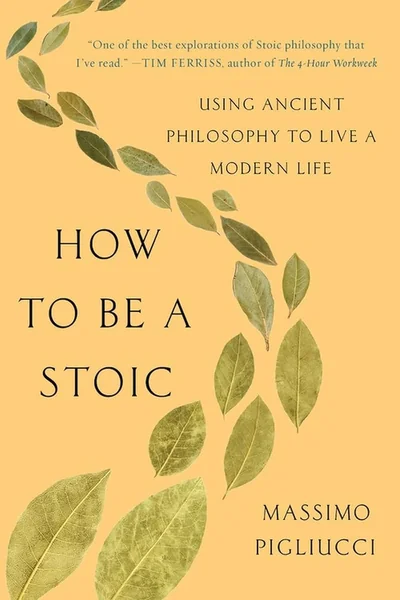
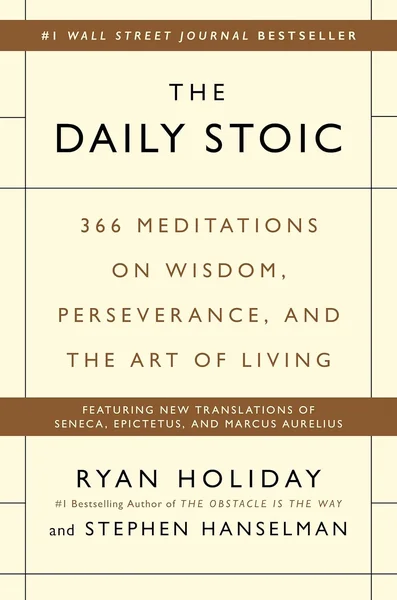
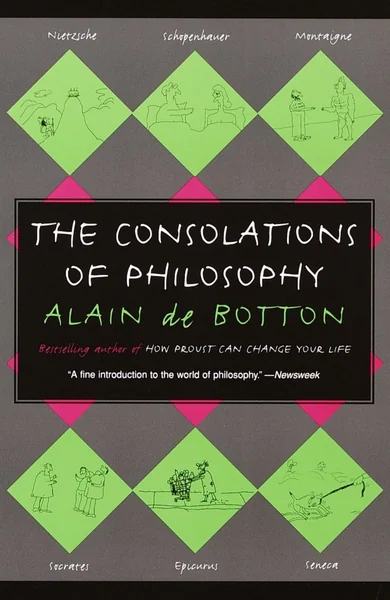
- Readers drawn to this adaptation of Meditations have several strong companion titles to explore. The standard critical edition, Meditations by Marcus Aurelius, offers the same text with greater scholarly rigour and is ideal for those ready to go deeper. Letters from a Stoic by Lucius Annaeus Seneca provides another primary Stoic voice from antiquity, while Massimo Pigliucci's How to Be a Stoic: Using Ancient Philosophy to Live a Modern Life bridges ancient Stoic principles and contemporary application in an accessible way. Ryan Holiday's The Daily Stoic: 366 Meditations on Wisdom, Perseverance, and the Art of Living similarly targets the practical self-improvement audience. For readers interested in broader philosophical consolation, Alain De Botton's The Consolations of Philosophy and Viktor E. Frankl's Man's Search for Meaning offer modern perspectives on meaning and resilience that resonate with Stoic themes.
- Who should read this?
- Harris's adaptation is best suited to first-time readers of Marcus Aurelius, particularly those drawn to Stoicism through contemporary interest in practical philosophy and self-improvement. It is deliberately designed to reduce the language barrier created by older translations, making the text approachable for anyone encountering Stoic ideas for the first time. Readers who already have a grounding in Stoic thought, or who are approaching Meditations as part of a broader study of ancient philosophy, will find critical editions — such as Gregory Hays's or C. Gill's Oxford University Press translation — more rewarding, given their scholarly apparatus and greater fidelity to Marcus's original Greek.
- About Marcus Aurelius
- Marcus Aurelius (April 26, 121 CE – March 17, 180 CE) was a Roman Emperor who reigned from 161 to 180 CE. Born into a wealthy patrician family in Rome, he was raised by his mother and paternal grandfather after his father's death. He is best known for the Meditations, a series of private writings on Stoic philosophy that remain a key source for understanding ancient Stoicism.
- How does this compare to other editions?
- Harris's adaptation sits at the accessible end of the spectrum: it modernises Marcus Aurelius's language for contemporary readers and frames the text as a practical guide, but it is a self-published CreateSpace release without the editorial apparatus — introductions, textual notes, cross-references to Epictetus or Chrysippus — found in critical editions. By contrast, C. Gill's Oxford University Press translation and the Loeb Classical Library volumes prioritise philological precision and annotation, while Gregory Hays's widely praised version is considered a gold standard for combining readability with scholarly fidelity. Readers who begin with Harris and then encounter Hays or Gill may find meaningful differences in nuance.
- Why is this text historically important?
- Wikipedia's reception overview identifies Meditations as 'one of the most important sources for the modern understanding of ancient Stoic philosophy,' and the Stanford Encyclopedia of Philosophy highlights it as offering 'a unique opportunity to see how an ancient person — indeed an emperor — might try to live a Stoic life.' Unlike most Stoic texts, the Meditations was not written for an audience: it is a private diary of self-examination, composed by a man who simultaneously commanded one of the ancient world's most powerful empires. The column and equestrian statue of Marcus Aurelius erected in Rome in celebration of his military victories still stand today, testifying to the extraordinary public figure behind these intensely private reflections.
Summarize this book
Follow up
Synthesized from verified book data & published reviews · How we review
Press Enter to ask. Answers come from our editorial Q&A — start typing to see related questions.
Age & Reading Level
Recommended age
Adult
Reading level
Adult
who it suits
Skip if you want a rigorously annotated scholarly translation with textual notes, cross-references, and a critical introduction.
Our Review
What This Book Is and Contains
The Significance of the Source Text
What the Adaptation Is Designed to Do
Genuine Limitations to Consider
Who Will Benefit Most From This Edition
Sources & Further Reading
The key facts and claims in this review are grounded in the retrieved, verified sources listed below.
- Cited in this review
- 1
plato.stanford.edu
- 2
en.wikipedia.org
- Further reading
- 3
- 4
- 5
Books like Marcus Aurelius - Meditations
Curated picks for readers who enjoyed Marcus Aurelius - Meditations, with our reasoning for each match.
If you liked Marcus Aurelius - Meditations