Philippe de Vosjoli
Robert Mailloux
Susan Donoghue
Roger Klingenberg
Jerry Cole
7 min read
4.7
· 314 Amazon ratingsShare This Review
Our review
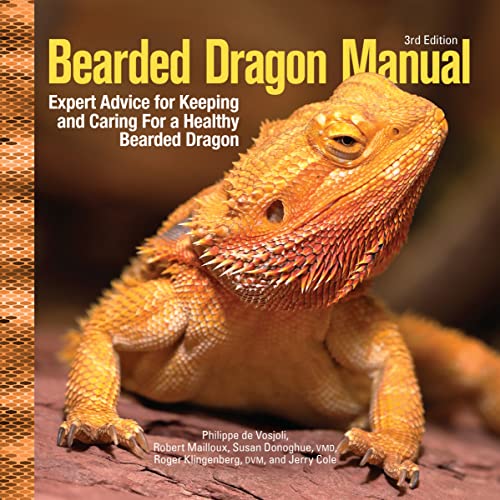
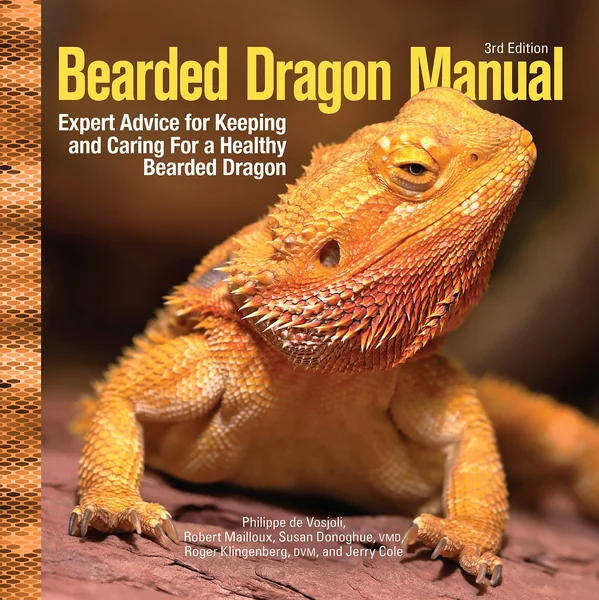
Bearded Dragon Manual, 3rd Edition by Philippe de Vosjoli et al. Review: The Authoritative Multi-Expert Care Guide
The Bearded Dragon Manual, 3rd Edition, published by CompanionHouse Books in 2022, is a comprehensive reptile care reference co-authored by five specialists — including herpetoculture pioneer Philippe de Vosjoli and veterinary nutrition diplomate Susan Donoghue, VMD — covering the full spectrum of bearded dragon husbandry, from enclosure setup and feeding to breeding, disease, and species characteristics. This review is based on published sources and the book's documented content and reception, not hands-on use.


 Tap to enlarge
LuvemBooks Verdict
Best for
Bearded dragon owners — first-time or experienced — who want a thorough, expert-grounded reference covering enclosure setup, nutrition, breeding, and disease management rather than a brief introductory pamphlet.
Worth it if
You want an unusually credentialed, multi-specialist manual — combining Philippe de Vosjoli's decades of herpetoculture expertise with a board-certified veterinary nutritionist's input — to serve as a sustained, comprehensive reference for the full arc of bearded dragon care.
Skip if
Casual or first-week owners looking only for a quick-start overview may find the technical depth and breadth more than they need at the outset.
What readers & critics say
Books Google describes this third edition of the best-selling manual as "packed with valuable information" to help owners "take quality care" of their pet, and frames the book's core rationale around the fact that, as cold-blooded creatures, reptiles' needs are not instinctively understood the way a cat or dog's would be — a gap the manual is explicitly designed to close.
Sources: Google Books, Google BooksPreview the book

Ask LuvemBooks
Was this helpful?
- Is it worth reading?
- For bearded dragon owners seeking a thorough, expert-grounded reference, the Bearded Dragon Manual, 3rd Edition is among the most credentialed options available in consumer pet guides. The combination of Philippe de Vosjoli's decades of herpetoculture experience — including authorship of more than twenty reptile care books and the Josef Laszlo Memorial Award — with Susan Donoghue's veterinary nutrition diplomate credential is genuinely unusual for this category. Readers wanting a serious, multi-topic reference covering everything from enclosure decisions to disease management will find strong value here. Those looking only for a brief introductory overview may find the depth more than they need at the start.
- Similar books
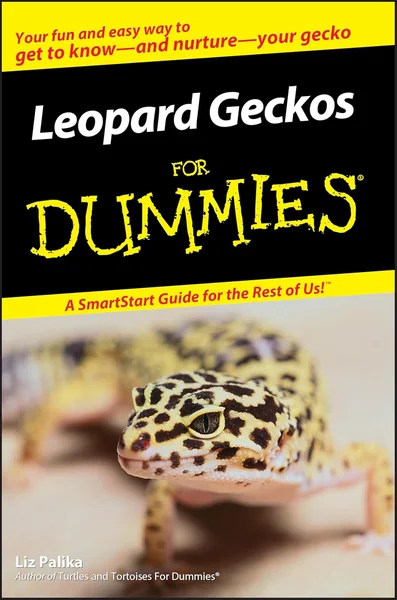
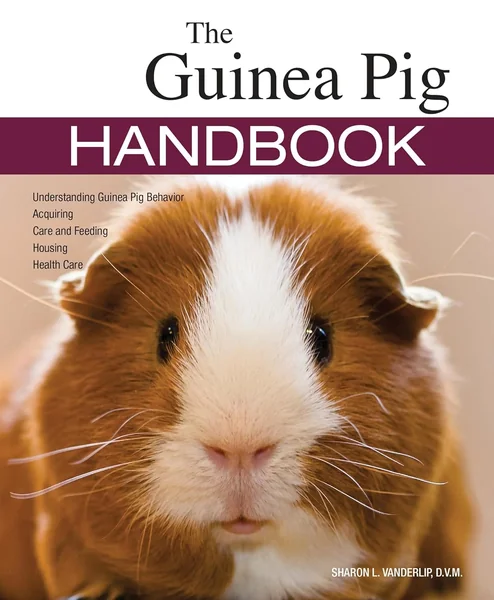
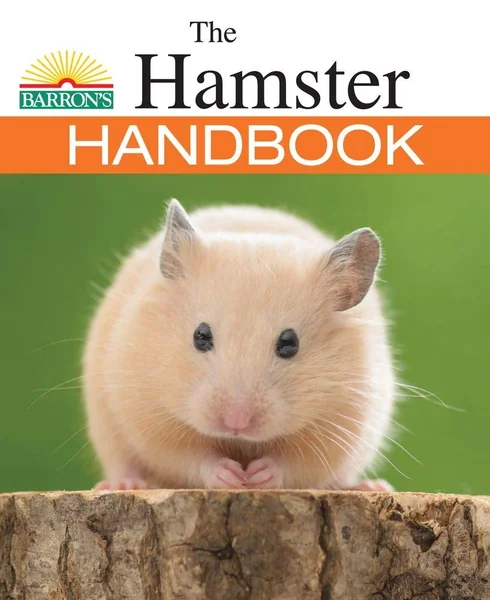
- Readers who value expert-assembled reptile and exotic pet references may also find interest in The Box Turtle Manual by Philippe de Vosjoli and Roger J. Klingenberg, which shares an authorship pedigree with the Bearded Dragon Manual. For another reptile-focused consumer guide, Leopard Geckos For Dummies by Liz Palika offers accessible coverage of a similarly popular lizard species. Those interested in chelonian care can explore The Turtle: An Owner's Guide to a Happy Healthy Pet by Lenny Flank Jr. For owners expanding into small mammals, The Guinea Pig Handbook by Sharon Vanderlip D.V.M. and The Hamster Handbook by Patricia Bartlett offer comparable handbook-style references backed by veterinary or specialist authorship.
- Who should read this?
- The Bearded Dragon Manual, 3rd Edition is designed for bearded dragon owners who want a thorough, expert-grounded reference — whether they are preparing for their first dragon or deepening their knowledge of breeding, nutrition, and disease management. It is particularly well-suited for owners transitioning from mammal pets who lack instinctive understanding of cold-blooded reptile requirements. Readers drawn to authoritative, multi-contributor references — rather than single-voice introductory guides — will find this title positioned at the serious end of the bearded dragon care shelf. Casual or first-week owners seeking only a quick overview may find the breadth and technical depth more than they immediately need.
- Who are the authors and why does it matter?
- The manual is co-authored by five specialists whose credentials are unusually strong for a consumer pet guide. Philippe de Vosjoli is widely credited with helping to professionalize reptile keeping through the Advanced Vivarium Systems book series; he has authored more than twenty books and over one hundred articles on reptile care, co-founded The American Federation of Herpetoculturists, and received the Josef Laszlo Memorial Award in 1995. Susan Donoghue, VMD, is a board-certified diplomate of the American College of Veterinary Nutrition, lending direct authority to the nutritional guidance. Co-authors Robert Mailloux, Roger Klingenberg, and Jerry Cole collectively span husbandry practice, veterinary science, and breeding expertise.
- Is the care guidance up to date?
- The Bearded Dragon Manual, 3rd Edition was published in April 2022 and represents the most recent update to a title the publisher describes as best-selling in its category. As with any printed reference in a field where husbandry standards continue to develop — particularly UVB lighting protocols and dietary supplementation — some specific guidance may benefit from cross-referencing with current veterinary sources over time. Readers with highly specific or emerging concerns are best served by using the manual as a comprehensive foundation while staying current with evolving reptile veterinary recommendations.
- How is the book structured?
- The Bearded Dragon Manual, 3rd Edition is organized around the full spectrum of bearded dragon husbandry rather than a single focal topic. Its documented subject coverage spans enclosure setup (bulb types, cage dimensions, exposure considerations), nutrition (dietary needs, calcium, greens), breeding (clutches, incubators, hatching), baby versus adult dragon care, health concerns (fecal analysis, hemipenes, calcium deficiency, adenovirus, coccidia), and species context including references to eastern bearded dragons and frilled lizards for comparative perspective. The structure is designed to close the knowledge gap between mammal-pet owners and cold-blooded reptile keeping systematically, rather than superficially.
Summarize this book
Follow up
Synthesized from verified book data & published reviews · How we review
Press Enter to ask. Answers come from our editorial Q&A — start typing to see related questions.
Our Review
What the Book Is and What It Covers
The Expertise Behind the Text
Strengths: Scope and Practical Detail
Limitations and Audience Fit
Who This Book Is For
Sources & Further Reading
The key facts and claims in this review are grounded in the retrieved, verified sources listed below.
- 1
- 2
Age & Reading Level
Recommended age
Adult
Reading level
Adult
who it suits
Skip if you want a brief, quick-start introduction rather than a comprehensive technical reference.
Books like Bearded Dragon Manual, 3rd Edition
Curated picks for readers who enjoyed Bearded Dragon Manual, 3rd Edition, with our reasoning for each match.
More by Philippe de Vosjoli, Robert Mailloux, Susan Donoghue, Roger Klingenberg, Jerry Cole
If you liked Bearded Dragon Manual, 3rd Edition