BOOKS
Published

Read Time

4 min read

Reader rating

4.6

· 243 Amazon ratings
reader ratings, not a LuvemBooks score
Curated & edited by

LuvemBooks Editorial

How we create our reviews →
Share This Review

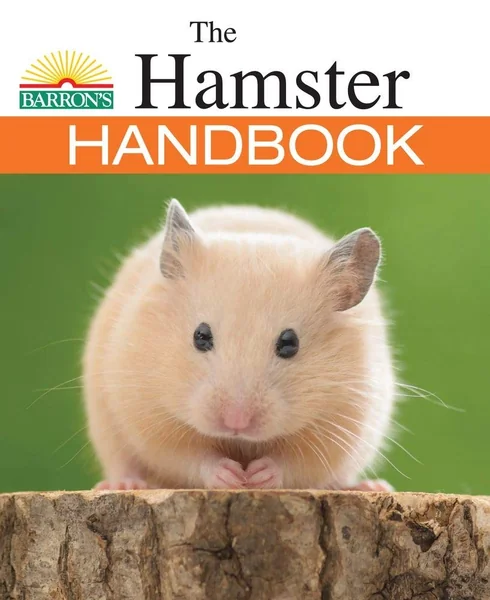
The Hamster Handbook by Patricia Bartlett Review: A Reliable Care Reference for Hamster Owners

Patricia Bartlett's The Hamster Handbook (B.E.S. Pet Handbooks, 2nd ed., Sourcebooks, 2015) is a full-color practical reference designed to guide both new and experienced hamster owners through housing, feeding, healthcare, breed differences, and hamster behavior — drawing on the expertise that defines the long-running B.E.S. Pet Handbooks series.
LuvemBooks Verdict

Best for

New hamster owners — especially parents equipping a child with their first pet — who want a single, trustworthy, breed-aware reference covering housing, feeding, healthcare, and behavior in an accessible, full-color format.

Worth it if

You want an expert-sourced, well-structured general reference that covers different hamster breeds and all core care pillars in one compact, readable volume.

Skip if

You're a dedicated breeder or are navigating a complex veterinary situation and need deep specialist or clinical detail beyond what a handbook-format reference is designed to provide.

Retailer descriptions on barnesandnoble.com characterise the book as offering "clear, expert advice on housing, feeding, and healthcare for hamsters" and a "perfect resource for both new and experienced hamster owners." The B.E.S. Series framework — noted across abebooks.com and ebay.co.uk listings — is consistently described as drawing on breeders, veterinarians, and other pet experts to deliver comprehensive, full-color guidance.

Sources: Barnes & Noble, AbeBooks, eBay
4.6from 243 Amazon ratings— reader ratings, not a LuvemBooks score
In This Review
  • What Works & What Doesn't
  • What the Book Actually Covers
  • Place Within the B.E.S. Pet Handbooks Series
  • Strengths: Accessibility and Breadth of Coverage
  • Limitations: A Compact Format Has Trade-Offs
  • Who This Book Is For

What Works & What Doesn't

What Works
  • Covers all core care pillars — housing, feeding, healthcare, and behavior — in a single structured reference
  • Addresses different hamster breeds and their specific needs, rather than treating all hamsters identically
  • Written to be accessible to readers without specialist background, while remaining useful to experienced owners
  • Full-color format throughout, consistent with the B.E.S. Pet Handbooks series standard
  • Draws on input from breeders, veterinarians, and pet specialists per the B.E.S. Series editorial framework
What Doesn't
  • Handbook format prioritizes breadth over depth; advanced or highly specialized questions may require supplemental resources
  • Readers facing complex veterinary situations will need to look beyond this guide for clinical detail
A solid, species-specific care reference built on expert input and accessible writing, this guide serves hamster owners at every experience level — though readers seeking deep specialist or veterinary-clinical content may find its scope intentionally concise.

What the Book Actually Covers

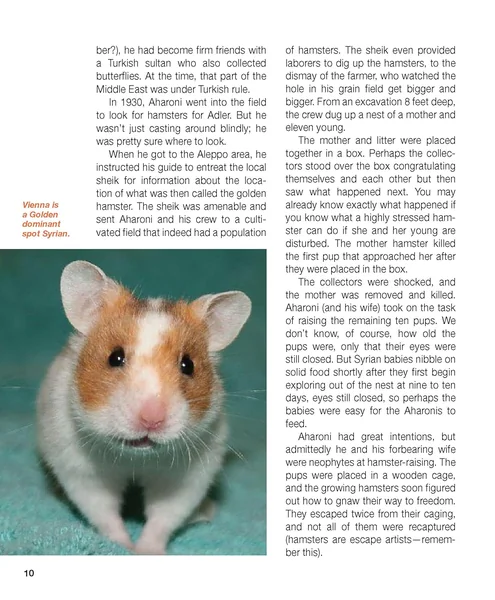
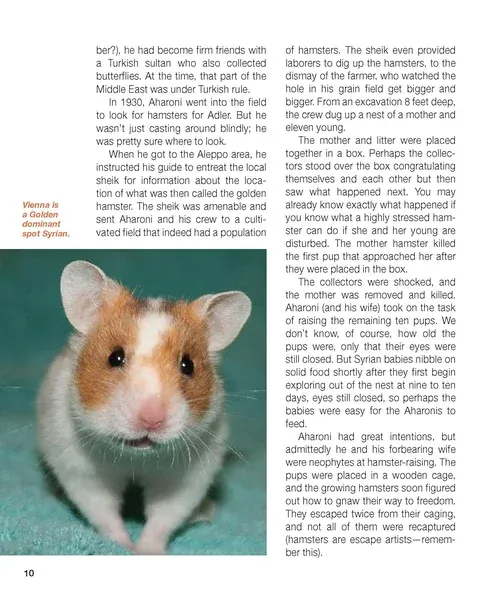
Interior page featuring a close-up photograph of a golden hamster alongside text about hamster care and behavior.
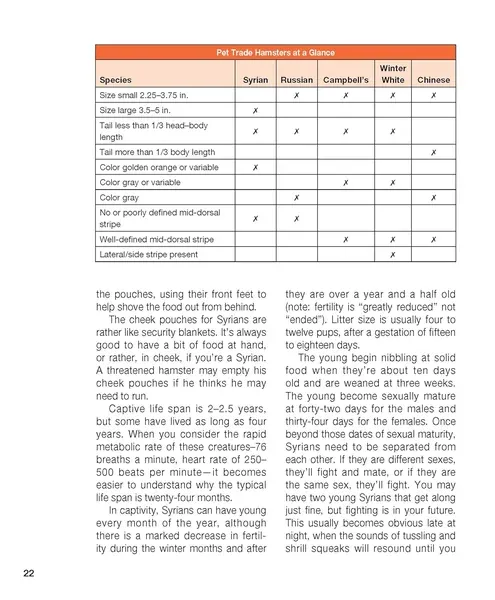
The Hamster Handbook by Patricia Bartlett is a full-color pet care reference published as part of the well-established B.E.S. Pet Handbooks series, with its second edition issued by Sourcebooks in 2015. The book is organized around the core pillars of responsible hamster ownership: housing, feeding, healthcare, and an understanding of hamster behavior. Crucially, Bartlett does not treat hamsters as a single uniform category — the guide addresses different breeds and their specific needs, helping owners understand that care requirements can vary meaningfully from one variety to another. The back cover positions the book as delivering "the information you need to keep happy and healthy hamsters," and the content is structured to fulfill that promise across a compact but thorough format.

Place Within the B.E.S. Pet Handbooks Series

The B.E.S. Pet Handbooks line is explicitly built around contributions from breeders, veterinarians, and other pet specialists, and The Hamster Handbook sits squarely within that tradition. This pedigree matters: the series is designed to function as a trustworthy first reference rather than a casual browse, drawing on practitioner knowledge rather than general pet-keeping lore. The fact that Bartlett's handbook has reached a second edition speaks to the series' durability and to sustained demand for this kind of reliable, accessible guidance. For readers evaluating whether to trust a care guide with decisions that affect a living animal, that editorial framework — expert sourcing, updated editions — carries genuine weight.
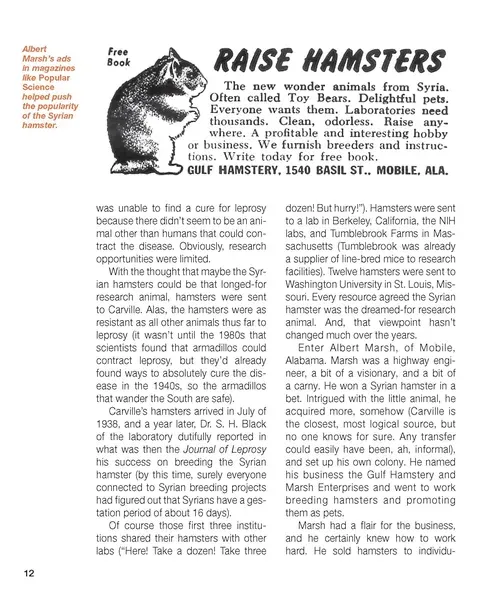
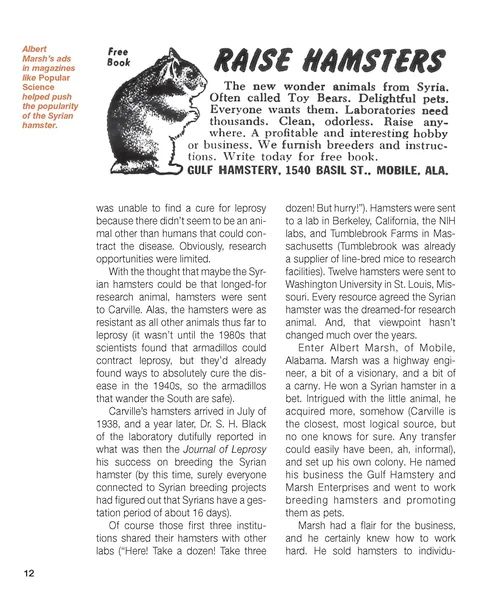
Interior page featuring a historical article about raising hamsters, with illustrated hamster and care information.

Strengths: Accessibility and Breadth of Coverage

One of the handbook's clear design strengths is its accessibility. The material on hamster behavior, housing requirements, feeding, and healthcare is written to be understood by readers without a specialist background, while still offering enough practical detail to serve owners who have kept hamsters before. The full-color format, noted consistently across retailer and aggregator descriptions, supports the text by giving visual context to care guidance. The scope is deliberately broad — covering both the practical logistics of keeping hamsters and the behavioral understanding that helps owners create a comfortable environment — rather than drilling into a single narrow topic. For a handbook-format reference, that breadth is a genuine asset.

Limitations: A Compact Format Has Trade-Offs

Because The Hamster Handbook is designed as an accessible, series-format reference rather than an exhaustive specialist manual, readers with advanced or highly specific needs may find the treatment of individual topics concise by design. A dedicated hamster breeder, or an owner dealing with a complex veterinary situation, may need to supplement this guide with more targeted resources. This is not a flaw so much as an honest description of scope — the handbook format, by definition, prioritizes breadth and usability over depth in any single area. Readers should approach it as a comprehensive starting point and authoritative general reference, not as a substitute for veterinary consultation or breed-specialist literature.

Who This Book Is For

The Hamster Handbook is positioned explicitly as a resource for both new and experienced hamster owners, and that dual audience makes sense given its structure. First-time owners will find a clear roadmap covering everything from setting up a habitat to understanding what hamster behavior signals about their pet's wellbeing. More experienced owners can use it as a reliable reference to cross-check care practices or to get specific guidance on breed-level differences they may not have previously explored. Given the expert sourcing embedded in the B.E.S. Series model, it also serves well as the kind of book a parent might place in the hands of a child taking on a hamster as a first pet — though, as with all practical care books, hands-on application remains the reader's responsibility to assess. Note: as this is a functional reference guide, this review is based on published descriptions and the documented series framework, not hands-on use.

Sources & Further Reading

The key facts and claims in this review are grounded in the retrieved, verified sources listed below.

  1. 1
  2. 2
  3. 3