8 min read
4.7
· 23,182 Amazon ratingsShare This Review
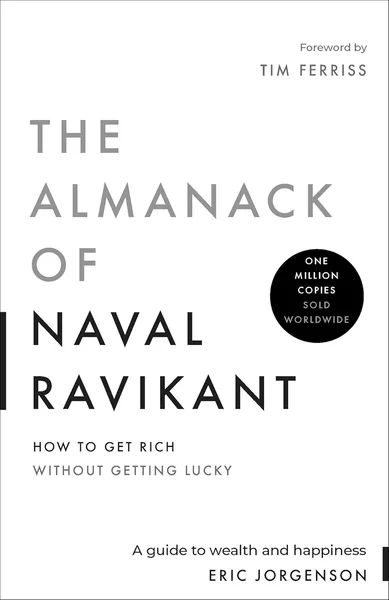
The Almanack of Naval Ravikant by Eric Jorgenson Review: A Curated Guide to Wealth and Happiness
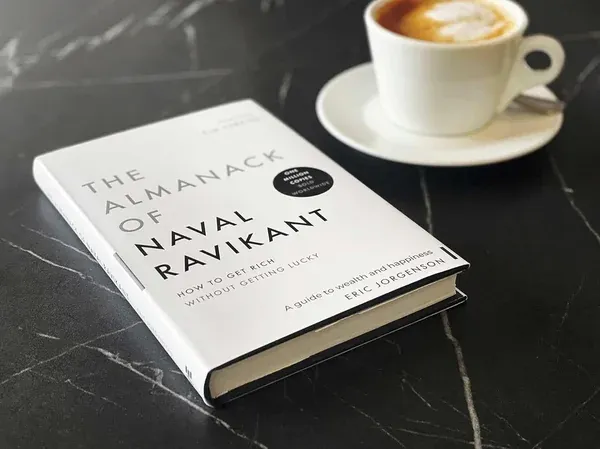
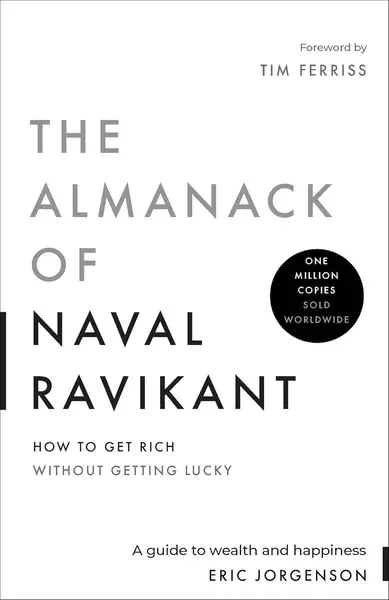
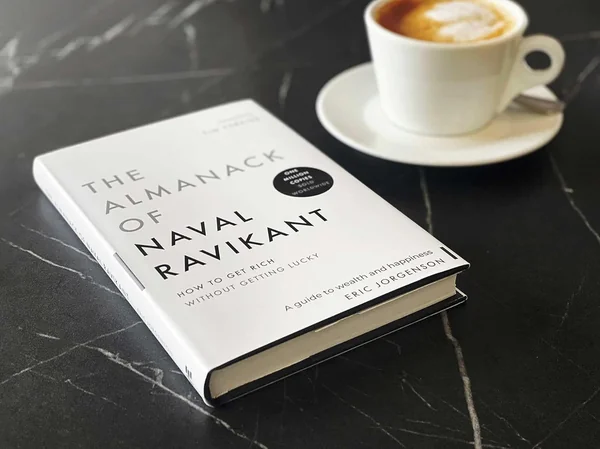
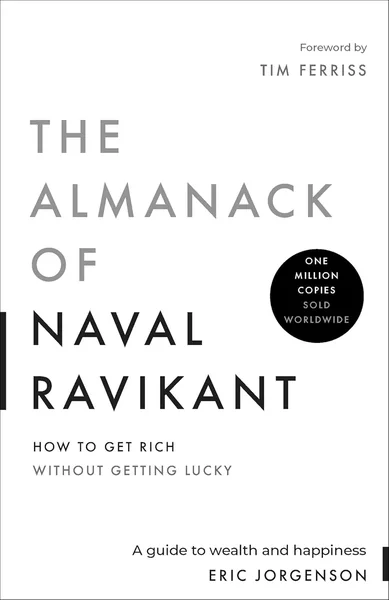
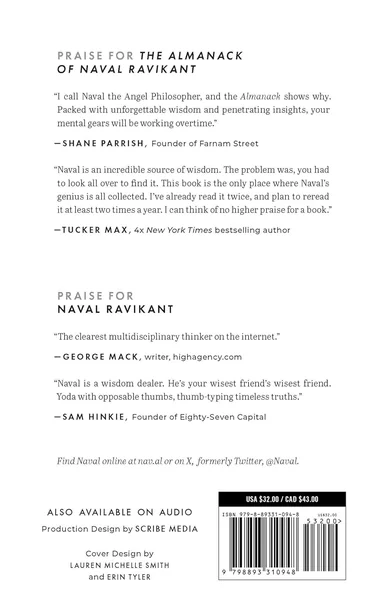
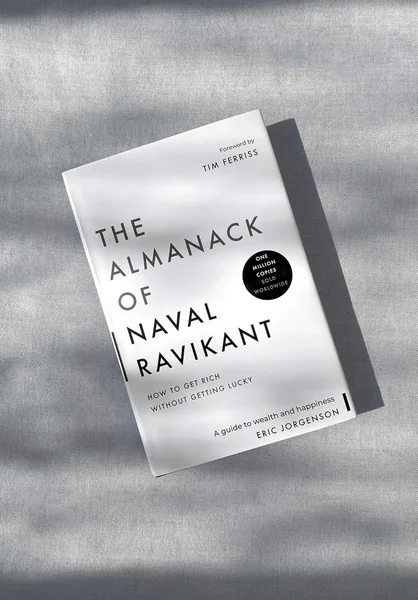
Eric Jorgenson's The Almanack of Naval Ravikant compiles over a decade of entrepreneur and investor Naval Ravikant's wisdom — drawn from tweets, podcasts, and essays — into a structured guide covering two central pillars: building wealth and finding happiness. Originally published in 2020 and now reissued in a second edition by Authors Equity (September 2025), the book features illustrations by Jack Butcher and a foreword by Tim Ferriss. It is designed to serve as both an entry point and a reference work for readers at any stage of life, translating Ravikant's first-principles thinking into accessible, consolidated form.

 Tap to enlarge
LuvemBooks Verdict
Best for
Ambitious readers — whether early-career or at a point of reassessment — who want a single structured reference distilling over a decade of Naval Ravikant's public thinking on building wealth and cultivating happiness, and who are comfortable with aphoristic, first-principles reasoning rather than linear, evidence-driven argument.
Worth it if
Worth reading if you want a concentrated, freely available synthesis of one unusually rigorous thinker's interlocking philosophy of financial independence and inner equanimity, and you can engage with fragmented, aphoristic material on its own terms.
Skip if
Skip it if you expect a book that builds a sustained, evidence-based argument with counterarguments and conclusions — the compilation format, drawn from tweets and podcast excerpts, will feel repetitive and insufficiently rigorous.
What readers & critics say
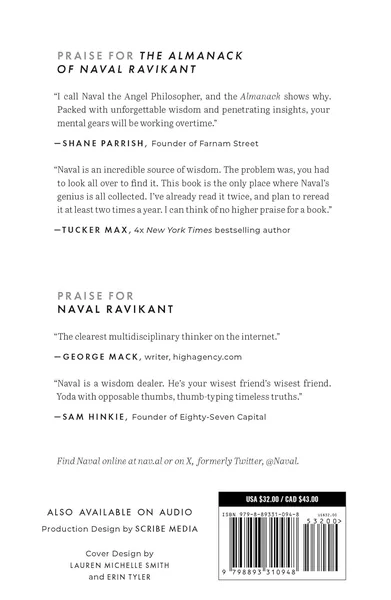
Bobbypowers.com calls it "one of the most impactful books I've ever read," praising Jorgenson's decision to collect Ravikant's ideas and aphorisms into a single volume. Teesche.com, while noting the book's unusual setup as a compiled rather than authored work, observes that large portions read more like a transcribed interview than a traditional almanac.
Sources: bobbypowers.com, teesche.com, mattswain.comPreview the book


Ask LuvemBooks
Was this helpful?
- Is it worth reading?
- For readers open to the aphoristic, compilation format, The Almanack of Naval Ravikant offers genuine value as a consolidated reference: it captures over a decade of Naval Ravikant's public thinking — its consistency and evolution — in a single structured volume rather than requiring readers to excavate years of tweets and podcast transcripts. The public-service model (free distribution, no revenue to Ravikant) also signals an integrity uncommon in the self-help space. However, readers who prefer a book that builds a sustained, evidence-based argument with counterarguments and conclusions should approach with caution — the fragmented, single-worldview structure is a real limitation, not just a stylistic quirk.
- Similar books
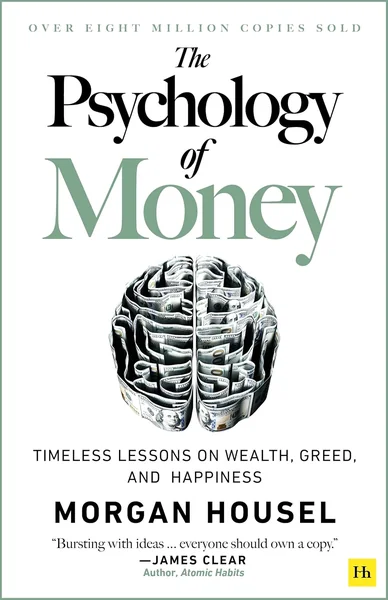
- Readers drawn to The Almanack of Naval Ravikant often gravitate toward books that blend wealth philosophy with broader thinking about how to live. Morgan Housel's The Psychology of Money explores the emotional and behavioural dimensions of financial decision-making in a similarly accessible, non-prescriptive style. Marcus Aurelius's Meditations is the closest classical parallel to Ravikant's aphoristic, first-principles philosophical mode — a collection of private reflections rather than a structured argument, widely cited as an influence on Ravikant's own thinking. For those interested in the compiled-wisdom almanack format specifically, Poor Charlie's Almanack by Charles T. Munger and Peter Bevelin's Seeking Wisdom: From Darwin to Munger cover overlapping intellectual terrain around long-term thinking and mental models. Timothy Ferriss's The 4-Hour Workweek, whose author contributes the foreword here, is another natural companion for readers interested in reframing work and autonomy.
- Who should read this?
- The Almanack of Naval Ravikant is best suited to adult readers who are either entering the worlds of entrepreneurship, investing, or personal philosophy for the first time and want a single, consolidated entry point, or to those reassessing established habits of thought who want Naval Ravikant's decade-spanning framework in one place. The book explicitly positions itself as relevant across life stages. It will resonate most with readers comfortable with the aphoristic, reference-style format — those who treat books as collections to revisit rather than arguments to move through linearly. Readers who prefer rigorous, multi-perspective analysis or who bring strong competing frameworks to wealth and happiness questions are less likely to find it satisfying.
- What are the main themes?
- The Almanack of Naval Ravikant is organised around two interconnected claims: that building wealth is a replicable skill — not a function of luck or birth — that can be studied and deliberately developed, and that lasting happiness cannot be achieved by changing external circumstances. As one passage from the book states, 'The idea you're going to change something in the outside world, and that is going to bring you the peace, everlasting joy, and happiness you deserve, is a fundamental delusion we all suffer from.' Ravikant's method throughout is reasoning from first principles: questioning assumptions, thinking long-term, and updating beliefs when evidence demands it. Financial independence and inner equanimity are treated as complementary goals rather than competing ones.
- How does the compilation format affect the reading experience?
- The format is both the book's greatest strength and its primary limitation. Because Jorgenson drew from over a decade of Ravikant's tweets, podcast appearances, and essays, the compilation captures the consistency and evolution of his thinking in a way that a single interview or keynote could not. The trade-off is that ideas are delivered in concentrated, aphoristic bursts rather than through extended linear argument — there is no sustained case-building with evidence and counterargument. Readers who find this reinforcing will use the book as a reference to revisit; readers who prefer a conventional progressive argument will find the fragmented structure unsatisfying.
- What's new in the 2025 second edition?
- The second edition of The Almanack of Naval Ravikant was published by Authors Equity in September 2025, five years after the original 2020 release. While the review does not detail the specific content changes between editions, the reissue represents a formal commercial republication of a book that originally circulated widely as a free PDF, epub, and audio download. The core structure — Jorgenson's curation of Ravikant's thinking on wealth and happiness, with illustrations by Jack Butcher and a foreword by Tim Ferriss — remains the foundation of the work.
Summarize this book
Follow up
Synthesized from verified book data & published reviews · How we review
Press Enter to ask. Answers come from our editorial Q&A — start typing to see related questions.
Age & Reading Level
Recommended age
Adult
Reading level
Adult
who it suits
Skip if you want a sustained, evidence-based argument that engages competing frameworks and builds to a structured conclusion.
Our Review
What the Book Actually Is and Contains
Naval Ravikant: Why This Subject, Why Now
The Central Arguments and How the Book Is Structured
Strengths: Accessibility and the Public-Service Model
Limitations and Who May Find It Frustrating
Sources & Further Reading
The key facts and claims in this review are grounded in the retrieved, verified sources listed below.
- Cited in this review
- 1
navalmanack.com
- 2
- Further reading
- 3
navalmanack.s3.amazonaws.com
- 4
- 5
- 6
- 7
- 8
- 9
Books like The Almanack of Naval Ravikant
Curated picks for readers who enjoyed The Almanack of Naval Ravikant, with our reasoning for each match.