BOOKS
Published

Read Time

3 min read

Curated & edited by

LuvemBooks Editorial

How we create our reviews →
Share This Review

The Psychology of Money by Morgan Housel Review: A Lucid, Story-Driven Personal Finance Classic

Morgan Housel's The Psychology of Money, published by Harriman House in September 2020, is a personal finance book structured around 19 short stories that examine the often irrational and deeply human ways people think about money, wealth, and happiness — and has sold over 10 million copies worldwide.

LuvemBooks Verdict

Best for

Readers who are early in their personal finance journey, or who recognise that their relationship with money is more emotional than analytical and want a clear, story-driven framework for understanding why.

Worth it if

You want to rethink the behavioural and psychological forces behind your financial decisions — and prefer concise, narrative-driven chapters over dense analytical frameworks.

Skip if

You are already well-versed in behavioural economics (Kahneman, Thaler et al.) or are looking for rigorous, step-by-step tactical investing guidance — the episodic format is built to reframe thinking, not deliver a granular roadmap.

What readers & critics say

Wikipedia's overview notes that a Financial Times review found the book makes a persuasive case that financial decisions are shaped more by human behaviour than by data, while Forbes praised its accessible approach to personal finance, highlighting how effectively it shows emotions and behaviour shaping financial outcomes. Stoffel Wealth's review echoes this, commending Housel's accessible, concise writing and memorable anecdotes.

Sources: Wikipedia – The Psychology of Money, Stoffel Wealth – Book Review
4.7from 72,043 Amazon ratings— reader ratings, not a LuvemBooks score

Look inside the book

Preview the actual pages, via Google Books
In This Review
  • What Works & What Doesn't
  • What the Book Actually Is and Argues
  • Significance and Place in the Genre
  • Core Strengths: Accessibility and Memorable Framing
  • A Genuine Limitation: Depth Over Breadth
  • Who This Book Is genuinely For

What Works & What Doesn't

What Works
  • Structured as 19 standalone short stories, making it highly accessible to readers without a finance background
  • Draws on history and real-world examples — such as the contrasting cases of Ronald Read and Richard Fuscone — to illustrate behavioral principles concretely
  • Housel's writing is noted for being accessible and concise, with ideas rendered in memorable, everyday terms
  • Reframes personal finance around psychology and behavior rather than formulas, broadening its appeal beyond traditional finance audiences
  • Has sold over 10 million copies worldwide, reflecting an unusually wide and sustained readership
What Doesn't
  • The episodic, story-based format prioritizes reframing over systematic depth, which may leave readers seeking rigorous analytical frameworks or step-by-step guidance wanting more
  • Readers already familiar with behavioral economics literature may find some of the underlying concepts well-covered elsewhere, even if Housel's storytelling approach makes them newly approachable
A book that has sold over 10 million copies worldwide earns a second look at exactly what it does — and what it doesn't.

What the Book Actually Is and Argues

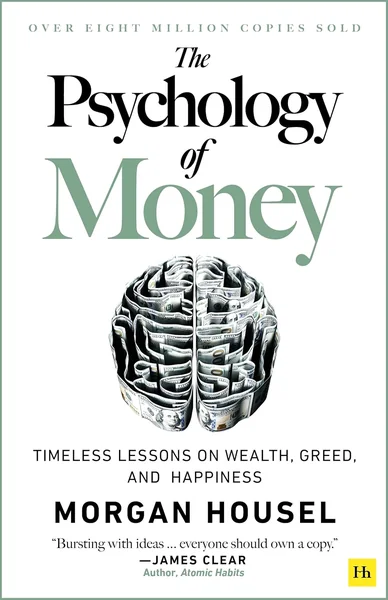
The Psychology of Money: Timeless lessons on wealth, greed, and happiness by Morgan Housel front cover
The Psychology of Money is a personal finance and behavioral economics title from Morgan Housel, published by Harriman House on September 8, 2020. Rather than presenting a single linear argument, Housel structures the book as 19 discrete short stories, each designed to illuminate a specific and often counterintuitive way that people think about money. The organizing thesis is that financial outcomes are shaped less by raw intelligence or access to information than by behavior — the habits, biases, and emotional impulses that govern financial decision-making. A central distinction Housel draws is between being rich (having a high current income) and being wealthy (holding unspent money as optionality for the future — assets that remain invisible precisely because they haven't been converted into consumption). This reframing sits at the heart of the book's broader argument.

Significance and Place in the Genre

Personal finance as a genre is crowded, but The Psychology of Money carved out a distinct lane by approaching money as a matter of temperament and psychology rather than calculation. Where many books in the space focus on formulas, tax strategies, or investment vehicles, Housel draws on history, business, and everyday human experience to make his case. The book's reach — over 10 million copies sold globally — places it among the most widely read personal finance titles of the decade. Its appeal extends well beyond traditional finance audiences into general readers interested in decision-making and behavioral reasoning, reflecting how Housel positioned the subject as a universal human challenge rather than a technical discipline.

Core Strengths: Accessibility and Memorable Framing

One of the book's most noted qualities is the accessibility and concision of Housel's prose, which blends lessons from history, business, and everyday life into short, standalone chapters that don't require prior financial knowledge to absorb. The story-based structure means readers can engage with individual chapters without feeling locked into a single narrative thread. Housel's use of contrast is particularly effective: the juxtaposition of Ronald Read — a patient, modest janitor who quietly accumulated substantial wealth — against Richard Fuscone — a high-earning finance executive who went bankrupt — encapsulates his argument that behavior, not income, determines financial outcomes. The concept of "room for error," or margin of safety, is another recurring idea Housel grounds in concrete terms: a frugal budget, flexible thinking, and the willingness to absorb volatility are presented as underappreciated but decisive financial forces.

A Genuine Limitation: Depth Over Breadth

The same structural choice that makes the book so readable — short, self-contained stories rather than a sustained, systematic argument — is also the source of its most credible criticism. Readers seeking rigorous analytical depth, detailed evidence-based frameworks, or actionable step-by-step guidance may find the episodic format more suggestive than comprehensive. Each chapter introduces a powerful idea, but the book is designed to reframe thinking rather than deliver a granular roadmap. Those already well-versed in behavioral economics or personal finance literature — familiar with the work of Kahneman, Thaler, or comparable authors — may find some of Housel's concepts well-trodden, even if his storytelling renders them freshly accessible to a general audience.

Who This Book Is genuinely For

The Psychology of Money is best suited to readers who are early in their engagement with personal finance or who recognize that their relationship with money is more emotional than analytical — and want a framework for understanding why. Housel's core message, that optimism and endurance (staying invested through market volatility rather than reacting to it) is itself a winning long-term strategy, resonates most with readers open to rethinking financial behavior rather than optimizing financial mechanics. The book is also well-matched to readers who find traditional finance writing dry or inaccessible; the narrative format and concise chapters lower the barrier to engagement considerably. For readers looking for advanced portfolio theory or tactical investing instruction, other resources will serve better — but as an entry point into the behavioral dimensions of wealth, the book's record speaks for itself.

Sources & Further Reading

The key facts and claims in this review are grounded in the retrieved, verified sources listed below.

  1. Cited in this review
  2. 1
  3. 2
  4. 3

    planetone.online

  5. 4
  6. Further reading
  7. 5
  8. 6
  9. 7