7 min read
4.6
· 608 Amazon ratingsShare This Review
The Montessori Method by Maria Montessori Review: A Foundational Text in Child Education
Maria Montessori's The Montessori Method is the foundational primary source in which the Italian physician and educator sets out the scientific and philosophical principles behind the approach to child education she developed in Rome's Casa dei Bambini — required reading for anyone who wants to understand the movement at its source rather than through secondary interpretation.
LuvemBooks Verdict
Best for
Educators training in or curious about the Montessori tradition, researchers in the history of pedagogy, and parents who want to engage with Montessori's own foundational arguments rather than secondhand summaries or derivative guides.
Worth it if
You approach it as a landmark historical and philosophical document — the physician-educator's own voice laying out the full rationale of her method — rather than as a modern empirical handbook or structured lesson-plan guide.
Skip if
You are looking for contemporary empirical outcome data or step-by-step classroom protocols, as the text is a work of early-twentieth-century scientific advocacy and observation that does not answer measurable-outcomes questions by today's standards.
What readers & critics say
The New Yorker observes that Montessori's ideas are now "ubiquitous even in the preschools that do not bear her name," tracing everyday classroom practices — mats instead of desks, hands-on materials, child-led pacing — directly back to principles she first articulated in this text. Nature's peer-reviewed research review acknowledges that while the Montessori method has existed for over a century, rigorous evaluations of its effectiveness remain scarce relative to the scale and longevity of its influence, a limitation the book itself — as a work of observation rather than controlled experimentation — was never designed to address.
“The children were serious and serene, occasionally speaking to each other in low, considerate tones — stacking blocks, stringing beads, arranging letter boards.”
— The New Yorker“The Montessori method has existed for over 100 years, but evaluations of its effectiveness are scarce.”
— NatureAsk LuvemBooks
Was this helpful?
- Is it worth reading?
- For anyone who wants to understand Montessori education at its source rather than through secondary interpretation, the book is indispensable — Montessori herself explains the rationale behind every element of the method, giving readers direct access to reasoning that gets filtered or simplified in most popular accounts. The New Yorker has observed that Montessori's ideas are now 'ubiquitous even in preschools that do not bear her name,' and tracing those ubiquitous practices — mats instead of desks, hands-on materials, child-led pacing — back to this founding text adds a dimension no derivative work can replicate. The key caveat is that readers seeking modern empirical meta-analyses or structured lesson plans will find the text more philosophical and observational than prescriptive.
- Similar books
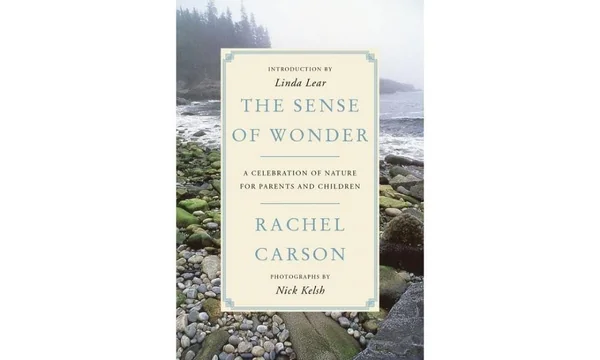
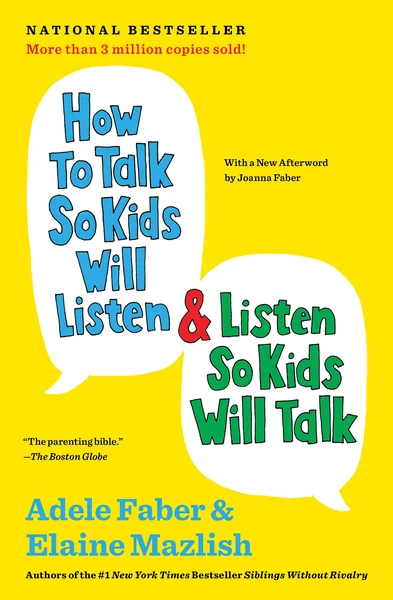
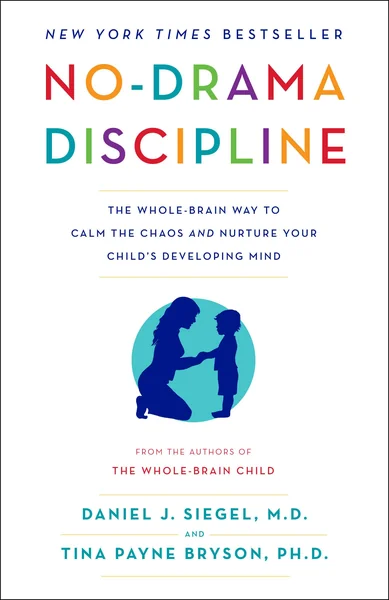
- Readers drawn to The Montessori Method's philosophy of child-led, respectful learning will find resonance in several related titles. How to Talk So Kids Will Listen & Listen So Kids Will Talk by Adele Faber and Elaine Mazlish applies a similarly child-respecting communication philosophy in a more accessible, contemporary format. No-Drama Discipline and The Power of Showing Up, both by Daniel J. Siegel and Tina Payne Bryson, bring modern neuroscience to questions of child development that Montessori addressed through scientific observation a century earlier. Rachel Carson's The Sense of Wonder shares Montessori's conviction that children learn best through direct, hands-on engagement with the world around them. Raising Resilient Children by Robert Brooks and Sam Goldstein also complements Montessori's focus on nurturing the individual child's strengths and inner resources.
- Who should read this?
- The Montessori Method is essential reading for educators training in or curious about the Montessori tradition, for researchers in the history of pedagogy, and for parents who want to engage with the foundational text rather than its many derivatives. Montessori herself intended the book for a broad audience — parents, teachers, and administrators alike — and it was described at its original American introduction as meriting 'general anticipation' beyond specialist circles. Those who approach it as a historical and philosophical document rather than a contemporary how-to guide will find it most rewarding.
- About Maria Montessori
- Maria Tecla Artemisia Montessori (31 August 1870 – 6 May 1952) was an Italian physician and educator born in Chiaravalle, Italy, and died in Noordwijk aan Zee, Netherlands. She is best known for developing the Montessori educational method and her writing on scientific pedagogy, and she authored works including The Montessori Method — a prolific output that spread her ideas globally across generations of teachers and families.
- What's the reading level?
- The Montessori Method is an adult-level text written in the formal scientific idiom of the early twentieth century — originally composed in Italian and first translated into English in 1912 — and it is demanding by contemporary reading standards. It is best approached as a work of historical and philosophical scholarship rather than a modern handbook, and readers comfortable with academic or early-twentieth-century non-fiction prose will find the experience most manageable. The Dover Publications illustrated paperback edition is recommended as an accessible and affordable format for the text.
- Why does this book matter historically?
- A century after its original publication, The Montessori Method stands as the founding text of one of the most influential educational movements in modern history. The New Yorker has noted that Montessori's principles — rejecting individual desks in favour of mats and child-size tables, privileging hands-on materials, and allowing child-led pacing — are now visible 'even in preschools that do not bear her name,' making this the rare educational work whose influence has permeated mainstream practice far beyond its originating tradition. Its early introduction to American audiences declared that 'no educational document has been so eagerly expected by so large a public, and not many have better merited general anticipation' — a reception that reflected the sense that Montessori had produced a genuinely original synthesis of scientific and humanistic thinking about children.
Summarize this book
Follow up
Synthesized from verified book data & published reviews · How we review
Press Enter to ask. Answers come from our editorial Q&A — start typing to see related questions.
Age & Reading Level
Recommended age
Adult
Reading level
Adult
who it suits
Skip if you are looking for a modern, empirically grounded guide with structured lesson plans and measurable outcome data.
Our Review
What the Book Is and What It Argues
The Historical and Intellectual Context
The Book's Genuine Strengths
Limitations and Likely Frustrations
Who This Book Is For
Sources & Further Reading
The key facts and claims in this review are grounded in the retrieved, verified sources listed below.
- Cited in this review
- 1
- 2
- 3
barnesandnoble.com
- 4
- Further reading
- 5
digital.library.upenn.edu
- 6
- 7
openlibrary.org
- 8
en.wikipedia.org
- 9
store.doverpublications.com
- 10
- 11
montessoriseeds.com
- 12
- 13
arvindguptatoys.com
- 14
penguinrandomhouse.com
Books like The Montessori Method
Curated picks for readers who enjoyed The Montessori Method, with our reasoning for each match.
If you liked The Montessori Method