8 min read
4.7
· 5,504 Amazon ratingsShare This Review
No-Drama Discipline by Daniel J. Siegel & Tina Payne Bryson Review: Brain-Based Parenting That Reframes Discipline
No-Drama Discipline is a New York Times bestseller from the co-authors of The Whole-Brain Child that uses neuroscience to help parents move beyond punishment toward connection-first strategies — making it a substantive, research-grounded resource for families navigating the daily chaos of raising children.
LuvemBooks Verdict
Best for
Parents and caregivers who want to understand the neuroscience behind children's misbehavior and are ready to replace reactive, consequence-first responses with a principled, repeatable connect-then-redirect framework.
Worth it if
You're willing to engage with both the brain-development theory and the practical application together — the two reinforce each other and that pairing is where the book's value lies.
Skip if
You're looking for a lean, prescriptive quick-reference guide and have no appetite for neuroscience context before reaching actionable advice — the framework is substantive, and the science comes first.
What readers & critics say
Psychiatryresource.com rated it 9 out of 10, calling it "the best parenting book released since 1998" and praising its "wealth of ideas" combining neuroscience, general approaches, and specific recommendations. Selfpublishingtitans.com noted that the book's emphasis on empathy and connection "distinguishes it from traditional discipline guides, promoting compassion over conflict."
Sources: psychiatryresource.com, selfpublishingtitans.com, racheltoalson.com, nicoleperryman.wordpress.comAsk LuvemBooks
Was this helpful?
- Is it worth reading?
- For parents and caregivers open to rethinking discipline through a neuroscience lens, No-Drama Discipline delivers genuine substance: complex brain-development content is rendered accessibly, the connect-then-redirect structure gives caregivers a repeatable decision-making sequence, and the cartoon illustrations and downloadable handouts make the framework practically shareable. Parents magazine called it 'a lot of fascinating insights... An eye-opener worth reading,' and Lawrence J. Cohen, Ph.D. wrote that it 'grabbed me from the very first page and did not let go.' The key caveat is that the book demands a real mindset shift — particularly for caregivers accustomed to consequence-first discipline — and those who want a stripped-down quick-reference guide may find the neuroscience context more extensive than they need.
- Similar books
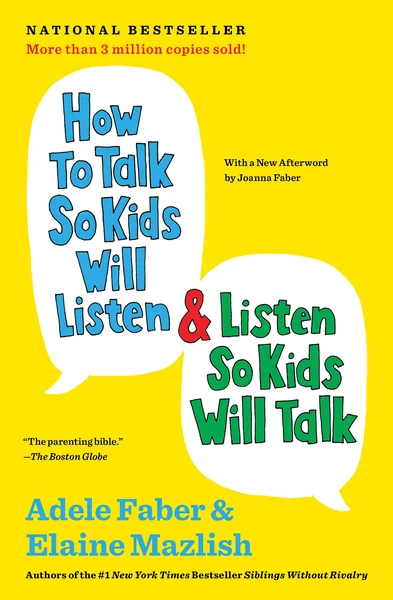
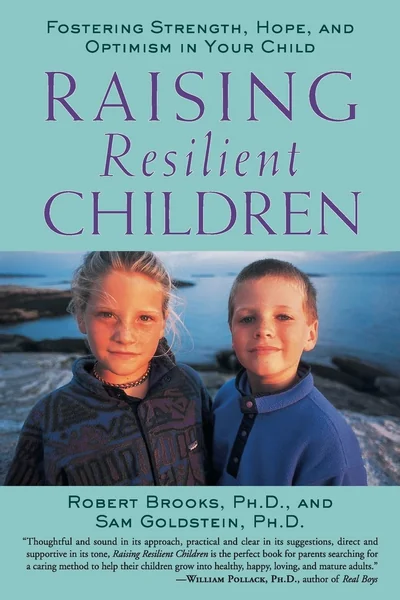
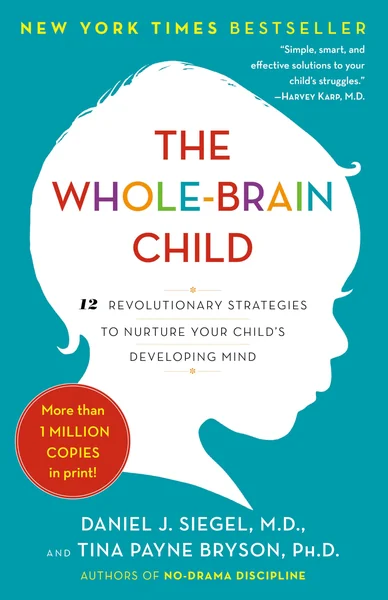
- Readers drawn to No-Drama Discipline will find natural companions in Siegel and Bryson's own The Whole-Brain Child — the earlier work that introduced their whole-brain parenting philosophy — and The Power of Showing Up, which focuses on the foundational importance of parental presence. How to Talk So Kids Will Listen & Listen So Kids Will Talk by Adele Faber and Elaine Mazlish is a classic in communication-first parenting that shares the book's emphasis on connection over confrontation. Raising Resilient Children by Robert Brooks and Sam Goldstein offers another research-grounded perspective on nurturing children's emotional strength. Peaceful Parent, Happy Kids by Laura Markham and The Explosive Child by Ross W. Greene are also frequently paired with No-Drama Discipline for their complementary connection-based and collaborative approaches.
- Who should read this?
- No-Drama Discipline is designed for parents and caregivers of children across a range of ages and developmental stages — from parents of young children navigating tantrums to those dealing with older kids. It is especially well-matched to caregivers who are open to a neuroscience-informed, connection-first approach and willing to engage with both theory and practice. The downloadable caregiver handouts also make it a useful resource for teachers, grandparents, and others in a child's support network. The Examiner noted that the mindsight skills taught in the book are ones many adults never developed, making the framework relevant beyond the family context to anyone navigating relationships under stress.
- Where should I start with Siegel and Bryson?
- For readers new to Siegel and Bryson, The Whole-Brain Child is the natural starting point — it introduces the foundational whole-brain parenting philosophy that No-Drama Discipline and The Yes Brain both build upon. Readers whose primary concern is discipline and behavior specifically can reasonably start with No-Drama Discipline, while those interested in attachment and the parental relationship as a foundation may prefer to begin with The Power of Showing Up.
- What are the main themes?
- The book's central themes are the neuroscience of child development, the redefinition of discipline as instruction rather than punishment, and the primacy of connection in the parent-child relationship. It argues that a child's brain is still developing and that a parent's response in tense moments literally shapes that development for better or worse. Secondary themes include empathy and repair, cooperative problem-solving, and the idea — noted by The Examiner — that the mindsight skills the book teaches are ones many adults never learned, making the framework as much about adult self-regulation as child behavior.
- Is this a good book club pick?
- No-Drama Discipline works well for parenting groups or caregiver-focused book clubs, particularly those whose members are navigating discipline challenges across different ages and family structures. The book's coverage of twenty common parenting mistakes and its downloadable caregiver handouts give groups concrete material to discuss and share. The neuroscience framework also opens discussion beyond individual parenting choices into broader questions about adult self-regulation and relationships — a dimension The Examiner specifically noted makes the book's insights relevant to anyone navigating stress, not only parents.
Summarize this book
Follow up
Synthesized from verified book data & published reviews · How we review
Press Enter to ask. Answers come from our editorial Q&A — start typing to see related questions.
Age & Reading Level
Recommended age
Adult
Reading level
Adult
who it suits
Skip if you want a lean, prescriptive quick-reference discipline guide with minimal theory.
Our Review
What the Book Actually Is and Argues

Scope and Structure
Reception and Significance
What the Book Does Well
Who This Book Is For — and Where It Asks the Most
Sources & Further Reading
The key facts and claims in this review are grounded in the retrieved, verified sources listed below.
- Cited in this review
- 1
psychiatryresource.com
- 2
- 3
- Further reading
- 4
drdansiegel.com
- 5
racheltoalson.com
- 6
- 7
Books like No-Drama Discipline
Curated picks for readers who enjoyed No-Drama Discipline, with our reasoning for each match.
More by Daniel J. Siegel, Tina Payne Bryson
If you liked No-Drama Discipline