8 min read
Share This Review
Our review
Fashion & Sustainability
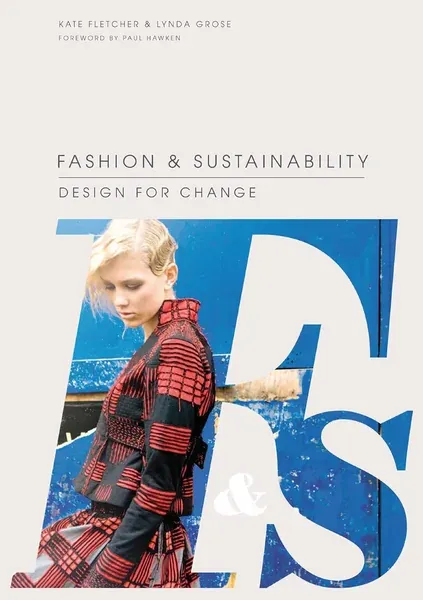
Fashion & Sustainability: Design for Change by Kate Fletcher & Lynda Grose Review: A Rigorous, System-Wide Blueprint for Fashion's Future
Fashion & Sustainability: Design for Change, by Kate Fletcher and Lynda Grose with a foreword by Paul Hawken, is a landmark non-fiction design reference published by Laurence King Publishing that maps the full scope of fashion's environmental and social crises — and argues, in structured, evidence-based terms, that sustainability holds the power to transform not only the fashion system but the designers and innovators who operate within it.
LuvemBooks Verdict
Best for
Design students, fashion educators, and industry practitioners who need a rigorous, end-to-end analytical framework for understanding how sustainability challenges are embedded in the fashion system — and how design decisions can address them at both product and structural levels.
Worth it if
Worth reading if you want a foundational, theoretically grounded framework that connects individual garment design decisions to the systemic forces — supply chains, business models, cultural assumptions — driving the fashion industry's environmental and social problems.
Skip if
Skip it if you need up-to-the-minute coverage of recent regulatory developments, digital supply-chain tools, or cutting-edge materials science, as the 2012 publication date means some specific examples and innovations have since been overtaken by the field's rapid evolution.
What readers & critics say
Shirahime.ch describes the book as "a worthy successor to Kate Fletcher's first book," noting it gives designers both a hands-on manual for changing practice and a guide to new concepts and technologies — the first time, in that reviewer's view, both have been offered together. Academic literature indexed on ResearchGate cites Fletcher and Grose (2012) as a foundational reference when analysing the fashion sector's systemic failures, treating the work as a cornerstone of the field rather than a passing contribution.
Sources: Shirahime.ch, ResearchGateAsk LuvemBooks
Was this helpful?
- Is it worth reading?
- For design students, educators, and practitioners who want a coherent, end-to-end framework for understanding fashion's environmental and social impact, Fashion & Sustainability: Design for Change remains a foundational reference. Fletcher and Grose's refusal to separate product design from systemic analysis is a genuine strength — the book tracks a garment from raw material through end-of-life while also interrogating the business logic that drives overproduction. Academic citations in peer-reviewed literature treat it as a foundational text rather than a passing contribution, and the structural arguments it makes remain live debates more than a decade after first publication. Those seeking cutting-edge case studies or the latest regulatory developments will need to supplement it, but for foundational understanding and analytical framing, the breadth is a feature rather than a flaw.
- Similar books
- Readers who value Fashion & Sustainability: Design for Change will find strong companions in several directions. Kate Fletcher's earlier Sustainable Fashion and Textiles: Design Journeys covers adjacent territory with a similarly research-grounded approach. For readers drawn to the systems-thinking dimension of Fletcher and Grose's argument, Donella H. Meadows' Thinking in Systems: A Primer provides the theoretical backbone for understanding how industries resist and enable transformation. Elizabeth Cline's Overdressed: The Shockingly High Cost of Cheap Fashion and Dana Thomas's Fashionopolis: The Price of Fast Fashion and the Future of Clothes offer more journalistic, narrative-driven explorations of fashion's systemic failures. William McDonough and Michael Braungart's Cradle to Cradle: Remaking the Way We Make Things extends the product lifecycle thinking into a broader circular design philosophy.
- Who should read this?
- Fashion & Sustainability: Design for Change is primarily aimed at fashion and textile design students, design educators, and industry practitioners who need a coherent, end-to-end analytical framework for understanding the environmental and social dimensions of fashion. Its translation into Spanish, Portuguese, Chinese, and Japanese reflects genuine international demand across design education and research communities. Researchers and academics working on sustainable fashion will find it a foundational reference, as evidenced by its citation in peer-reviewed literature. It is less suited to general readers seeking a narrative or journalistic account of fast fashion's costs, or to specialists seeking exhaustive depth on a single topic such as textile chemistry or circular economy finance.
- What are the main themes?
- The book's central themes are systemic critique and design-led transformation. Fletcher and Grose argue that fashion's problems — labour abuses, toxic chemical use, and conspicuous consumption — are structural rather than incidental, and that addressing them requires change at both the product level and the industry-system level. The garment lifecycle is a key organising framework, tracing how design decisions made at the production stage ripple through to use-phase and disposal outcomes. Broader themes include supply-chain anonymity, ecosystem impact, worker welfare, and the business models that perpetuate overproduction — all framed as interconnected pressures that demand a comprehensive, design-led response.
- How widely has this book been adopted?
- The book's influence is measurable in concrete ways. It has been translated into Spanish, Portuguese, Chinese, and Japanese — a breadth of international reach that reflects genuine demand from design educators, industry practitioners, and researchers across different cultural contexts. Academic citations in peer-reviewed literature, including work published on ResearchGate, draw on Fletcher and Grose's frameworks when analysing the fashion sector's systemic failures, treating the book as a foundational reference rather than a passing contribution. The questions it raises about supply-chain anonymity, ecosystem impact, and worker welfare have remained live debates more than a decade after first publication.
- Where should I start with Kate Fletcher's work?
- For readers new to Kate Fletcher's scholarship, Fashion & Sustainability: Design for Change — co-authored with Lynda Grose — provides the broadest and most structured entry point, covering both product-level innovation and system-level transformation within a single coherent framework. Fletcher's earlier Sustainable Fashion and Textiles: Design Journeys covers adjacent territory with the same research-grounded approach and is a natural companion or follow-up. Both texts are cited in sustainable fashion academic literature and used in design education internationally.
Summarize this book
Follow up
Synthesized from verified book data & published reviews · How we review
What would you like to know about Fashion & Sustainability?
Answers come from our editorial notes on this book. If we haven't covered something, we'll say so.
Readers often ask
Our Review
We review the evidence: published reviews and reader verdicts, gathered and weighed with AI assistance and edited by LuvemBooks, rather than one reader's first-hand take.
What the Book Is and What It Argues
Structure and Scope
Significance and Reach
What the Book Does Well
Limitations and Who May Find It Challenging
Sources & Further Reading
The key facts and claims in this review are grounded in the retrieved, verified sources listed below.
- 1
- 2
katefletcher.com
- 3
researchgate.net
- 4
- 5
sustainable-fashion.com
- 6
- 7
prelaunch.cfda.com
- 8
Age & Reading Level
Our age band
Adult
Our age band groups books for browsing; it isn't an age a review gave.
Reader reviews
No LuvemBooks readers have answered yet.
Read it? Was it right for you?
Books like Fashion & Sustainability
Curated picks for readers who enjoyed Fashion & Sustainability, with our reasoning for each match.
If you liked Fashion & Sustainability