
8 min read
4.7
· 25 Amazon ratingsShare This Review
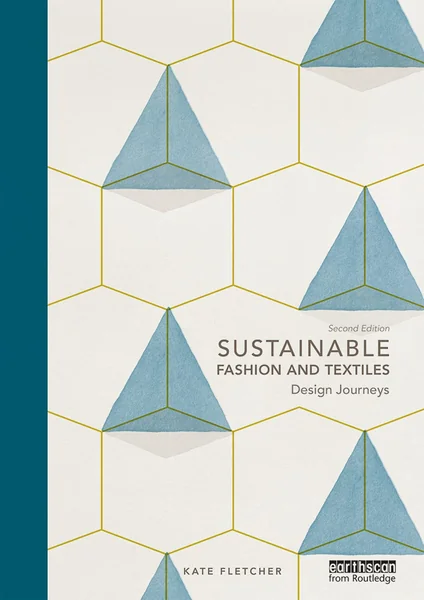
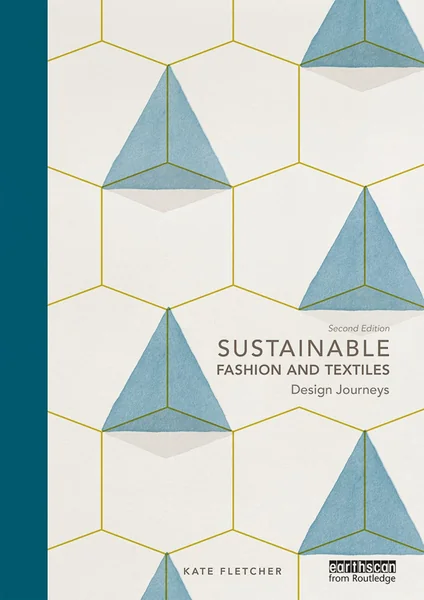
Sustainable Fashion and Textiles: Design Journeys by Kate Fletcher Review: A Rigorous Academic Foundation for Ethical Fashion
Kate Fletcher's Sustainable Fashion and Textiles: Design Journeys, published by Routledge in its fully revised second edition, stands as a landmark academic text that systematically maps the lifecycle sustainability challenges of fashion and textiles — and charts credible, design-led paths forward. Structured across eight chapters divided into product- and systems-level thinking, it draws on lifecycle analysis, slow fashion theory, localism, and participatory design to offer fashion and textiles professionals and students a rigorous, pluralistic framework. Endorsed by educators, designers, and publications including Nature and Treehugger, it remains the go-to reference for those serious about embedding sustainability into the practice of fashion.
LuvemBooks Verdict
Best for
Design students, fashion educators, textile researchers, and sustainability practitioners who need a rigorous, systems-level academic framework covering the full lifecycle of fashion and textiles — from materials science and ethical production through to slow fashion theory and participatory design.
Worth it if
You want to ground sustainable fashion practice in serious theory rather than trend-driven rhetoric, and are prepared to engage with an eight-chapter framework that moves from product-level choices all the way up to systemic redesign.
Skip if
You're looking for an introductory consumer guide or a quick practical primer — the book's academic depth and dense lifecycle analysis sections will be demanding without prior grounding in design practice, materials science, or sustainability frameworks, and practitioners at the current frontier will need to supplement it with more recent research.
What readers & critics say
Routledge and Taylor & Francis describe the second edition as continuing to "define the field of design in fashion and textiles," with the integrative scope praised by multiple voices for bringing lifecycle sustainability, practical alternatives, and social innovation together for the first time. Wildehippi's review describes it as a transformative and frequently cited text, calling it a "lifeline" for readers working in sustainability programmes.
Sources: Routledge, Taylor & Francis, wildehippi.com, katefletcher.comAsk LuvemBooks
Was this helpful?
- Is it worth reading?
- For its intended audience — design students, fashion educators, textile researchers, and sustainability practitioners — Sustainable Fashion and Textiles: Design Journeys remains a structurally sound and intellectually serious resource that continues to provide foundational scaffolding the field still needs. Nature assessed it as examining 'systems as well as products, examining possible solutions from raw material to final design,' while Treehugger noted that 'the depth of Fletcher's writing will take people's understanding of sustainable fashion and textiles to a new level.' Carole Collet, Course Director of the MA Textile Futures at Central Saint Martins, was unequivocal at the time of release: 'We NEED this book.' The key caveat is that its academic depth and breadth require genuine investment, and practitioners at the current frontier of the field will want to supplement it with more recent research given how rapidly sustainability science continues to evolve.
- Similar books
- Readers drawn to Sustainable Fashion and Textiles: Design Journeys may also want to explore Fletcher's companion work Fashion and Sustainability: Design for Change, which extends her thinking on systemic change in the industry. For a broader design-and-sustainability framework, William McDonough's Cradle to Cradle: Remaking the Way We Make Things offers a landmark treatment of circular design principles. Elizabeth Cline's Overdressed: The Shockingly High Cost of Cheap Fashion approaches fast fashion's consequences from a more accessible, journalistic angle, while Safia Minney's Slow Fashion: Aesthetics Meets Ethics provides a practitioner-oriented companion to Fletcher's more academic framework. Yvon Chouinard's The Responsible Company rounds out the picture with a business-leadership perspective on sustainable enterprise.
- Who should read this?
- Sustainable Fashion and Textiles: Design Journeys is positioned by Routledge explicitly for 'fashion and textiles professionals and students interested in sustainability.' It is particularly well suited to design students, fashion educators, textile researchers, and sustainability practitioners who want a rigorous, theory-grounded resource rather than a trend-driven introduction. Its eight-chapter structure and division between product- and systems-level analysis make it especially strong for academic course adoption. Readers without prior grounding in design practice, materials science, or sustainability frameworks should be prepared for demanding material — but for those willing to invest, Carole Collet of Central Saint Martins' assessment remains apt: 'We NEED this book.'
- What are the main themes?
- Sustainable Fashion and Textiles: Design Journeys organises its themes across two levels. At the product level, it addresses material diversity, ethical manufacture, the role of use and user behaviour, and end-of-life strategies including reuse, recycling, and zero waste. At the systems level, it examines fashion, needs and consumption; localism and lightness; speed (a core concern of slow fashion theory); and the 'user maker' concept of participatory design. Across both levels, Fletcher draws on biomimicry, Fairtrade frameworks, lifecycle assessment, and slow fashion theory to argue — as one endorsement quoted by the publisher puts it — that 'fashion is not only interested in trend-driven fluff: not only does it have a brain, but it could be a sustainable one.'
- What's the reading level?
- Sustainable Fashion and Textiles: Design Journeys is an academic non-fiction text pitched at fashion and textiles professionals and students, not a general-audience introduction. The level of detail in chapters such as Material Diversity and the lifecycle analysis sections assumes familiarity with design practice, materials science, or sustainability frameworks. John Thackara of Doors of Perception called it 'a fascinating book,' but the density that earns that description requires genuine intellectual investment — it is best approached as a primary academic reference rather than a cover-to-cover narrative read.
- How has it been received?
- Sustainable Fashion and Textiles: Design Journeys has been endorsed by a notably wide range of academic, journalistic, and practitioner voices. Nature described Fletcher as showing 'how clothing manufacture could be turned into a sustainable industry,' assessing 'systems as well as products, examining possible solutions from raw material to final design.' Treehugger noted that 'the depth of Fletcher's writing will take people's understanding of sustainable fashion and textiles to a new level,' while Design 21 called it 'a must read' and Ethical Pulse said it 'provides the foundations for a radical new perspective.' Carole Collet, Course Director of the MA Textile Futures at Central Saint Martins, stated simply: 'We NEED this book' — a signal of how urgently the academic community felt the gap the text filled at its original publication.
Summarize this book
Follow up
Synthesized from verified book data & published reviews · How we review
Press Enter to ask. Answers come from our editorial Q&A — start typing to see related questions.
Age & Reading Level
Recommended age
Adult
Reading level
Adult
who it suits
Skip if you're looking for an accessible, general-audience introduction to sustainable fashion rather than a rigorous academic framework grounded in lifecycle analysis and systems thinking.
Our Review
What the Book Is and What It Covers
Significance and Place in the Field
Strengths: Depth, Structure, and Integrative Thinking
Limitations and Audience Fit
Who This Book Is For Today
Sources & Further Reading
The key facts and claims in this review are grounded in the retrieved, verified sources listed below.
- Cited in this review
- 1
- 2
- Further reading
- 3
- 4
- 5
researchgate.net
- 6
sustainable-fashion.com
- 7
- 8
- 9
Related reading
Adjacent titles worth exploring. We haven't reviewed these yet, so they link out to Amazon.