BOOKS
Published

Read Time

7 min read

Curated & edited by

LuvemBooks Editorial

How we create our reviews →
Share This Review

Where the Wind Wills by D. Flower Review: A Raw, Wide-Ranging Adventure Travel Memoir

Where the Wind Wills: An Adventure Driven Travel Memoir by D. Flower is a globe-spanning personal narrative that carries readers from the Himalayas to the East African savanna, from the rainforests of Rwanda to the rapids of Ethiopia's Omo River, and through the author's time serving as a public relations specialist for FEMA during Hurricane Katrina recovery — all while weaving in the emotional terrain of love and self-discovery.

LuvemBooks Verdict

Best for

Readers who thrive on wide-ranging, immersive adventure memoirs and want a single book that moves them from the Himalayas and East Africa to post-Katrina Louisiana, with cultural depth and emotional candour throughout.

Worth it if

You prize physical risk, cultural immersion, and personal transformation in equal measure — and don't mind a narrative that shifts continents and registers rather than dwelling long in any one place.

Skip if

You prefer a deeply sustained, single-destination travel memoir; the multi-continent structure and the tonal jump between wilderness adventure and Hurricane Katrina disaster relief may feel too diffuse for that kind of reading experience.

Age & Reading Level

Recommended age

Adult

Reading level

Adult

Content to know about

accounts of physical danger (whitewater rapids, high-altitude trekking)
emotional difficulty of a romantic relationship
Hurricane Katrina disaster relief — emotional weight of mass displacement and loss

Skip if you prefer a single deeply sustained destination study or a tonally consistent travel memoir without significant tonal shifts between wilderness adventure and domestic disaster relief.

In This Review
  • What Works & What Doesn't
  • What the Book Is and What It Covers
  • The Scope and Structure of the Journey
  • Personal Stakes and the Emotional Through-Line
  • Significance and Context
  • Who Will Find It Most Rewarding

What Works & What Doesn't

What Works
  • Spans an unusually wide range of destinations — Himalayas, Kenya, Rwanda, Ethiopia, and Brazil — giving the memoir the sweep of a long-form adventure narrative
  • Grounds the travel in specific cultural encounters, including documentation of Maasai tribal ceremonies and close-range mountain gorilla observation in Rwanda
  • Weaves a personal emotional arc — including a love story and Hurricane Katrina FEMA service — into the physical adventure, broadening the memoir's human stakes
  • Published by Lisa Hagan Books with a companion photography archive at the author's website, offering readers a visual dimension alongside the text
What Doesn't
  • The scope of continents and experiences covered is ambitious, and readers who prefer a single deeply sustained destination or culture may find the multi-region structure moves too quickly between contexts
  • The memoir's dual focus on both wilderness adventure and the domestic Hurricane Katrina chapter means the tonal register shifts considerably mid-book, which may not suit every reader's expectations for the genre
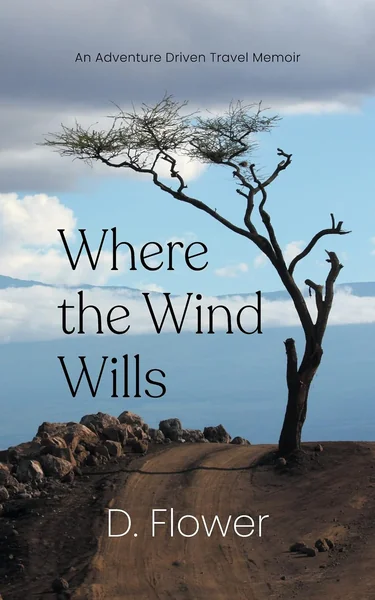
A memoir that refuses to stay in one place — geographically or emotionally — Where the Wind Wills is a wide-scope adventure narrative that earns its subtitle.
Where the Wind Wills: An Adventure Driven Travel Memoir by D. Flower front cover

What the Book Is and What It Covers

Where the Wind Wills: An Adventure Driven Travel Memoir is the published account of D. Flower's journeys across multiple continents. The memoir follows Dee — the author's name used throughout — as she treks in the Himalayas, travels to Brazil to meet with a healer before embarking on an extended stay in Africa, and spends a year living in a grass-roofed hut in Kenya. From there the narrative moves to Rwanda, where she crawls through stinging nettles to come face to face with mountain gorillas, and to Ethiopia, where she navigates the hazardous Omo River. Back in the United States, the memoir turns to a different kind of challenge: Flower volunteered as a public relations specialist for FEMA during the Hurricane Katrina recovery efforts. Running through the entire arc, according to the publisher's description, is the emotional thread of love — described as "one of the toughest roads" the author traveled.
a fiercely independent woman confident and flexible, changeable and free

The Scope and Structure of the Journey

The breadth of this memoir is one of its defining qualities. Rather than focusing on a single destination or a single expedition, the book assembles a mosaic of distinct environments and cultures. In Kenya, Flower documents Maasai tribal ways and their ancient sacred ceremonies, grounding the narrative in specific ethnographic detail. The Rwanda chapter places the author in physically demanding terrain — stinging nettles, dense bush — to arrive at a profoundly close encounter with mountain gorillas. The Ethiopian segment raises the stakes further with a genuinely dangerous passage on the Omo River. This variety of settings and experiences gives the memoir the energy of a serial adventure rather than a straightforward travelogue, and it distinguishes the book from destination-focused travel writing.

Personal Stakes and the Emotional Through-Line

What separates an adventure-driven travel memoir from a simple expedition account is the personal dimension, and Lisa Hagan Books' description of Where the Wind Wills makes clear that Flower foregrounds her inner life alongside the outer journey. The negotiation of a romantic relationship runs parallel to the physical risks of altitude, wildlife, and whitewater. By the memoir's close, the publisher's synopsis describes Flower as having emerged as "a fiercely independent woman confident and flexible, changeable and free" — a transformation framed as the direct result of everything the journey demanded of her. The Hurricane Katrina section adds a further dimension: the chaos and emotional weight of a major disaster relief effort serving as a kind of domestic counterpoint to the wilderness experiences abroad.

Significance and Context

The memoir was published in 2022 by Lisa Hagan Books and is also available in a Kindle edition. Flower — a Kent State University graduate who resides in Nashville, Tennessee — accompanies her published work with an extensive photography archive available at her website, deeflower.com, which the publisher describes as containing "gorgeous photographs" from the journeys documented in the book. The combination of multi-continent fieldwork, cultural documentation of Maasai ceremonies, and close wildlife encounters positions Where the Wind Wills within a tradition of immersive, participation-driven travel writing rather than observational tourism memoir.

Who Will Find It Most Rewarding

Readers drawn to travel memoirs that prioritize personal risk and cultural immersion over comfort and curation are the clear audience here. The book covers an unusually wide range of regions and experiences — the Himalayas, East and Central Africa, the Amazon region of Brazil, and post-Katrina Louisiana — which means the narrative moves quickly between landscapes and contexts. Readers who prefer a single, deeply sustained place-study may find that breadth works against intimacy. Those who appreciate a memoir that treats both physical adventure and emotional vulnerability as equally legitimate forms of discovery, however, will find the structure well-suited to the story D. Flower sets out to tell.

Sources & Further Reading

The key facts and claims in this review are grounded in the retrieved, verified sources listed below.

  1. Cited in this review
  2. 1
  3. 2
  4. Further reading
  5. 3
  6. 4
Related Reviews

Reviews of books we picked for readers who enjoyed Where the Wind Wills.