Emergence is an unusually ambitious memoir — part coming-of-age survival story, part lay introduction to computational neuroscience — and the two threads are more entwined than they might first appear.
What the Book Actually Is
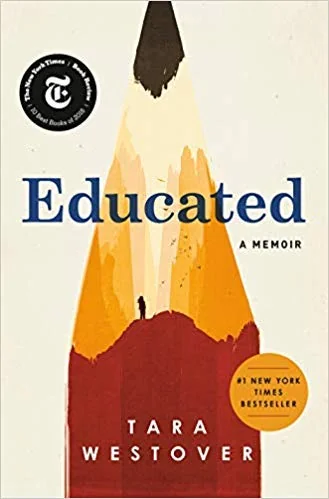
Emergence: A Memoir of Boyhood, Computation, and the Mysteries of Mind is the debut memoir of David Sussillo, a computational neuroscientist whose career has spanned a PhD at Columbia, work in Silicon Valley during the dot-com boom, and a position at the Google Brain AI research group. The book's title is both biographical and scientific: "emergence" names the phenomenon by which complex patterns arise from simple parts — a concept Sussillo uses as a lens for understanding his own unlikely trajectory. Published by Grand Central Publishing on March 17, 2026, the memoir is positioned by its publisher as essential reading for fans of Educated and Invisible Child.
The Central Story and Its Stakes
Sussillo writes that he did most of his growing up in group homes, the child of neglectful, drug-addicted parents, where survival required navigating stern houseparents and abusive housemates. The early chapters establish the particular texture of that precarity — and the unexpected lifeline he found in arcade and computer games, which opened a door to understanding how programs work from the inside. Severe panic attacks interrupted his college years, yet he graduated in his mid-twenties and went on to build a career at the cutting edge of mathematical modeling of the human mind. Running alongside Sussillo's own story is that of Esther, whose difficulty escaping similar circumstances generates the memoir's most quietly painful undercurrent — what Publishers Weekly identifies as Sussillo's guilt about her parallel, harder path.
Scientific Accessibility and Intellectual Texture
One of the memoir's distinctive structural choices is the inclusion of what reviewers describe as "well-written and engaging asides on scientific topics that fascinated him as a youth, such as physics, coding, and neuroscience" — material that foreshadows his career and gives the book an intellectual dimension beyond straightforward life narrative. According to Publishers Weekly, Sussillo manages to make his work mathematically modeling the human mind accessible to a lay reader, a meaningful achievement given how technically demanding computational neuroscience can be. These passages are designed to illuminate his central argument: that understanding how complex systems self-organize is inseparable from understanding how a person becomes who they are.
Strengths: Resilience, Self-Awareness, and Psychoanalytic Candor
Reviewers note that Sussillo is "clear-eyed about how his tumultuous past gave him a unique perspective on the world," and that his reflections on overcoming hardship stand out as the memoir's emotional core. He credits years of psychoanalysis as a key factor in his becoming, a candor that gives the book an introspective depth uncommon in scientist memoirs. The blurb from Sarah Sentilles, author of Stranger Care, frames the book as "an invitation to pay attention to the forces — neural and cultural, intimate and vast — that shape us, and to notice the moments when something new becomes possible." critics's review characterizes the book as offering "a stirring tribute to resilience and a humble acknowledgment of how much remains unknown about the human mind." The dual emphasis — on the hard facts of his childhood and the genuine mysteries of his science — gives Emergence* a tonal range that keeps neither strand from feeling formulaic.
Who It Is For and Where It Challenges
Readers drawn to survivor memoirs with an intellectual through-line — the audience that made Educated a phenomenon — are the natural fit here. Those seeking a purely personal narrative may find the scientific asides require patience; equally, readers hoping for a popular-science primer will find the emotional and autobiographical material dominant. Publishers Weekly suggests that what stands out most are the personal reflections rather than the scientific exposition, which may recalibrate expectations for readers who come primarily for the neuroscience. The memoir asks its audience to hold both registers simultaneously, and how rewarding that proves will depend on individual appetite for that kind of synthesis.