8 min read
4.6
· 49,300 Amazon ratingsShare This Review

Our review
The Glass Castle
The Glass Castle by Jeannette Walls Review: A Landmark Memoir of Resilience and Reckoning
The Glass Castle is Jeannette Walls' memoir of growing up in a nomadic, deeply impoverished, and chaotic household under the care of her father Rex and mother Rose Mary Walls — a #1 New York Times bestseller that earned the Christopher Award and the American Library Association's Alex Award, and has remained a touchstone of American memoir writing since its original 2005 publication.
LuvemBooks Verdict
Best for
Readers drawn to unsentimental American memoirs about poverty, family dysfunction, and hard-won self-determination — particularly those who want emotional complexity over tidy moral resolution.
Worth it if
You're willing to sit with a narrator who holds genuine love and justified outrage toward the same parents simultaneously, and let that tension do the heavy lifting.
Skip if
You expect a memoir to deliver explicit moral verdicts on its subjects' neglect, or prefer a conventional linear narrative over episodic, memory-driven structure.
What readers & critics say
Kirkus Reviews praises Walls' "journalistic bare-bones style" as producing "a chilling, wrenching, incredible testimony of childhood neglect," singling out the memoir's unsentimental balance as its defining strength. Wikipedia's reception summary notes the book has earned "broad readership and positive critical feedback," while storey-lines.com and bookbrowse.com both relay the New York Times' assessment that it is "a very good memoir" — one that falls just short of art but succeeds on its own terms.
“Moving because it's unsentimental; Walls' journalistic bare-bones style makes for a chilling, wrenching, incredible testimony of childhood neglect.”
— Kirkus ReviewsAsk LuvemBooks
Was this helpful?
- Is it worth reading?
- For readers drawn to confessional memoirs that resist sentimentality and self-pity, The Glass Castle is widely regarded as essential reading — Kirkus Reviews praises Walls' 'journalistic bare-bones style' as producing 'a chilling, wrenching, incredible testimony of childhood neglect' that is 'moving because it's unsentimental.' Its critical validation is substantial, including the Christopher Award and the ALA Alex Award, and it has sustained a broad, durable readership across two decades. The key caveat: Walls' refusal to render final moral verdicts on Rex and Rose Mary's neglect is the book's defining literary achievement, but readers expecting a direct reckoning with that neglect may find the memoir's compassion toward its parents difficult to settle into.
- Similar books
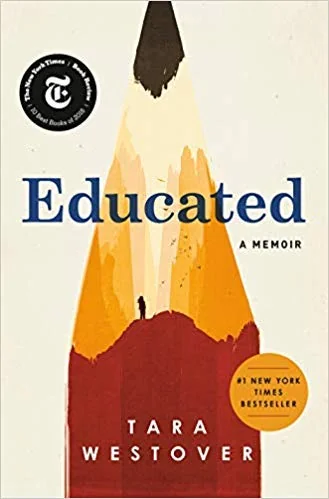
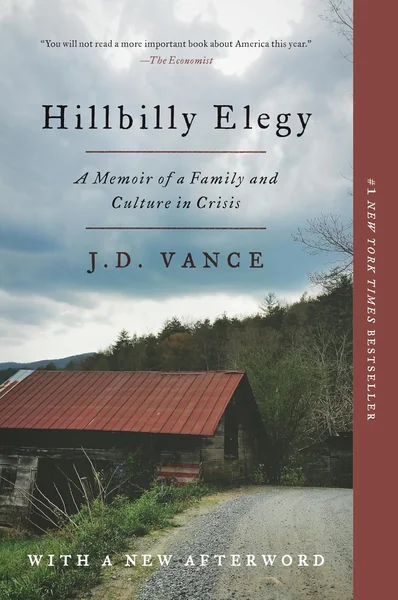
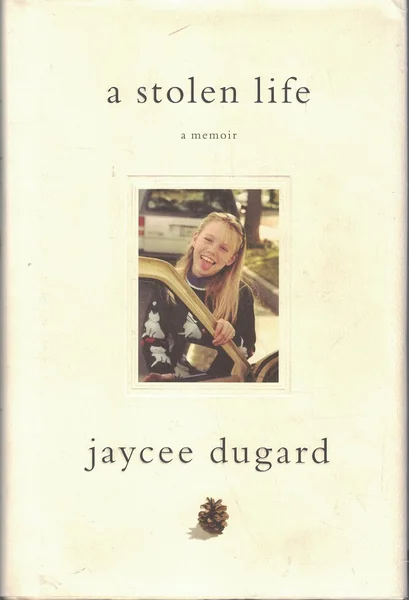
- Readers who respond to The Glass Castle's blend of poverty, family dysfunction, and resilience are well served by the books curated below. Tara Westover's Educated is perhaps the closest companion — another memoir of a chaotic, isolating rural upbringing and a woman's hard-fought escape into the wider world. J. D. Vance's Hillbilly Elegy shares the Appalachian working-class geography and the weight of family instability, though it takes a more explicitly analytical tone. Jeannette Walls herself followed The Glass Castle with The Half-Broke Horses, a novelized account of her grandmother's life, which offers a different but related lens on the family's history. Jaycee Dugard's A Stolen Life represents the same unflinching memoir tradition — a survivor's account told with deliberate restraint — though its subject matter is distinctly different in nature.
- Who should read this?
- The Glass Castle draws its broadest readership from those interested in family dysfunction, poverty in America, resilience narratives, and the ethics of memoir itself. Readers who specifically gravitate toward confessional memoirs that resist sentimentality — and who are willing to sit with moral ambiguity rather than demand clear verdicts — tend to find the book particularly compelling. It also appeals strongly to readers interested in Appalachian life and the American Southwest, as well as those who came to it via the 2017 film adaptation starring Brie Larson.
- Tell me about the adaptation
- A feature film adaptation of The Glass Castle was released in 2017, with Brie Larson portraying Jeannette Walls. The film brought the memoir's story of the Walls family's nomadic, impoverished upbringing to a new audience and further amplified the book's already durable readership. As with most memoir adaptations, readers familiar with the book tend to find that Walls' episodic, memory-driven narrative structure — shaped by the interiority of the prose — is an experience the film can complement but not fully replicate.
- How does Walls handle her parents' neglect?
- Walls' treatment of Rex and Rose Mary is the memoir's defining literary achievement and its most debated quality. Rather than demonizing or idealizing her parents, Walls holds her affection for them and her justified outrage in deliberate, sustained tension — Kirkus Reviews specifically notes the memoir is 'moving because it's unsentimental.' Rex, when sober, taught his children physics, geology, and what the publisher's synopsis describes as 'how to embrace life fearlessly,' even as his alcoholism and grandiosity exposed them to genuine danger and deprivation. critics acknowledges that Rex and Rose Mary's parenting 'justifiably elicits the children's exasperation and disgust,' and readers who expect a more direct moral accounting may find Walls' compassion toward them difficult to settle into.
- What awards has it won?
- The Glass Castle earned the Christopher Award, the American Library Association's Alex Award in 2006, and the Books for Better Living Award, in addition to reaching #1 on the New York Times bestseller list following its 2005 publication. The Alex Award is particularly notable, as it is given to books written for adults that have demonstrated special appeal to young adults — reflecting the memoir's unusually broad readership. Simon & Schuster positioned it alongside Mary Karr's The Liars' Club and Rick Bragg's All Over But the Shoutin' as a landmark of the American memoir tradition.
Summarize this book
Follow up
Synthesized from verified book data & published reviews · How we review
What would you like to know about The Glass Castle?
Answers come from our editorial notes on this book. If we haven't covered something, we'll say so.
Readers often ask
Our Review
What the Memoir Actually Recounts
Significance and Place in the Genre
Craft and Narrative Voice

Reception and Readership
Genuine Limitations to Consider
Sources & Further Reading
The key facts and claims in this review are grounded in the retrieved, verified sources listed below.
- Cited in this review
- 1
storey-lines.com
- 2
kirkusreviews.com
- 3
en.wikipedia.org
- Further reading
- 4
readinggroupguides.com
- 5
openbooksummary.com
- 6
- 7
bookbrowse.com
- 8
readingladies.com
- 9
- 10
Age & Reading Level
Recommended age
Ages 16+
Reading level
Older teens & adults
4 content notes · who it suits
Content to know about
Best for: Adults / mature 16+ — the ALA Alex Award recognizes its strong appeal to older teens, but the memoir's themes of childhood neglect, parental alcoholism, and deliberate moral ambiguity suit mature readers.
Skip if you want a memoir that delivers explicit moral accountability and a clear-eyed condemnation of the parents' behavior.
Reader reviews
Be one of the first readers to answer.
Read it? Was it right for you?
Books like The Glass Castle
Curated picks for readers who enjoyed The Glass Castle, with our reasoning for each match.

If you liked The Glass Castle