Skip to content
Reviewed

Updated

Read Time

9 min read

Our age bandAdult
Reader rating
4.4 · 32,380 Amazon ratings
reader ratings, not a LuvemBooks score
Curated & edited by

LuvemBooks Editorial

How we create our reviews →
Share This Review
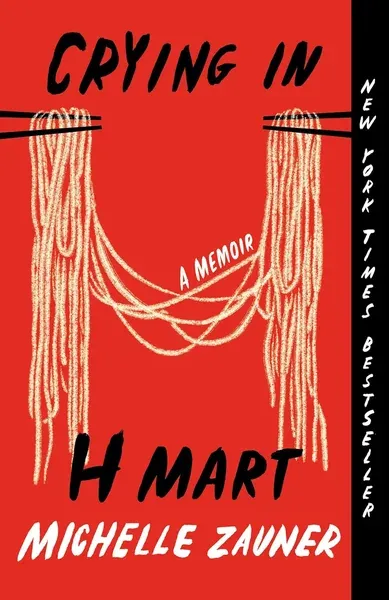
Crying in H Mart: A Memoir by Michelle Zauner front cover

Our review

Crying in H Mart

Crying in H Mart by Michelle Zauner Review: A Searingly Honest Memoir of Grief and Identity

Crying in H Mart is Michelle Zauner's debut memoir, originally published by Alfred A. Knopf in April 2021 and later reissued by Vintage, in which the singer-guitarist of Japanese Breakfast chronicles the death of her mother, Chongmi, from pancreatic cancer and the cultural inheritance, grief, and hard-won self-knowledge that followed. Rooted in a celebrated 2018 New Yorker essay of the same name, the book became a major bestseller and received widespread critical acclaim. This review draws on published sources and the book's record; it does not reflect hands-on reading or use.

Our age band: Adultparental death from terminal cancer · grief and anticipatory grief

LuvemBooks Verdict

Best for

Readers drawn to grief memoirs with strong cultural specificity — particularly those interested in the Korean American immigrant experience, the role of food as memory and mourning, and the intimate tensions of a mother-daughter relationship tested by illness and loss.

Worth it if

Worth reading if you want a grief memoir that grounds abstract loss in granular, sensory detail — Korean cuisine, family ritual, and cultural inheritance — and are willing to engage actively with an episodic, non-linear structure that rewards patience.

Skip if

Skip it if you prefer a straightforward, chronologically tidy narrative arc, or if you're seeking a broad cultural or sociological account rather than an intimate, closely focused portrait of one mother-daughter relationship.

Where reviewers agree and split

Readers rate it 4.4 on Amazon. The reviews we read that discuss it in depth split on some points:

  • Positive

    The Washington Independent Review of Books · Press review: zauner's memoir transports readers where cultures meet through food (from its headline)

  • Positive

    Chicago Review of Books · Magazine: zauner's writing resonates deeply with genuine charm and passion (from its headline)

  • Positive

    The Adroit Journal · Magazine: zauner's work accomplishes something remarkable through touching sincerity (from its headline)

  • Positive

    What Is Quinn Reading · Book blog: A stunning and evocative memoir that is both gorgeous and gutting (from its headline)

  • Negative

    Shelf Reflection · Book blog: the reviewer found this a disappointing, unpleasant memoir (from its headline)

  • Positive

    Full Stop · Book blog: zauner renders grief with coherence and creates a powerful protection against loss (from its headline)

  • Positive

    Marie Claire · Book blog: the memoir lives up to its acclaim, celebrating love and death through food (from its headline)

  • Positive

    A Well-Read Tart · Book blog: A compelling love letter flowing like fiction that readers lose themselves in (from its headline)

  • Positive

    Berkeley Fiction Review · Book blog: the reviewer was completely enamoured, racing through the memoir in one sitting (from its headline)

    Overall verdicts are our summary of each review we read, from its headline, rating and conclusion.

    The memoir received widespread critical acclaim and became a #1 New York Times bestseller, with the Chicago Review of Books praising it as "exquisitely detailed and wonderfully layered," situating it within a lineage of defining grief memoirs. Bookreporter.com credits Zauner with "gracefully and honestly" sharing a story that is "as heartbreaking as it is comforting and page-turning," while Full Stop highlights how Zauner keeps her narrative threads close even at the highest points of emotion, rendering grief with a coherence that defies its senselessness.

    Sources: Chicago Review of Books, Bookreporter.com, Full Stop
    4.4from 32,380 Amazon ratings— reader ratings, not a LuvemBooks score

    Ask LuvemBooks

    Was this helpful?

    Crying in H Mart is Michelle Zauner's debut memoir chronicling the death of her mother, Chongmi, from pancreatic cancer — and the Korean food, family ritual, and cultural identity that both defined their bond and became the language of mourning. Rooted in a celebrated 2018 New Yorker essay and praised by the Chicago Review of Books as "exquisitely detailed and wonderfully layered," the book is a landmark grief memoir of the early 2020s, best suited to readers who embrace its episodic, non-linear structure and the intense specificity of one Korean American mother-daughter story.
    Is it worth reading?
    For readers drawn to grief memoirs with strong cultural specificity, Crying in H Mart delivers something rare: the granular, sensory texture of Korean food and family ritual used to ground abstract loss in the concrete. The Chicago Review of Books argues its depictions of motherhood and daughterhood 'stand alone,' placing it in a lineage alongside Joan Didion's The Year of Magical Thinking and Maya Shanbhag Lang's What We Carry. The key caveat is structural — the episodic, non-linear construction rewards active engagement but may frustrate readers seeking a straightforward chronological account.
    Similar books
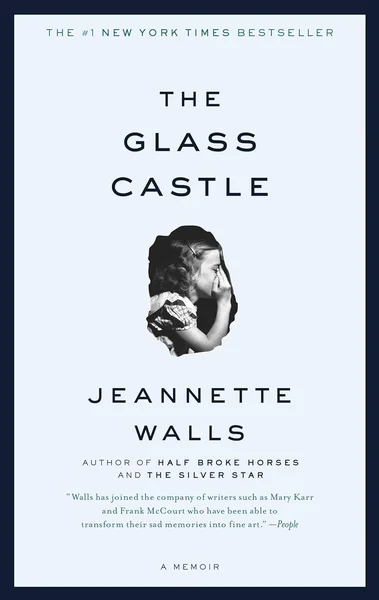
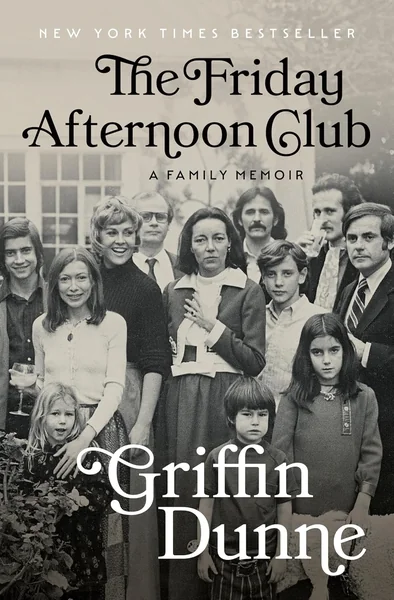
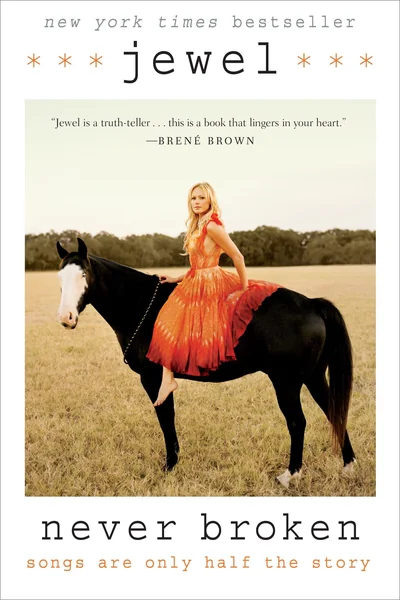
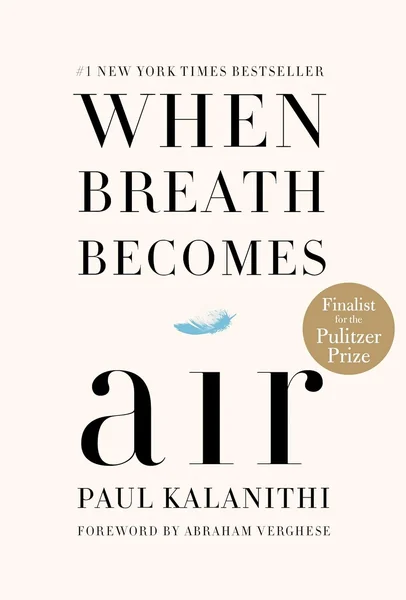
    Readers who connect with Crying in H Mart often turn to other grief and family memoirs with a strong personal voice. Paul Kalanithi's When Breath Becomes Air offers a similarly unflinching meditation on mortality, written by a neurosurgeon facing terminal cancer. Tara Westover's Educated and Jeannette Walls' The Glass Castle both explore fraught parent-child relationships and the question of inherited identity across generations. For music-world memoir with raw honesty, Jewel's Never Broken traces artistic self-discovery alongside family hardship, and Griffin Dunne's The Friday Afternoon Club navigates grief and family complexity from a Hollywood insider's perspective.
    Who should read this?
    Crying in H Mart is most naturally for adult readers drawn to grief memoirs with strong cultural specificity — particularly those interested in the Korean American immigrant experience, the role of food as memory and mourning, and the nuanced dynamics of a mother-daughter relationship strained and deepened by illness. Readers who know Japanese Breakfast's music will find additional resonance, but the book stands fully on its own as literary nonfiction. Those who prefer linear, chronologically tidy narratives may find the episodic construction demands more patience than they're willing to give.
    About Michelle Zauner
    Michelle Chongmi Zauner is an American musician, singer, songwriter, and author, known as the lead vocalist of the indie pop band Japanese Breakfast.
    Tell me about the adaptation
    A film adaptation of Crying in H Mart has been in development, but hit a significant setback in 2025 when director Will Sharpe quietly exited the project. With his departure, the film's future is now uncertain, leaving the adaptation's timeline and creative direction unresolved.
    What are the main themes?
    The memoir's central themes are grief, cultural inheritance, and the mother-daughter bond — explored through the specific lens of the Korean American immigrant experience. Korean cuisine functions as the primary vehicle for all three: food is how Zauner's mother, Chongmi, transmitted identity, how the two expressed love amid friction, and ultimately how Zauner mourns. The Chicago Review of Books identifies the memoir's distinctive achievement as the way these threads 'interweave' — grief, food, cultural identity, and artistic self-discovery are never treated as separate subjects but as facets of a single, continuous reckoning with loss.
    Summarize this book

    Summarize this book

    Crying in H Mart began as a 2018 New Yorker essay in which Michelle Zauner — singer and guitarist of the indie-rock project Japanese Breakfast — wrote about returning to H Mart, the Korean grocery chain, after the death of her mother, Chongmi, who died of pancreatic cancer in October 2014. Expanded into a full memoir published by Alfred A. Knopf in April 2021, the book moves between Zauner's childhood in Eugene, Oregon, treasured visits to her grandmother's apartment in Seoul, the harrowing months of her mother's illness, and the grief that followed.

    Follow up

    How did the New Yorker essay become a book?
    How does food fit into the story?
    Do I need to know Zauner's music to appreciate this?

    Synthesized from verified book data & published reviews · How we review

    Ask LuvemBooks

    What would you like to know about Crying in H Mart?

    Answers come from our editorial notes on this book. If we haven't covered something, we'll say so.

    Readers often ask

    Our Review

    We review the evidence: reader verdicts, gathered and weighed with AI assistance and edited by LuvemBooks, rather than one reader's first-hand take.

    A major bestseller and critically acclaimed debut, Crying in H Mart stands as one of the defining grief memoirs of the early 2020s.
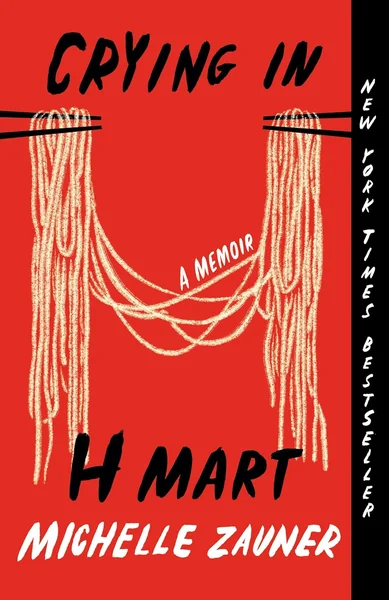
    Crying in H Mart: A Memoir by Michelle Zauner front cover
    Crying in H Mart: A Memoir by Michelle Zauner front cover

    What the Book Is and How It Is Structured

    Crying in H Mart began as an essay published in The New Yorker on August 20, 2018, in which Michelle Zauner — singer and guitarist of the indie-rock project Japanese Breakfast — wrote about returning to H Mart, the North American supermarket chain specializing in Korean and other Asian products, after the death of her mother, Chongmi. The book opens, as the Chicago Review of Books notes, not with Chongmi directly but with her impact — Zauner as an adult overwhelmed at an H Mart, overcome with anger at seeing Korean women allowed to grow older than her mother did.
    From that anchor the narrative shifts between past and present, moving from Zauner's childhood in Eugene, Oregon, through treasured visits to her grandmother's apartment in Seoul, into the months of her mother's illness, and onward through grief. The structure is at once episodic — organized around discrete scenes and essays — and continuous in its exploration of loss.

    The Central Story: Grief, Motherhood, and Korean Identity

    At the memoir's core is Zauner's relationship with Chongmi, who died of pancreatic cancer in October 2014. Zauner grew up one of the few Asian American students at her school in Eugene, Oregon — born in Seoul but raised in a predominantly white environment — and her Korean identity was transmitted largely through her mother: through food, through high expectations, through the friction and tenderness that defined their bond.
    The book traces that inheritance across a painful adolescence, through months spent in Seoul bonding with her mother over "heaping plates of food," and into adulthood, when Chongmi's illness forced a reckoning with what it meant to be her daughter. Korean cuisine functions not merely as backdrop but as the primary language through which the mother-daughter relationship is preserved and mourned.
    The bookreporter.com summary describes the memoir as being "filled with rich stories of familial love that weather the storms of immigration, illness and death."

    Critical Standing and Cultural Significance

    The memoir received critical acclaim and became a major bestseller. It expanded from a New Yorker essay that had already circulated widely, and its reception confirmed the book's reach far beyond Zauner's existing audience.
    Critics reviewed the manuscript as early as December 2020. The Chicago Review of Books situates Crying in H Mart within a lineage of grief memoirs — from Joan Didion's The Year of Magical Thinking to Maya Shanbhag Lang's What We Carry — and argues that Zauner's contribution is "exquisitely detailed and wonderfully layered, both episodic in its individual essays and continuous in its exploration of grief," with depictions of motherhood and daughterhood that "stand alone."
    Zauner's dual profile as a musician and now a memoirist gave the book unusual crossover visibility, though reviewers consistently engage with it as a work of literary nonfiction in its own right.

    Strengths: Voice, Specificity, and Emotional Architecture

    What reviewers consistently surface as the memoir's distinguishing quality is its specificity — the granular, sensory detail of Korean food, family ritual, and immigrant experience that grounds abstract grief in the concrete. Bookreporter.com credits Zauner with "gracefully and honestly" sharing a story that encompasses artistic self-discovery alongside family history, and notes that she "skillfully crafted" a memoir that interweaves personal growth with cultural inheritance.
    The Chicago Review of Books highlights how individual chapters — such as "Double Lid," which introduces Zauner's Korean relatives — feed into the larger architecture of the book without losing their standalone force. The memoir's narrative movement between past tenderness and present devastation gives structural weight to what might otherwise be purely elegiac material.
    Zauner also writes with what Pan MacMillan's profile of the book describes as an exploration of "mother-daughter love and grief" — a pairing that reviewers treat as inseparable rather than sequential.

    Readership and Honest Limitations

    Crying in H Mart is most naturally for readers drawn to grief memoirs with strong cultural specificity — the Korean American immigrant experience, the texture of food as memory and mourning, and the particular dynamics of a mother-daughter relationship strained and deepened by illness. Readers seeking a linear, chronologically tidy narrative may find the memoir's episodic construction demands patience; the Chicago Review of Books notes that part of the work's achievement is precisely in "how these things interweave," implying that the connections require active engagement rather than passive absorption.
    Readers unfamiliar with Zauner's music will find nothing missing — reviewers approach the book squarely as memoir — but those who do know Japanese Breakfast may find additional resonance in seeing how grief shaped both the writing and the music simultaneously. This review is grounded in the book's published record and critical reception; hands-on assessment of the reading experience is beyond its scope.

    Sources & Further Reading

    The key facts and claims in this review are grounded in the retrieved, verified sources listed below.

    1. 1

      Michelle Zauner, LuvemBooks

    2. 2
    3. 3
    4. 4
    5. 5
    6. 6
    7. 7
    8. 8
    9. 9
    10. 10
    11. 11
    12. 12
    13. 13
    14. 14

    Age & Reading Level

    Our age band

    Adult

    Our age band groups books for browsing; it isn't an age a review gave.

    Content to know about

    parental death from terminal cancer
    grief and anticipatory grief
    cultural dislocation and racial isolation

    Skip if you want a chronologically linear narrative or a broad sociological exploration of Korean American culture rather than an intimate personal memoir.

    Michelle Zauner on Crying in H Mart

    Michelle Zauner speaks with CBS Sunday Morning's Hua Hsu about her memoir 'Crying in H Mart' and the healing connection between food and memory.

    Uploaded by CBS Sunday Morning, 2022 · Watch on YouTube ·

    More from this interview on Michelle Zauner's page →

    Needing word count to process loss

    Zauner explains that writing provided the space and word count she needed to work through the devastating impact her mother's cancer had on her family.

    From our readers

    Reader reviews

    No LuvemBooks readers have answered yet.

    Read it? Was it right for you?

    Books like Crying in H Mart

    Curated picks for readers who enjoyed Crying in H Mart, with our reasoning for each match.

    If you liked Crying in H Mart
    Discussion

    Reader comments