8 min read
4.8
· 7,711 Amazon ratingsShare This Review
When Breath Becomes Air by Paul Kalanithi Review: A Searing, Unforgettable Memoir of Mortality
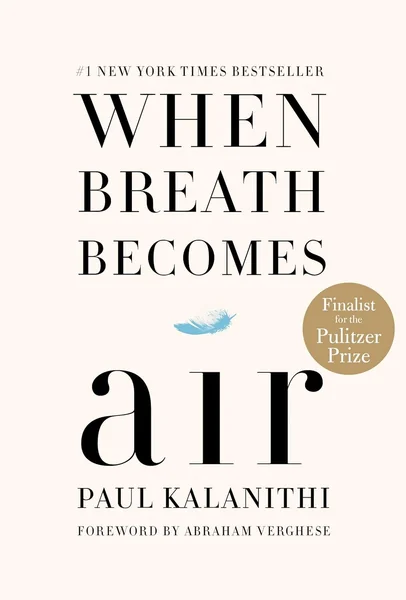
When Breath Becomes Air is the memoir of Paul Kalanithi, a neurosurgeon at Stanford who, at thirty-six and on the verge of completing a decade of surgical training, was diagnosed with stage IV lung cancer. Written as he was dying, and completed with an epilogue by his wife Lucy Kalanithi, the book is a Pulitzer Prize finalist and a New York Times bestseller that spent 68 weeks on that list, selling over two million copies and reaching readers in more than 40 languages. It is one of the most widely read meditations on mortality, meaning, and what constitutes a life well lived to emerge from American medicine in recent memory.
LuvemBooks Verdict
Best for
Anyone grappling seriously with mortality, the gap between ambition and time, or the meaning of parenthood under conditions of loss — particularly readers who want a memoir that brings genuine literary intelligence to medicine's most human questions.
Worth it if
You want a memoir of uncommon moral seriousness that turns one man's dying into a meditation on what makes a life worth living, written with the plainness and restraint of someone equally at home in an operating theatre and an English literature seminar.
Skip if
You come to it hoping for a deep, unflinching examination of surgical culture and the physician's interior life — the pre-diagnosis neurosurgery sections are, by critical consensus, the least compelling part, and the book's true power only fully ignites once illness forces Kalanithi out of his role as doctor.
What readers & critics say
Kirkus Reviews calls it "a moving meditation on mortality by a gifted writer whose dual perspectives of physician and patient provide a singular" lens, noting that what makes the book essential is that it was written under a death sentence just as Kalanithi was poised to reach the summit of his profession. The Guardian praises his plain, matter-of-fact prose entirely free of self-pity — observing that readers are immediately gripped — while also identifying the neurosurgery sections as the least interesting portion of the memoir, suffering by comparison with Henry Marsh's Do No Harm in terms of self-reflection about clinical identity.
“Kalanithi writes very well, in a plain and matter-of-fact way, without a trace of self-pity, and you are immediately gripped and carried along.”
— The Guardian“The least interesting part is the section on neurosurgery, which suffers by comparison with Henry Marsh's wonderful memoir.”
— The Guardian“Part of what makes this book so essential is the fact that it was written under a death sentence following the diagnosis that upended his life.”
— Kirkus ReviewsAsk LuvemBooks
Was this helpful?
- Is it worth reading?
- For readers willing to sit with genuinely hard questions — about mortality, the gap between ambition and time, and what it means to become a parent as another life fades — When Breath Becomes Air is an extraordinary read. Critics noted that Kalanithi writes in a plain, matter-of-fact way without a trace of self-pity, and that readers are immediately gripped and carried along; the restraint and specificity work together rather than against each other. The one caveat worth knowing in advance: the sections covering Kalanithi's clinical life before his diagnosis are the least engaging portion, and readers hoping for a deep, unflinching examination of surgical culture may find that dimension thinner than expected.
- Similar books
- Readers drawn to When Breath Becomes Air often find similar resonance in a handful of companion titles. Joan Didion's The Year of Magical Thinking approaches grief with the same unsentimental precision, while Atul Gawande's Being Mortal: Medicine and What Matters in the End engages mortality from a physician's perspective with sharper systemic critique. Randy Pausch's The Last Lecture shares the premise of a life cut short but takes a more explicitly hopeful register. For memoirs of personal reinvention and survival, Cheryl Strayed's Wild and Tara Westover's Educated — both in the LuvemBooks catalogue — chart different but equally harrowing journeys of self-discovery. Jean-Philippe Soulé's Dancing with Death, also in the catalogue, offers another first-person confrontation with mortality and the drive to live fully in the shadow of death.
- Who should read this?
- When Breath Becomes Air is written for adult readers who want to think seriously about mortality, meaning, and what constitutes a life well lived — not as an abstract exercise but through the specific, grounded experience of one person facing those questions under deadline. It will resonate particularly with readers in or adjacent to medicine, with anyone who has navigated serious illness in themselves or a loved one, and with readers drawn to the intersection of literature and science; Kalanithi's background in English literature gives the prose a quality rare in physician-authors. Those seeking a hard-edged critique of surgical culture or hospital systems will find that angle underdeveloped.
- How emotionally demanding is the read?
- The emotional demands are real but never exploitative. Critics observed that Kalanithi writes without a trace of self-pity, and the plain, matter-of-fact voice actually intensifies rather than softens the impact — particularly in the passages where he knows something is wrong but has not yet had the tests to confirm it, rendered in what one reviewer called horrible detail. Lucy Kalanithi's epilogue is described as heart-wrenching in its own right. Readers who find books about dying difficult should know this is an immersive, unsentimental account of exactly that — but one shaped by a writer who believed, as Stanford Medicine has recorded, that the doctor must relate to patients as fellow human beings.
- Does the literary background matter?
- Kalanithi's postgraduate degree in English literature is a meaningful part of what makes When Breath Becomes Air distinctive. He wrote his undergraduate thesis on Walt Whitman's vision of the physiological-spiritual person who could only be understood by a physician — a preoccupation that runs through the book's treatment of identity, the body, and what it means to inhabit both a clinical and a humanistic worldview. That background gives the prose a quality rare in physician-authors, and it explains why the book reads less like a medical document and more like a serious work of literary memoir.
- How widely has the book been read?
- The numbers are remarkable: When Breath Becomes Air spent 68 weeks on the New York Times bestseller list, has sold over two million copies, and has been translated into more than 40 languages — a reach that speaks to how directly its central questions transcend any single culture or profession. It was a Pulitzer Prize finalist. According to Stanford Medicine, Lucy Kalanithi still receives weekly notes of gratitude nearly a decade after her husband's death — a measure of ongoing resonance that few memoirs of any kind sustain. The review is clear that this reach is not a publishing accident but a reflection of how universally the book's questions land.
Summarize this book
Follow up
Synthesized from verified book data & published reviews · How we review
Press Enter to ask. Answers come from our editorial Q&A — start typing to see related questions.
Age & Reading Level
Recommended age
Adult
Reading level
Adult
2 content notes · who it suits
Content to know about
Skip if you are looking for an unflinching critique of surgical culture or the physician's interior life — that dimension is comparatively thin.
Our Review
What the Book Actually Is
Significance and Reception
Where the Writing Is Strongest
A Real and Specific Limitation
Who This Book Is For — and Why It Endures
Sources & Further Reading
The key facts and claims in this review are grounded in the retrieved, verified sources listed below.
- Cited in this review
- 1
med.stanford.edu
- Further reading
- 2
- 3
pulitzer.org
- 4
- 5
- 6
tatteredcover.com
- 7
bookshopsantacruz.com
- 8
penguinrandomhouse.com
- 9
barnesandnoble.com
Books like When Breath Becomes Air
Curated picks for readers who enjoyed When Breath Becomes Air, with our reasoning for each match.
If you liked When Breath Becomes Air