8 min read
4.5
· 21 Amazon ratingsShare This Review

Our review
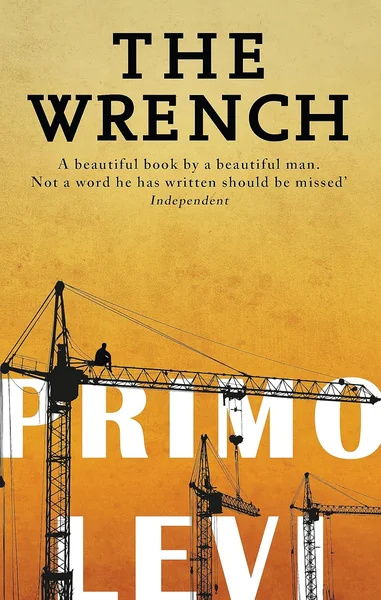
The Wrench
The Wrench by Primo Levi Review: A Joyful Ode to Work and Storytelling
The Wrench (published in the U.S. As The Monkey's Wrench) is Primo Levi's most light-hearted novel — a celebration of skilled labour, human ingenuity, and the art of the tale, told through the unlikely friendship of a globe-trotting rigger and a chemist narrator. First published in Italian as La Chiave a Stella in 1978, it stands as a warmly comic departure from Levi's better-known Holocaust testimony, and remains one of his most distinctive and underappreciated works.
LuvemBooks Verdict
Best for
Readers drawn to literary fiction that takes skilled work seriously as a subject in its own right — particularly those already in Levi's orbit who want to encounter him at his most humorous and life-affirming, away from the shadow of Auschwitz.
Worth it if
You're willing to follow an episodic, anecdote-led structure in which the pleasures of craft, competence, and storytelling are the entire point — rather than a conventional plot.
Skip if
You come to Levi specifically for moral gravity and searching complexity; the novel's sustained warmth and optimism about industrial labour may feel one-note if that is what you are looking for.
What readers & critics say
Wikipedia's entry on the novel notes that commentators broadly agree it is the happiest and most humorous of Levi's works. The Independent, reviewing a reissue, describes it as having "acquired the reputation of being something of an oddity in Levi's oeuvre, especially given its more life-affirming properties," while acknowledging "real beauty in the moments of revelation."
“The stories have an honesty and humility that appeal to the chemist, who sees himself and chemists in general as riggers as well — admittedly bad ones.”
— Kirkus ReviewsAsk LuvemBooks
Was this helpful?
- Is it worth reading?
- The Wrench is a genuine rarity in literary fiction: a novel that takes skilled manual and technical labour seriously as a subject in its own right, with its own pleasures, frustrations, and dignity. Its semi-autobiographical grounding — including real incidents from Levi's time at SIVA, such as a failed acetic acid separation column that mirrors one Levi himself designed — gives the technical episodes an authority that sets them apart from fictional workshop-talk. The episodic format means it offers little in the way of conventional dramatic tension, and readers expecting Levi's more morally searching mode may find its sustained warmth one-note — but for readers open to a different register, it is bracing and distinctive.
- Similar books
- Readers drawn to The Wrench's episodic, anecdote-driven structure and its sense of a restless life told through accumulated stories may find a kindred spirit in Olga Tokarczuk's Flights, which similarly builds meaning through fragments and motion rather than linear plot. Wallace Stegner's Angle of Repose shares the novel's interest in work, craft, and lives defined by technical skill. Barbara Kingsolver's Demon Copperhead offers another literary fiction that takes seriously the world of physical labour and working-class experience. For readers who enjoy the frame-narrative, story-within-a-story architecture, Margaret Atwood's The Blind Assassin is a further point of comparison. Levi's own The Periodic Table and Other People's Trades are the most direct companions within his canon, sharing the linked-episode structure and the homo faber preoccupation.
- Who should read this?
- The Wrench rewards readers drawn to literary fiction that takes work seriously — not as metaphor or background, but as a subject in its own right, with its own pleasures, frustrations, and dignity. It is particularly well suited to readers who enjoy linked-story structures, character studies built through accumulation rather than plot, and writing that is both intellectually grounded and genuinely warm. Existing Levi readers will find it a striking and necessary counterpart to If This Is a Man and The Periodic Table; readers new to Levi will want to come back to it after The Periodic Table as their entry point.
- About Primo Levi
- Primo Michele Levi was a Jewish Italian chemist, partisan, Holocaust survivor and writer.
- How was it received by critics?
- Commentators broadly regard The Wrench as Levi's most joyful and humorous work, and it has been described as a comic novel. However, its critical reception was not without friction: at the time of its 1978 publication, Italian leftist critics took issue with the novel's enthusiastic, almost celebratory portrayal of manual and industrial labour, arguing it was too untroubled — too positive about the conditions of work in a capitalist industrial economy. That debate points to something real in the book: its optimism about skilled physical labour genuinely resists easy ideological categorisation.
- Is this a good book club pick?
- The Wrench makes for a rich book club selection, particularly for groups interested in literary fiction that engages seriously with work, craft, and the meaning of a well-made thing. The novel's contested critical history — including the sharp pushback from Italian leftist critics over its optimistic portrayal of industrial labour — supplies a ready-made discussion thread about politics, ideology, and whether literature has an obligation to critique the conditions of work it depicts. Its episodic structure also means individual stories can be discussed on their own terms, making it accessible even for members who engage with it partially.
- Where should I start with Primo Levi?
- For most readers, The Periodic Table is the recommended entry point into Levi's work: it is his most celebrated book and shares The Wrench's linked-episode structure while also conveying the full moral and emotional range of his voice. Readers who know Levi primarily through If This Is a Man — his account of Auschwitz — will find The Wrench a striking counterpart, offering a Levi unclouded by trauma and delighting in the mechanics of the world and of storytelling.
Summarize this book
Follow up
Synthesized from verified book data & published reviews · How we review
Press Enter to ask. Answers come from our editorial Q&A — start typing to see related questions.
Our Review
What the Book Actually Is
Levi's Place in His Own Canon
The Semi-Autobiographical Texture
Reception and Genuine Tensions
Who This Book Is For
Sources & Further Reading
The key facts and claims in this review are grounded in the retrieved, verified sources listed below.
- 1
Primo Levi, Wikipedia
Age & Reading Level
Recommended age
Adult
Reading level
Adult
who it suits
Skip if you're looking for Levi's morally searching, trauma-inflected register — this novel's sustained optimism about industrial work is a deliberate and significant departure from that mode.
Reader reviews
Be one of the first readers to answer.
Read it? Was it right for you?
Books like The Wrench
Curated picks for readers who enjoyed The Wrench, with our reasoning for each match.

If you liked The Wrench