8 min read
4.2
· 6,761 Amazon ratingsShare This Review

Our review
The Blind Assassin
The Blind Assassin by Margaret Atwood Review: A Booker-Winning Feat of Layered Storytelling
Margaret Atwood's The Blind Assassin is a structurally daring, prize-winning novel that weaves multiple narratives across twentieth-century Canada, earning the Booker Prize in 2000 and a place on Time magazine's list of the 100 greatest English-language novels since 1923 — though its deliberate coldness and considerable length are not for every reader.
LuvemBooks Verdict
Best for
Readers who relish formally ambitious literary fiction — nested narratives, unreliable retrospective voices, and the slow, satisfying accumulation of withheld truths — and who have an appetite for mid-century Canadian social history and stories about women navigating class, marriage, and silence.
Worth it if
Worth the investment if you are genuinely engaged by postmodern narrative architecture and are prepared to follow Atwood's layered structure across 521 pages to reach a revelation that reframes everything before it.
Skip if
Skip it if you need propulsive plotting, emotional warmth, or deep character interiority — at its steeliest, this is a cool, cerebral novel that will frustrate readers expecting the moral urgency or intimacy of Atwood's other work.
What readers & critics say
The Guardian praised Atwood's "mastery of dense, complex fictions from carefully layered narratives" and her "exceptional story-telling skills," while Kirkus Reviews acknowledged it as "her most ambitious and challenging work to date" but noted it is "short on characterization" with Atwood "never a warm writer, at her steeliest." Publishers Weekly called it a "spellbinding family saga" marked by "loss and regret and memory and yearning."
“Atwood demonstrates she has mastered the art of creating dense, complex fictions from carefully layered narratives — hooking readers through exceptional story-telling skills.”
— The Guardian“Her most ambitious and challenging work to date — but short on characterization; this is Atwood, never a warm writer, at her steeliest.”
— Kirkus ReviewsAsk LuvemBooks
Was this helpful?
- Is it worth reading?
- For the right reader, The Blind Assassin is genuinely essential: it won the Booker Prize and the Hammett Prize, and Time magazine named it among the 100 greatest English-language novels since 1923 — a record that places it among the most formally recognized literary novels of its decade. Its pleasures are intellectual as much as emotional, arriving from the slow accumulation of revelation across its 521 pages and the eventual satisfaction of understanding how its nested layers fit together. The key caveat, as LuvemBooks' review emphasizes, is that Atwood is 'never a warm writer, at her steeliest' here — readers seeking emotional warmth, deep character interiority, or propulsive plotting are better served by other Atwood titles. Those willing to engage with narrative indirection and a deliberately measured pace will find it repays sustained attention.
- Who should read this?
- The Blind Assassin is designed for readers who are genuinely comfortable with — and engaged by — narrative indirection, unreliable perspective, and the slow accumulation of revelation. Readers drawn to mid-century Canadian social history, to stories about women navigating class, marriage, and silence, or to fiction that takes formal experimentation seriously will find it especially rewarding. Those expecting the moral urgency of The Handmaid's Tale, or who want propulsive plotting or emotional directness, are better served by other Atwood titles. The novel rewards patience and intellectual engagement above emotional identification.
- Similar books
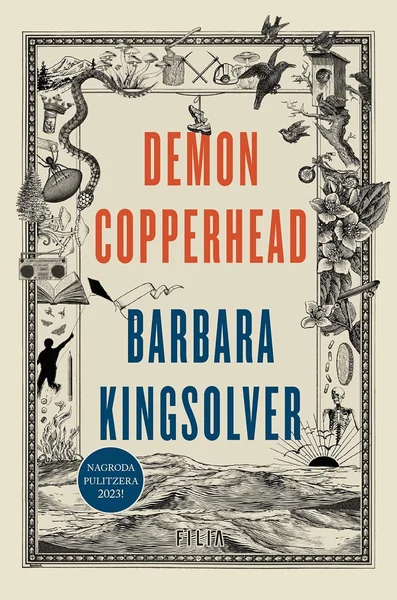
- Readers drawn to The Blind Assassin's blend of formal ambition, women's interior lives across time, and literary weight will find strong companions among the curated titles below. Wallace Stegner's Angle of Repose similarly uses a narrator reconstructing a woman's life across decades through layered, unreliable documents. Maggie Shipstead's Great Circle offers another structurally ambitious, multi-era narrative centered on a woman's life and legacy. Olga Tokarczuk's Flights shares Atwood's appetite for fragmentary, non-linear structure and intellectual coolness. Elizabeth Strout's Olive Kitteridge provides a portrait of a woman's life in compressed, interlocking episodes — warmer in register but equally precise. Barbara Kingsolver's Demon Copperhead, like The Blind Assassin, is a Pulitzer-recognized literary novel with a strong sense of social and historical place.
- What are the main themes?
- The Blind Assassin's central argument — embedded in its very structure — concerns how women's lives are recorded, obscured, and eventually recovered. Through Iris Chase's retrospective narration and the layered texts attributed to her sister Laura Chase, the novel explores women navigating class, marriage, and silence in twentieth-century Canada. The nested narratives also interrogate memory, unreliable perspective, and the relationship between storytelling and power. The embedded science-fiction tale of a blind assassin on a distant planet functions as a counterpoint to Iris's measured voice, expanding the novel's tonal range while reinforcing its preoccupation with clandestine lives and concealed truths.
- Is it a good book club pick?
- The Blind Assassin offers rich, substantive discussion material: its three-layer narrative structure, the question of what Iris has concealed throughout her account, and its central argument about how women's lives are recorded and obscured all generate genuine debate. The novel's critical reception — from Salon's praise for its 'dark humor and deft hand' to Thomas Mallon's dissenting 'overlong and badly written' — also provides a ready-made entry point for groups who enjoy disagreeing about a book. The primary challenge for book clubs is the 521-page length and deliberately measured pace, which may test groups on a tight schedule. Groups willing to commit to the investment will find it rewards the conversation.
- How does it compare to The Testaments?
- The Testaments — also by Atwood and reviewed by LuvemBooks in its TV tie-in edition — is the sequel to The Handmaid's Tale and operates at a more propulsive narrative pace with a clearer moral urgency. The Blind Assassin, by contrast, is structurally denser and emotionally cooler, with its pleasures arriving through cumulative intellectual revelation rather than momentum. Readers who found The Testaments compulsively readable may find The Blind Assassin's measured pace and steely emotional register a significant shift — though both demonstrate Atwood's formal control and range.
Summarize this book
Follow up
Synthesized from verified book data & published reviews · How we review
What would you like to know about The Blind Assassin?
Answers come from our editorial notes on this book. If we haven't covered something, we'll say so.
Readers often ask
Our Review
What the Novel Actually Is
Its Place in Atwood's Career and the Wider Canon
What the Novel Does Well
Genuine Limitations and Dissenting Views
Who This Novel Is For
Sources & Further Reading
The key facts and claims in this review are grounded in the retrieved, verified sources listed below.
- Cited in this review
- 1
penguinrandomhouse.com
- 2
en.wikipedia.org
- 3
kirkusreviews.com
- 4
publishersweekly.com
- Further reading
- 5
compulsivereader.com
- 6
quillandquire.com
- 7
lastwordbooks.org
- 8
youronlinebookstore.com
Age & Reading Level
Recommended age
Adult
3 content notes · who it suits
Content to know about
Best for: Adults — the novel's complex nested structure, retrospective unreliable narration, and themes of coercion, clandestine affairs, and women's suppressed lives suit mature readers.
Skip if you want emotional warmth, propulsive plotting, or the moral urgency of The Handmaid's Tale — The Blind Assassin's cool, intellectually demanding register will disappoint those seeking those experiences.
Reader reviews
Be one of the first readers to answer.
Read it? Was it right for you?
Books like The Blind Assassin
Curated picks for readers who enjoyed The Blind Assassin, with our reasoning for each match.
More by Margaret Atwood


If you liked The Blind Assassin