BOOKS
Published

Read Time

8 min read

Reader rating

4.2

· 56,823 Amazon ratings
reader ratings, not a LuvemBooks score
Curated & edited by

LuvemBooks Editorial

How we create our reviews →
Share This Review

The Names by Florence Knapp Review: A Dazzling, Haunting Debut About Identity

Florence Knapp's debut novel The Names, a Read with Jenna Pick published by Pamela Dorman Books in May 2025, is a structurally inventive work of literary fiction that traces how a single maternal decision — what to name a child — fractures into three distinct life paths. Praised by Jojo Moyes as "an utter original" and by Elle as "a deft and lovely story," it has drawn wide critical acclaim for its spare prose, its three richly drawn casts of characters, and its unflinching exploration of domestic violence and the butterfly effect of identity.

LuvemBooks Verdict

Best for

Readers drawn to structurally ambitious literary fiction who want a morally serious, emotionally demanding exploration of how a single early decision — a child's name — can reshape identity, family, and generations, particularly those who appreciate braided timelines and unflinching treatment of domestic violence.

Worth it if

Worth it if you're ready to invest in three distinct casts of characters simultaneously and want fiction that is both intellectually generative — ideal for book clubs — and genuinely unsettling in the way it makes you interrogate your own history.

Skip if

Skip it if you're seeking lighter parallel-lives fare or find harrowing depictions of domestic violence and intergenerational harm too demanding — this novel is designed, as one critic put it, to leave marks.

Bookshop.org aggregates praise from Elle, which calls it "a grounded, gut-wrenching portrait of the butterfly effect… a deft and lovely story," and from People, which labels it "a wholly original work," while Parnassus Books surfaces a starred critical coverage notice describing it as "compelling [and] emotionally wrenching." Fictionophile calls it "an exceptionally original novel" while noting it can be difficult to read at times, and Tertulia highlights the "brilliantly imaginative structure, propulsive storytelling, and emotional, gut-wrenching power" praised in its blurb copy.

Sources: Bookshop.org, Parnassus Books, Fictionophile, Tertulia
4.2from 56,823 Amazon ratings— reader ratings, not a LuvemBooks score
Trending Now
Trending

The Names: A Read with Jenna Pick by Florence Knapp is Trending

Updated Aug 2, 2026
In This Review
  • What Works & What Doesn't
  • What the Novel Is and What It Does
  • The Central Stakes: Domestic Violence and the Butterfly Effect
  • Craft and Prose Style
  • Reception and Significance
  • Who It Is For and Where It Challenges

What Works & What Doesn't

What Works
  • Structurally inventive parallel-timeline premise grounded in genuine emotional and moral stakes, not mere cleverness
  • Praised across multiple outlets for spare, luminous prose that sustains tonal consistency across three distinct narrative threads
  • Unflinching yet sensitive treatment of domestic violence, earning specific critical praise for how it captures intergenerational damage
  • Selected as a Read with Jenna Pick and endorsed by a wide range of acclaimed authors, signaling broad literary credibility
  • Identified by the Minneapolis Star Tribune as exceptional book-club fiction — intellectually generative as well as emotionally resonant
What Doesn't
  • The novel's frank engagement with domestic violence and its consequences makes for demanding, at times harrowing reading — not suited to readers seeking lighter fare
  • The three-timeline structure, while praised for originality, asks readers to invest in three separate casts of characters simultaneously, which may test patience early on
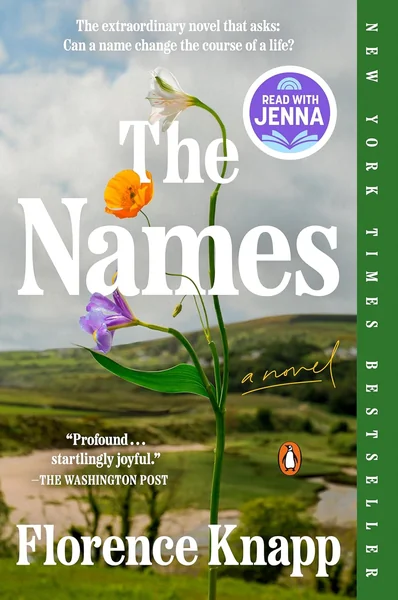
Florence Knapp's debut is a wholly original feat of structure and feeling — one that earns its blurb-laden launch without leaning on them.
The Names: A Read with Jenna Pick: A Novel by Florence Knapp front cover

What the Novel Is and What It Does

The Names begins with an ordinary act — a mother naming her child — and builds an entire architecture of consequence from it. The novel unfolds across three parallel timelines, each springing from a different name given to the same child, tracking how that single choice reshapes not only the child's identity but the lives of everyone around her across generations. Penguin Random House describes it as a novel that explores "with remarkable sensitivity how we become who we are," and the premise bears that description out: this is less a gimmick than a genuinely sustained meditation on fate, family, and the quiet violence of circumstance. As Maria Shriver's Sunday Paper puts it, it is a book about "how one mother's decision reshapes generations."
emblematic of the ways domestic violence can damage all the members of a family.

The Central Stakes: Domestic Violence and the Butterfly Effect

What distinguishes The Names from lighter treatments of the parallel-lives conceit is its moral seriousness. Domestic violence runs through the novel's DNA, and J. Courtney Sullivan, writing in her blurb, notes that Knapp's characters are "emblematic of the ways domestic violence can damage all the members of a family." The three timelines are not simply thought experiments in optimism and regret — they are a structural argument about how vulnerability, escape, and harm ripple outward through families in ways that a single early decision can accelerate or deflect. Elle describes the result as "a grounded, gut-wrenching portrait of the butterfly effect," capturing how Knapp anchors a speculative premise in recognizable, emotionally costly human experience.

Craft and Prose Style

Critical attention has repeatedly landed on Knapp's sentence-level writing. Rosie Walsh, praising the novel on Penguin Random House's own pages, highlights Knapp's "spare, luminous prose" and the complexity of three distinct casts of characters, "each as complex and human as the other." Chris Whitaker, writing there as well, calls the book "bitterly beautiful" — a phrase that captures the tonal balance Knapp maintains between hope and devastation. People called it "a wholly original work," while Elle's description of it as "deft and lovely" points to the same quality: a style that never overstates its own sorrow. For a debut, the consistency of that register across three separate narrative threads is a notable achievement.

Reception and Significance

The novel launched with significant institutional backing — selected as a Read with Jenna Pick and published by Pamela Dorman Books — and the critical response has matched that positioning. Anne Griffin called Florence Knapp's debut the kind of book that "lives up to the hype." The Minneapolis Star Tribune assessed it as an "insightful" debut with "book club" written all over it, one "guaranteed to make readers reflect about their own lives — how they compare to the characters' lives, how they might have gone differently if a few circumstances were changed." That dual appeal — emotionally immediate and intellectually generative — is precisely what has made it a natural fit for group reading and discussion.

Who It Is For and Where It Challenges

The Names rewards readers drawn to structurally ambitious literary fiction: those who enjoy working across braided timelines and tracking the slow divergence of lives that share a common origin. The novel's exploration of domestic violence means it carries genuine emotional weight, and readers seeking lighter parallel-lives fare may find its stakes demanding. The Minneapolis Star Tribune notes the book's power to make readers interrogate their own histories, which is both its greatest strength and the quality most likely to unsettle: this is a novel designed to leave marks. Helen Simonson described being "haunted" by it, and Rosie Walsh singled out the characters' "thirst for hope and redemption" as what kept her tethered through their darkest moments — a useful signal for prospective readers calibrating their own readiness for where the three timelines go.

Sources & Further Reading

The key facts and claims in this review are grounded in the retrieved, verified sources listed below.

  1. Cited in this review
  2. 1
  3. 2
  4. Further reading
  5. 3

    Florence Knapp, Wikipedia