Skip to content
Reviewed

Read Time

10 min read

Our age bandAdult
Reader rating
3.2 · 1,506 Amazon ratings, as of Nov 2026
reader ratings, not a LuvemBooks score
Curated & edited by

LuvemBooks Editorial

How we create our reviews →
Share This Review
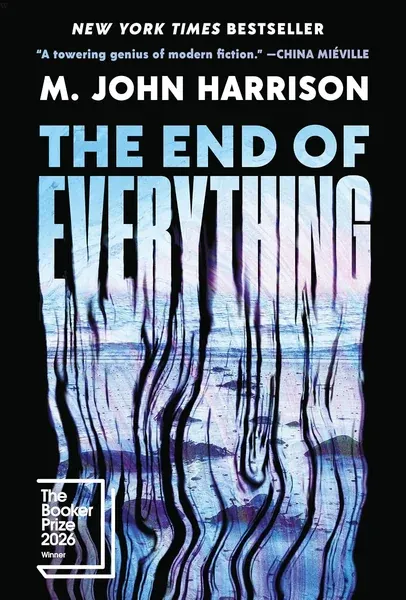
The End of Everything (Booker Prize Winner): A Novel by M. John Harrison front cover

Our review

The End of Everything

The End of Everything by M. John Harrison Review: A Genre-Defying Booker Winner

M. John Harrison's The End of Everything captures the 2026 Booker Prize for its unflinching, genre-defying portrayal of societal collapse. Readers seeking clear answers to its apocalyptic premise will be frustrated, but those drawn to literary ambiguity will find a profoundly rewarding experience.

Our age band: Adultsocietal collapse · dementia

LuvemBooks Verdict

Best for

Readers who appreciate literary ambiguity and atmospheric, genre-defying fiction will find a profoundly rewarding experience in this unflinching portrayal of societal collapse.

Worth it if

Worth reading if you are drawn to Booker Prize-winning literary fiction that deliberately subverts traditional worldbuilding.

Skip if

Skip it if you require clear explanations for an apocalyptic premise or expect a fast-paced, plot-driven narrative with definitive answers.

Where reviewers agree and split

Readers rate it 3.2 on Amazon. The reviews we read that discuss it in depth split on some points:

  • Positive

    The Guardian · Press review: praises prose and near-future speculative vision

  • Mixed

    Locus · Press review: analytical exploration of thematic uncertainty

  • Mixed

    Taskerland · Book blog: appreciates craft but notes confusing structure

Only nytimes.com and The Atlantic discuss its originality: both calls the work thoroughly original.

  • Originality

    2 calls the work thoroughly original

Originality

Praise

“Thoroughly original new novel”

— The New York Times · Press review
Praise

“Inverts the dystopian formula”

— The Atlantic · Press review
Overall verdicts are our summary of each review we read, from its headline, rating and conclusion. Topic counts use only words we can quote (2 reviews: 2 press reviews).

The Guardian praised Harrison’s prose and near-future speculative vision, while The New York Times called the novel a fascinating, sometimes frustrating and thoroughly original work that inverts standard dystopian tropes. Locus and Taskerland highlighted the book’s epistemically unstable world and blurred chronology, reflecting its deliberate refusal to explain the central catastrophe.

“precise descriptions with disquieting lacunae”

— The Guardian

“fascinating, sometimes frustrating and thoroughly original new novel”

— The New York Times

“inverts the dystopian formula, resonating with the modern feeling of slow-rolling collapse”

— The Atlantic
Sources: The Guardian, The New York Times, Locus, Taskerland
3.2from 1,506 Amazon ratings, as of Nov 2026— reader ratings, not a LuvemBooks score

Ask LuvemBooks

Was this helpful?

The End of Everything follows beachcomber Phillip Tennent and his aging aunt Marnie as they navigate a collapsed Europe and encounter the mysterious, shape-shifting iGhetti. Harrison deliberately withholds explanatory details to mirror the real-world failure of explanation, prioritizing atmosphere and psychological survival over traditional plot resolution. Readers will find a profoundly rewarding experience, while those seeking clear apocalyptic answers should look elsewhere.
Is it worth reading?
It delivers a compelling read for readers drawn to Booker Prize-winning literary fiction that subverts traditional worldbuilding. However, those seeking clear resolutions to its apocalyptic premise will likely find the deliberate ambiguity and dense prose frustrating.
Similar books
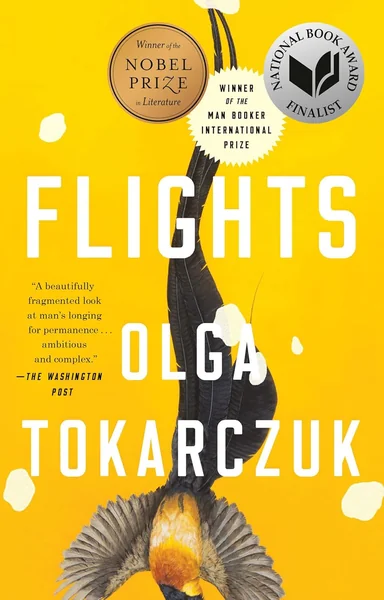
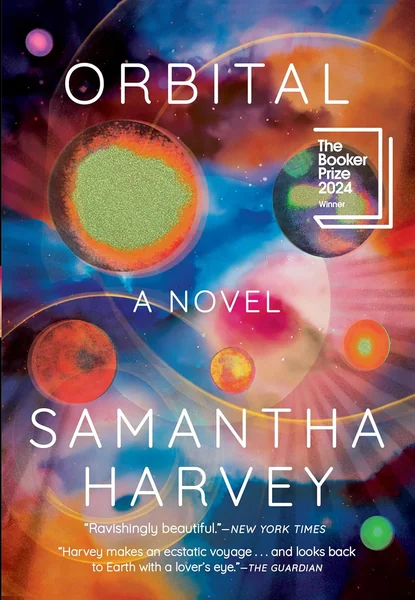
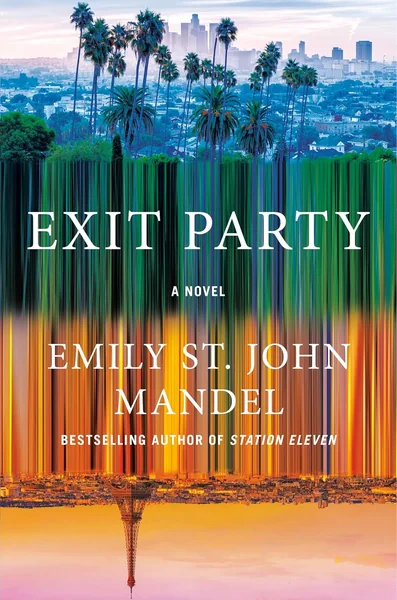
Readers who enjoy its atmospheric narrative style will appreciate Olga Tokarczuk's Flights and Samantha Harvey's Orbital for their atmospheric, boundary-pushing narratives. Emily St. John Mandel's Exit Party also offers a similarly grounded yet surreal exploration of societal shifts.
Who should read this?
The novel is best suited for readers who enjoy atmospheric narratives. It will particularly resonate with those who follow M. John Harrison’s career or enjoy complex, philosophical takes on modern existential themes.
What age is it for?
Written for adults, the book demands mature comprehension due to its dense literary prose and themes regarding dementia. While not explicitly graphic, its intellectual demands and thematic weight make it unsuitable for younger readers.
What are the central themes?
The narrative explores the failure of explanation, using an unexplained apocalypse and alien iGhetti to reflect contemporary anxieties. It also deeply examines aging, dementia through Marnie, and the quiet resilience required to navigate a world where old rules no longer matter.
Why did the author win the Booker Prize?
Harrison secured the 2026 Booker Prize at age eighty-one, marking the oldest win in the award’s history. Judges praised the work for turning contemporary politics through a speculative lens, noting it turns you upside down while leaving readers with a surprising twinge of optimism.
What is the writing style like?
The prose is dense and deliberately literary, bridging imaginative realism. Critics note its thematic depth, though some find the confusing structure and blurred chronologies challenging compared to accessible genre fiction.
Summarize this book

Summarize this book

Follows Phillip Tennent, a Kent coast beachcomber, and his aunt Marnie as they navigate a collapsed Europe and encounter the mysterious, shape-shifting iGhetti. Harrison deliberately withholds explanatory details to mirror the failure of explanation, prioritizing atmosphere and psychological survival over traditional plot resolution.

Follow up

What are the iGhetti?
Is the ending satisfying?
How does it connect to Harrison's other work?

Synthesized from verified book data & published reviews · How we review

Ask LuvemBooks

What would you like to know about The End of Everything?

Answers come from our editorial notes on this book. If we haven't covered something, we'll say so.

Readers often ask

Our Review

We review the evidence: published critics and reader verdicts, gathered and weighed with AI assistance and edited by LuvemBooks, rather than one reader's first-hand take.
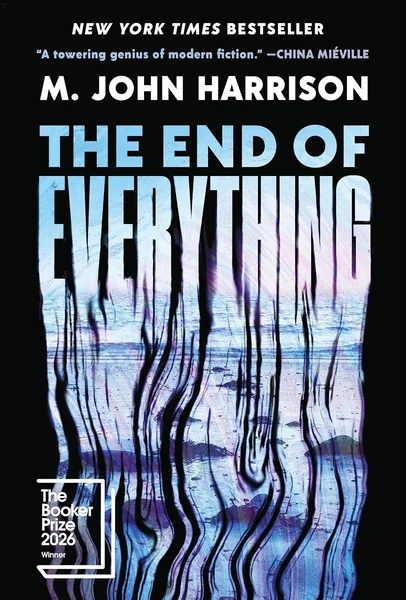
The End of Everything stands as a landmark achievement in speculative fiction, securing the 2026 Booker Prize for its unflinching portrayal of societal collapse.
The End of Everything (Booker Prize Winner): A Novel by M. John Harrison front cover

What the Book Argues and How It Unfolds

M. John Harrison’s novel operates as a post-apocalyptic adventure that deliberately rejects rational worldbuilding. The story follows Phillip Tennent, a beachcomber living on the Kent coast who makes a living collecting artifacts washed up from the sea.
These objects originate from a global crisis involving the iGhetti, vast and shape-changing beings whose origins and intentions remain entirely obscure. Central government has collapsed, and Europe is now considered a lost continent.
Phillip fishes out a peculiar artifact that refuses to stay static. The creature grows limbs, begins to speak, and develops a relationship with Phillip’s aging aunt, Marnie, who is an elderly artist suffering from dementia.
The narrative tracks their journey from the coast to London as Phillip attempts to sell the artifact while Marnie is driven from their community. The book opens with a moment of quiet uncertainty: Eventually it’ll turn into speech, Tennent said, without knowing why.
The premise serves as a vehicle for Harrison to explore what he termed the failure of explanation in society. Harrison, who spent the 1970s running the books pages of the speculative fiction magazine New Worlds, wanted the text to evoke the New Wave works serialized in that publication.
The novel deliberately leaves the nature of the apocalypse and the alien entities unexplained to mirror the incomprehensibility of real-world crises. Riverhead Books released the digital edition on October 13, 2026.
The Kindle version measures 2.5 MB and supports screen readers. The print length spans 206 pages, making it a concise volume.

Place in Speculative Fiction and Literary Fiction

The novel occupies a unique space by bridging the gap between genre science fiction and contemporary literary fiction. Critics have variously described the work as speculative fiction, dystopian, satirical, weird fiction, and realism.
Harrison has long been called a genre-defying writer who does not believe in genre in any way, and this volume solidifies that reputation. The setting of South East England in the near future provides a grounded backdrop for the surreal elements.
Monstrous iGhetti have appeared in the City of London, creating bad patches of anomalous and unstable environment. The story treats the apocalypse not as a spectacle to be conquered, but as a mundane reality that people must navigate.
Harrison’s background as a veteran of the speculative fiction industry informs the narrative’s texture. He sold his first story in 1965 and has published five short-story collections alongside his novels.
This latest work develops a storyline he first explored in his 2017 short story "The Crisis." The novel stands as his first Booker nomination and marks a significant shift in how the literary establishment views science fiction.
Nova Swing earned him the Arthur C Clarke award in 2007, and The Sunken Land Begins to Rise Again claimed the Goldsmiths prize in 2020.

Critical Reception and Thematic Ambition

The novel’s reception highlights its impact on both the literary and speculative fiction communities. The Guardian offered an overall positive verdict, praising the prose and near-future speculative vision, while noting that the book delivers "near-future visions from an SF master."
Locus provided a mixed assessment, focusing on an analytical exploration of thematic uncertainty, with the critic remarking, "I’m not certain about very much right now." The New York Times praised the originality, calling it a "Thoroughly original new novel."
The Atlantic also highlighted the originality, observing that the story Inverts the dystopian formula. Finally, Taskerland delivered a mixed review that appreciates the craft but notes a confusing structure, pointing out that "Cause and effect blur, internal chronologies dissolve."
Together, these perspectives demonstrate the work’s complex engagement with contemporary genre expectations.
The Guardian noted that Harrison became the oldest winner in the award’s history at eighty-one years old. Gaby Wood, chief executive of the Booker Prize Foundation, stated that Harrison was the first winner of the Booker Prize to come from the legitimate science fiction community.
This designation underscores the historical significance of the award for a writer whose decades of work are lightly worn on every page. Mary Beard, chair of the judges, added that the book "turns you upside down, raises a wry smile – and surprisingly, given the subject matter, leaves you with a twinge of optimism."
Mary Beard emphasized that the book reflects the politics of now seen through the lens of the future. The judges noted that the old rules no longer matter in Harrison's imagined world.
The book was recognized as one of the Financial Times' best books of 2026 and achieved status as a New York Times bestseller. It beat out higher-profile books by authors such as Marlon James, Elizabeth Strout, and Douglas Stuart.
Harrison received the £50,000 award and trophy at a ceremony in London on Monday evening. David Szalay, the 2025 winner, presented the trophy to him at Old Billingsgate.
Serpent's Tail printed 148,000 copies to satisfy expected demand following the prize announcement. The unanimous decision by the judges after a full day of discussion reflects the novel's ambitious thematic scope.

Genuine Limitations and Points of Contention

The novel’s deliberate refusal to explain its central mysteries creates a specific limitation for certain readers. Harrison eschewed rational worldbuilding to portray the failure of explanation in society, which means the plot offers no clear resolutions to the crisis.
Readers expecting a traditional apocalyptic narrative with defined villains or a path to salvation will likely find the pacing and ambiguity frustrating. The narrative focuses heavily on the psychological and physical journey of Phillip and Marnie rather than on large-scale action.
The iGhetti remain distant and unknowable forces rather than active antagonists in a conventional sense. This approach prioritizes atmosphere and thematic resonance over plot-driven momentum.
Furthermore, the book’s dense prose and literary ambitions may alienate readers who prefer accessible genre fiction. The text demands active engagement with its surreal imagery and philosophical undertones.
Those looking for straightforward entertainment may find the experience intellectually demanding. The Spectator Australia published a review.
This deliberate subversion of genre expectations alienates readers seeking conventional adventure. The storyline develops from his 2017 short story "The Crisis," which appeared in the Times Literary Supplement.
That earlier work was set in London where alien entities first appeared. Harrison expands the scope to the south coast of England, shifting the focus to beachcombing and artifact collection.

Is It Worth Reading?

The End of Everything is a vital read for readers who appreciate literary ambiguity and genre-bending narratives. It offers a profound meditation on how individuals cope when the world around them becomes fundamentally incomprehensible.
The novel succeeds by refusing to provide easy answers, instead leaving readers with a lingering sense of unease and cautious hope. Readers who prefer tightly plotted science fiction or traditional dystopian tales should approach the book with adjusted expectations.
It is best suited for those who value atmospheric prose and thematic depth over conventional storytelling. The novel stands as a testament to Harrison’s enduring creativity and his ability to reshape familiar genres.
The book’s status as a Booker Prize winner and a New York Times bestseller confirms its broad appeal across literary boundaries. It bridges the gap between speculative fiction enthusiasts and general literary readers.
The novel remains a singular achievement that challenges conventions while delivering a deeply human story. It appeals to readers who enjoy weird fiction and realism blended with dystopian themes.
It challenges conventional science fiction tropes by refusing to explain the alien invasion. Harrison's prose demands patience but rewards attentive readers with a unique philosophical perspective.
The End of Everything stands as a formidable exploration of what it means to be human in a shifting world. It remains a defining work of contemporary speculative fiction that transcends its genre boundaries.

Sources & Further Reading

The key facts and claims in this review are grounded in the retrieved, verified sources listed below.

  1. 1
  2. 2
  3. 3
  4. 4
  5. 5
  6. 6
  7. 7
  8. 8
  9. 9

    theguardian.com

  10. 10
  11. 11

    locusmag.com

  12. 12

    tasker.land

Age & Reading Level

Our age band

Adult

Our age band groups books for browsing; it isn't an age a review gave.

Content to know about

societal collapse
dementia
unexplained apocalyptic crisis
dense philosophical prose

Best for: Adults — complex philosophical themes and dense literary prose demand mature comprehension.

Skip if you require clear explanations for an apocalyptic premise or expect a fast-paced, plot-driven narrative with definitive answers.

From our readers

Reader reviews

No LuvemBooks readers have answered yet.

Read it? Was it right for you?

Discussion

Reader comments