8 min read
4.3
· 8,622 Amazon ratingsShare This Review

Our review
The Brief Wondrous Life of Oscar Wao
The Brief Wondrous Life of Oscar Wao by Junot Díaz Review: A Pulitzer-Winning Dominican-American Epic
Junot Díaz's debut novel follows Oscar de León — a lovesick, sci-fi-obsessed Dominican-American from New Jersey — alongside his fiercely resilient sister Lola and their scarred mother Belicia, tracing the family's turbulent arc between Santo Domingo and the United States. Winner of the 2008 Pulitzer Prize for Fiction and the National Book Critics Circle Award, the novel is widely recognised as a landmark of contemporary American literature, praised for its adrenaline-powered prose, its panoramic sweep of Dominican history, and its unflinching examination of love, diaspora, and survival.
LuvemBooks Verdict
Best for
Readers drawn to multigenerational immigrant fiction who want a formally ambitious novel — one that blends Dominican-American history, geek-culture allusion, code-switching prose, and footnoted political catastrophe into a single, emotionally raw family saga.
Worth it if
You're prepared to meet a digressive, footnote-laden, bilingual narrator on its own terms and want fiction that earns its emotional weight by placing personal longing inside genuine historical horror.
Skip if
You prefer linear storytelling with a clean narrative drive — the novel's structural ambition, dense pop-culture register, and historical digressions are intrinsic to its identity and cannot be separated from it.
What readers & critics say
The Pulitzer Prize jury (pulitzer.org) praised Díaz for rendering "the Dominican-American experience" with "genuine warmth and dazzling energy, humor, and insight," calling it "a true literary triumph." Kirkus Reviews (kirkusreviews.com) highlighted the novel's "earthy, streetwise, Spanish-interlaced prose" and its oblique but damning indictment of the Trujillo regime, while compulsivereader.com described the writing as "spectacularly confident and witty" and "scatalogical, alive, and full of allusions to popular culture and classical literature alike."
“In earthy, streetwise, Spanish-interlaced prose, Díaz links overweight, nerdy fantasist Oscar, his combative, majestic sister and their once Amazonian mother to the island of their ancestry.”
— kirkusreviews.comAsk LuvemBooks
Was this helpful?
- Is it worth reading?
- For readers prepared to engage with its demanding architecture, Oscar Wao is widely regarded as one of the most fully realized American novels of its era. It won the 2008 Pulitzer Prize for Fiction and the National Book Critics Circle Award — a rare double for a debut — and major outlets including Newsweek and the San Francisco Chronicle praised it as a landmark of contemporary American fiction. Its emotional core, Oscar's aching longing to be loved, is genuinely moving, even as the novel surrounds it with layers of history, myth, and linguistic play. Readers who embrace its digressive, code-switching register will find it extraordinary; those seeking a more linear narrative may need to adjust their expectations.
- Similar books
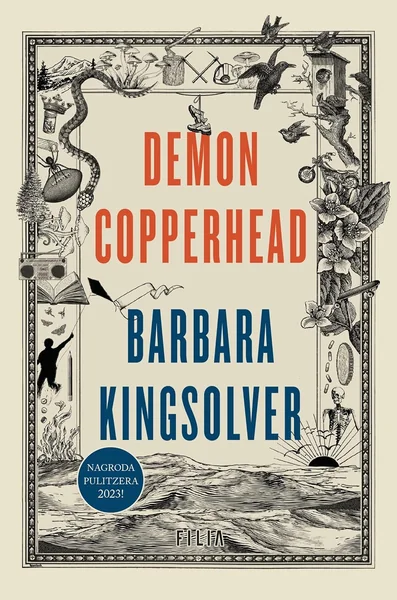
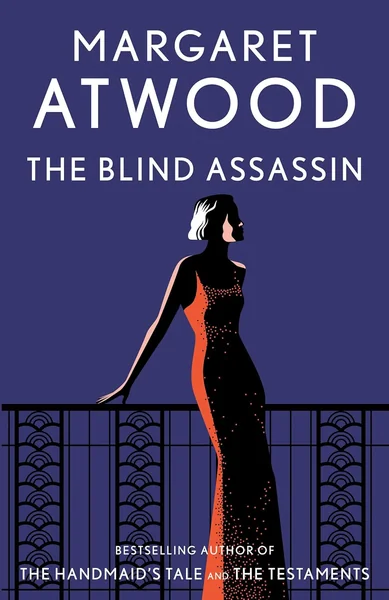
- Readers drawn to Oscar Wao's multigenerational family saga and deep engagement with historical trauma may also appreciate Demon Copperhead by Barbara Kingsolver, another Pulitzer Prize-winning novel that traces a life shaped by systemic forces, or The Blind Assassin by Margaret Atwood, which similarly interweaves personal drama with historical catastrophe across generations. Angle of Repose by Wallace Stegner and Great Circle by Maggie Shipstead both share the novel's epic scope and interest in lives caught between geographies and eras. Drown, Junot Díaz's earlier short story collection, offers a closely related portrait of Dominican-American experience and is a natural companion read, though it is not currently in the LuvemBooks catalogue.
- Who should read this?
- Oscar Wao is best suited to adult readers of literary fiction who are comfortable with a narrator who digresses, footnotes, and code-switches between academic, vernacular, bilingual, and deeply nerdy registers. Readers with an interest in Dominican history, the Trujillo dictatorship, or the immigrant experience in the United States will find particular resonance, as will fans of ambitious, structurally inventive fiction. The San Francisco Chronicle suggested that 'a new America can recognize itself' in its pages — and that everyone else can too — making it broadly rewarding for readers willing to meet the book on its own demanding terms.
- What are the main themes?
- Love, diaspora, and survival are the novel's central preoccupations, anchored in Oscar's consuming, unrequited longing for connection and the family's broader struggle to persist across generations of historical trauma. The Trujillo dictatorship functions as a gravitational historical force, giving the novel strong political and moral dimensions around state terror and its long shadow over immigrant life. Penguin Random House's publisher description frames it as an exploration of 'the endless human capacity to persevere — and risk it all — in the name of love,' while the prose itself raises questions about identity, language, and what it means to be Dominican-American.
- Is this a good book club pick?
- Oscar Wao is exceptionally rich book club material, offering discussion threads on its structural choices — particularly the footnote-driven historical digressions — its code-switching narrative voice, the Trujillo dictatorship's role in shaping immigrant experience, and the contrasting characters of Oscar, Lola, and Belicia across generations. Its status as a Pulitzer Prize and National Book Critics Circle Award winner gives it cultural weight, while the genuine tension between its ambition and its accessibility (the digressive structure that some readers find essential and others find disruptive) makes for productive disagreement. Groups with members familiar with Dominican-American history or immigrant experience may find particularly personal resonance.
- Tell me about the adaptation
- Director Walter Salles, known for The Motorcycle Diaries, was at one point attached to adapt Oscar Wao for the screen — a measure of how broadly the novel's appeal has been felt beyond literary circles. However, according to the review, the rights have since reverted, meaning no active adaptation is currently in production. The novel's densely footnoted, code-switching structure presents considerable challenges for screen translation, and no completed film or television adaptation exists at this time.
- Where should I start with Junot Díaz?
- Oscar Wao is Junot Díaz's debut novel and his most celebrated work, representing the fullest expression of his voice and his multigenerational, Dominican-American subject matter. Readers wanting a shorter or more accessible introduction to his writing might consider Drown, his earlier short story collection, which offers a closely related portrait of Dominican and Dominican-American experience in a less structurally demanding format. For most readers, however, Oscar Wao — the Pulitzer and National Book Critics Circle Award winner — is the natural starting point.
Summarize this book
Follow up
Synthesized from verified book data & published reviews · How we review
Press Enter to ask. Answers come from our editorial Q&A — start typing to see related questions.
Our Review
What the Novel Actually Is
Scope and Significance
Distinctive Strengths
The Weight of History
Who This Novel Is For
Sources & Further Reading
The key facts and claims in this review are grounded in the retrieved, verified sources listed below.
- 1
en.wikipedia.org
- 2
pulitzer.org
- 3
- 4
junotdiaz.com
- 5
- 6
- 7
- 8
Age & Reading Level
Recommended age
Ages 16+
Reading level
Adult
3 content notes · who it suits
Content to know about
Best for: Adults / mature 16+ — the novel contains depictions of state terror, torture, and sexual violence rooted in the Trujillo dictatorship era, and its structurally complex, linguistically demanding prose is best suited to mature readers.
Skip if you prefer a linear, straightforwardly plotted narrative without historical digressions or code-switching prose.
Reader reviews
Be one of the first readers to answer.
Read it? Was it right for you?
Books like The Brief Wondrous Life of Oscar Wao
Curated picks for readers who enjoyed The Brief Wondrous Life of Oscar Wao, with our reasoning for each match.

If you liked The Brief Wondrous Life of Oscar Wao