BOOKS
Published

Read Time

9 min read

Reader rating

4.5

· 23,031 Amazon ratings
reader ratings, not a LuvemBooks score
Curated & edited by

LuvemBooks Editorial

How we create our reviews →
Share This Review

How to Read a Book by Monica Wood Review: A Redemptive Novel of Unlikely Human Bonds

How to Read a Book is a National Bestseller from award-winning author Monica Wood, published by Mariner Books in May 2024. Set against the backdrop of a small-town bookstore and a women's prison near Portland, Maine, the novel follows retired English teacher Harriet, whose prison book club brings her into the orbit of Violet — an inmate convicted of killing a woman in a drunk-driving accident — and Frank, the bookstore's handyman, who was married to Violet's victim. This review is based on the book's contents and published reception, not hands-on reading. The novel has drawn warm commentary from readers and critics for its exploration of forgiveness, redemption, and the transformational power of storytelling.

LuvemBooks Verdict

Best for

Readers who love quiet, character-driven fiction centred on moral complexity — particularly those drawn to stories about forgiveness, grief, and community, and who appreciate a novel that works especially well as a book-club read.

Worth it if

You respond to emotionally precise, empathetic storytelling built around a surprising convergence of characters — a retired teacher, a grieving widower, and a woman fresh out of prison — whose entanglement raises genuinely difficult questions about what forgiveness costs and what it heals.

Skip if

If you prefer fiction driven by plot momentum and sustained moral ambiguity rather than the slow, warm accumulation of trust and grace among a small cast of characters, the novel's deliberately contained scope and consistently compassionate tone may feel more reassuring than challenging.

Kirkus Reviews gave the novel a starred review, and bookmarks.reviews synthesises critical consensus as "told with compassion and empathy, Wood's tender novel explores the ways people can surprise themselves and others — a deeply humane and touching novel," while critical coverage (as quoted at bookbrowse.com) offered a more mixed note, calling it "heartwarming if simplistic" but acknowledging that "the novel improves in the second half" with poignant revelations. BookTrib praises Wood's "deep understanding of the ripple effect of kindness, compassion and forgiveness," and forthejoyofbooks.com highlights its particular strength as a book-club pick, noting the novel's hopeful tone despite its dark content warnings.

Sources: Kirkus Reviews, bookmarks.reviews, BookBrowse, BookTrib, forthejoyofbooks.com
4.5from 23,031 Amazon ratings— reader ratings, not a LuvemBooks score

Age & Reading Level

Recommended age

Adult

Reading level

Adult

Content to know about

drunk-driving death
grief and survivor trauma
incarceration

Skip if you prefer plot-driven fiction or stories that lean into sustained moral ambiguity rather than resolving it with compassion.

In This Review
  • What Works & What Doesn't
  • What the Novel Is Actually About
  • The Architecture of Its Central Tension
  • Monica Wood's Thematic Ambitions and Craft
  • Reception and Who This Novel Serves
  • Genuine Limitations to Consider

What Works & What Doesn't

What Works
  • A National Bestseller built on a genuinely surprising convergence of characters — Harriet, Frank, and Violet — whose connections create sustained ethical and emotional tension
  • Monica Wood brings her established reputation for precise, empathetic character work (honed across fiction, memoir, and playwriting) to a story with real moral stakes
  • The prison book club at the novel's heart doubles as a thematic argument about literature's power to build empathy across difference
  • Particularly well-suited for book-club discussion, with reader commentary noting its rich potential for group conversation
  • Rooted in a specific, rendered world — a women's prison and a small-town bookstore near Portland, Maine — that gives the story grounding and texture
What Doesn't
  • Readers who prefer plot-driven fiction over character-focused emotional interiority may find the pacing unhurried
  • The novel's consistently warm, compassionate tone may feel more reassuring than challenging to readers who seek fiction that sustains moral ambiguity
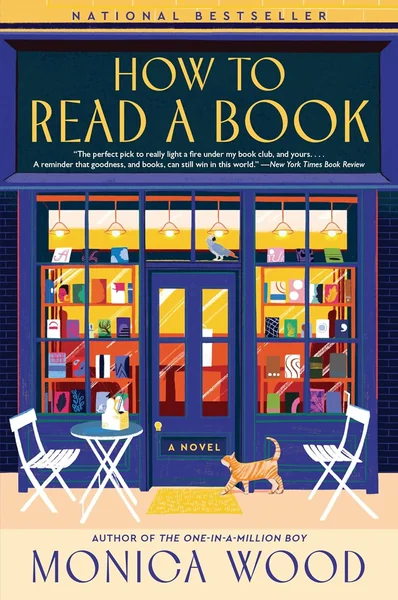
How to Read a Book is a novel with a deceptively gentle premise that conceals an intricate web of grief, guilt, and grace — and it earns its National Bestseller status through the specificity of its human entanglements rather than any easy comfort.
How to Read a Book: A Heartfelt Novel of Redemption and Unlikely Friendships in a Small Town Bookstore by Monica Wood front cover

What the Novel Is Actually About

At its center is Harriet, a retired English teacher who volunteers as a book-club leader inside a women's prison near Portland, Maine. Over eighteen months, she has built genuine relationships with the incarcerated women in her group, learning the details of their lives and convictions while they, in turn, have pieced together fragments of hers. When Harriet begins frequenting a small local bookstore, she strikes up a friendship with Frank, the shop's handyman — only to discover that Frank was married to the woman that one of her book-club members, Violet, killed in a drunk-driving accident. This convergence of characters forms the novel's moral and emotional core: three people bound together by an act of irreversible harm, navigating each other's presence with honesty, pain, and, ultimately, something approaching grace.
a deep understanding of the ripple effect of kindness, compassion and forgiveness in soothing troubled hearts

The Architecture of Its Central Tension

What distinguishes the novel structurally is how Monica Wood refuses to let the connection between Harriet, Frank, and Violet remain abstract. The coincidence that links them — one woman's crime, one man's loss, one teacher's improbable friendship with both — is the engine driving every chapter. Sources note that the novel explores "complex family dynamics" beneath its more visible themes of redemption and forgiveness, and it is precisely this layering that prevents the story from settling into sentimentality. The question of whether Harriet should disclose Frank's identity to Violet, or Violet's presence to Frank, gives the narrative its ongoing tension and ethical weight.

Monica Wood's Thematic Ambitions and Craft

Wood, the award-winning author of The One-in-a-Million Boy and a writer also known for memoir and playwriting, has built a career around emotionally precise character work, and that reputation shapes how this novel has been received. BookTrib describes Wood as demonstrating "a deep understanding of the ripple effect of kindness, compassion and forgiveness in soothing troubled hearts," framing the novel as one that celebrates acceptance alongside storytelling itself. The book club within the novel is not merely a setting but an argument: Harriet teaches her incarcerated readers to engage with characters they find unlikeable or unrelatable — a method that mirrors the novel's own invitation to readers to extend empathy across difficult moral terrain. Edgar Lee Masters's Spoon River Anthology, a collection of verse epitaphs for residents of a fictional town, emerges as the group's most discussed text — a quietly pointed choice, given that the novel itself is preoccupied with how the dead continue to shape the living.

Reception and Who This Novel Serves

The novel has been embraced by book-club communities in particular. Commentary gathered at forthejoyofbooks.com notes that the novel rewards the kind of deep-dive discussion that organized reading groups favor, with its layered character relationships and ethical questions generating substantial conversational material. BookTrib urges readers to place it "at or near the top of your reading list," citing its "warmth, charm, wit, hope and understanding." Readers drawn to quiet, character-driven fiction — especially those who respond to stories set in specific, richly rendered communities — will find the small-town Maine bookstore setting and the close-quarters world of the prison book club both grounding and evocative. The novel is especially well-suited to readers who have responded to Wood's earlier work, or to anyone drawn to fiction that takes seriously the question of what forgiveness actually costs and what it actually heals.

Genuine Limitations to Consider

The very qualities that make How to Read a Book appealing to its core audience may give pause to readers who prefer fiction driven by plot momentum over moral and emotional interiority. The novel's power lies in the slow accumulation of trust and revelation among its three central figures rather than in dramatic incident, and some readers may find that its tone — consistently warm even when the subject matter is grave — tilts toward reassurance more than challenge. The title, borrowed from Mortimer Adler's famous how-to guide, signals an intellectual playfulness that the novel honors thematically, but readers arriving with expectations shaped by Wood's earlier novel may need to recalibrate for a story that is more deliberately contained in scope. These are design choices rather than flaws, but they are worth naming for readers who prefer fiction that leans into moral ambiguity rather than resolving it with compassion.

Sources & Further Reading

The key facts and claims in this review are grounded in the retrieved, verified sources listed below.

  1. Cited in this review
  2. 1
  3. 2
  4. 3
  5. Further reading
  6. 4
  7. 5
  8. 6
  9. 7
  10. 8
  11. 9