8 min read
4.7
· 350 Amazon ratingsShare This Review
The Well-Tended Perennial Garden by Tracy DiSabato-Aust Review: An Enduring Reference for Serious Perennial Gardeners
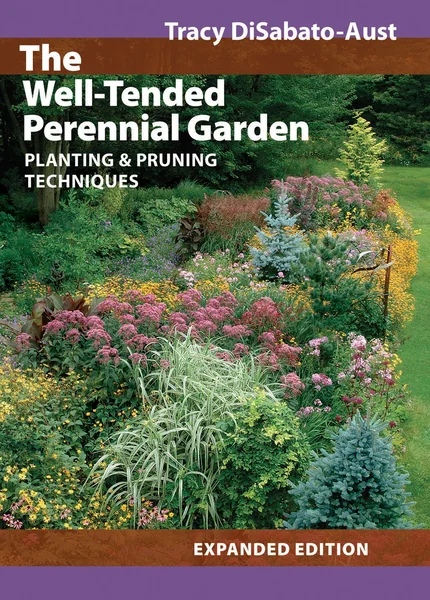
Tracy DiSabato-Aust's The Well-Tended Perennial Garden is a comprehensive, practical gardening reference organized around planting, pruning, and long-term maintenance of perennial beds — structured to be read cover to cover once and then consulted season after season. This review is based on published sources and the book's documented content; it does not reflect hands-on use or testing.
LuvemBooks Verdict
Best for
Committed perennial gardeners who want to move beyond seasonal trial-and-error and build a deep, principle-based understanding of planting, maintenance, and pruning across the full growing year.
Worth it if
You treat perennials as the structural backbone of your garden and want a single reference — grounded in 40 years of professional experience — that explains not just what to do but why, and that rewards both a cover-to-cover read and decades of return visits.
Skip if
You're looking for a quick-start planting guide or a primarily visual inspiration book — the technique-heavy, reference-manual format and the Midwest-calibrated maintenance schedule will likely demand more engagement and regional adaptation than you're after.
What readers & critics say
Both mgnv.org and gardeninacity.com treat the book as an established gardening classic: mgnv.org documents how the 2017 edition improves meaningfully on earlier versions through better typography, added photographs, and clearer section design, while gardeninacity.com calls it "a useful and engaging book that should be read through once and then kept on hand as a reference work." Garden Rant notes that when perennials became a dominant plant group for American gardeners, DiSabato-Aust's 1998 original was the book new enthusiasts turned to for clear, authoritative guidance.
Sources: mgnv.org, gardeninacity.com, gardenrant.comAsk LuvemBooks
Was this helpful?
- Is it worth reading?
- For gardeners who treat perennials as the structural backbone of their planting and want to understand their plants at a mechanistic level, The Well-Tended Perennial Garden is widely regarded as a cornerstone text. Its grounding in DiSabato-Aust's 40 years of professional horticulture experience gives the maintenance and design guidance documented depth that distinguishes it from shorter, more trend-driven titles. The dual-purpose design — readable cover to cover, then consulted season after season — adds lasting utility. The main caveat is that readers expecting a quick-start guide or a primarily visual inspiration book will find the reference-manual format demanding more engagement than they may have intended.
- Similar books
- Readers drawn to The Well-Tended Perennial Garden's depth and principle-driven approach will find natural companions in several titles. Allan M. Armitage's Armitage's Garden Perennials offers similarly encyclopedic plant-level coverage for the serious perennial grower. Barbara Damrosch's The Garden Primer covers a broader range of gardening fundamentals in an accessible, reference-friendly format. David L. Culp's The Layered Garden explores long-term garden design and plant combinations with a focus on year-round structure. For those interested in naturalistic planting philosophy alongside technique, Thomas Rainer's Planting in a Post-Wild World offers a compelling design-forward perspective, and John Greenlee's The American Meadow Garden extends that sensibility toward low-maintenance, ecologically grounded planting.
- Who should read this?
- The Well-Tended Perennial Garden is designed for gardeners who treat perennials as the structural backbone of their planting and want to engage with care at a mechanistic, principled level — not as accents or one-season displays. It rewards committed gardeners willing to read it cover to cover before returning to it as a season-by-season reference. Gardeners in Midwest climates will find the scheduling guidance most immediately applicable, though the underlying principles are transferable for those willing to adapt. Readers looking for a quick-start planting guide, a coffee-table inspiration book, or primarily visual content will find the reference-manual format and technique emphasis a mismatch for their needs.
- Which edition should I get?
- The 2017 edition is the most current and the most refined, incorporating longitudinal photographs of DiSabato-Aust's own garden, Hiddenhaven, and client gardens photographed 10–15 years after planting — a perspective rarely available in gardening books. The schedule section was redesigned with a larger typeface, added photographs, and visually distinctive light blue pages. Extension Master Gardener Elaine Mills, writing for mgnv.org after comparing the 2017 edition directly against the 2006 expanded version, concluded she would refer more frequently to the newer edition, explicitly noting that each version has built on rather than simply reprinted the last.
- What principles does the book teach?
- The book's central teaching philosophy is transferable understanding over prescriptive formulas. DiSabato-Aust explains the underlying principles that make certain plant combinations and maintenance approaches succeed, equipping gardeners to adapt recommendations to their specific conditions rather than following rigid plant lists. As gardeninacity.com describes it, readers learn 'not to be so precious about plants but to be more hard hearted' — a practical shift in mindset toward sustainable, long-term perennial management. This principle-first approach extends through the pruning chapters, where specific timing by perennial family is always paired with an explanation of why that timing matters.
- How useful is the seasonal schedule?
- The month-by-month Planting & Maintenance Schedule — presented in a visually distinctive section with light blue pages in the 2017 edition — covers seasonal tasks including planting, general maintenance, and pruning across the calendar year. DiSabato-Aust explicitly frames it as a guideline calibrated to Midwest gardens and emphasizes that gardeners must adapt it to their local conditions, so it functions best as a structural template rather than a universally applicable prescription. The 2017 redesign — larger typeface, added photographs, distinctive visual treatment — was noted by reviewer Elaine Mills as making it more practically useful than in the 2006 edition.
Summarize this book
Follow up
Synthesized from verified book data & published reviews · How we review
Press Enter to ask. Answers come from our editorial Q&A — start typing to see related questions.
Age & Reading Level
Recommended age
Adult
Reading level
Adult
who it suits
Skip if you want a quick-start planting guide or a primarily visual inspiration book with minimal technical depth.
Our Review
What the Book Actually Contains
The Book's Place in Gardening Literature
Design Principles Over Rigid Formulas
Evolution Across Editions
Who Will Get the Most — and Least — from This Book
Sources & Further Reading
The key facts and claims in this review are grounded in the retrieved, verified sources listed below.
- Cited in this review
- 1
- 2
mgnv.org
- 3
- Further reading
- 4
If you liked this, try…