At a glance
LuvemBooks Verdict
Best for: Readers who feel paralyzed by an imperfect home, a tight budget, or the pressure to match aspirational interiors — particularly those in busy family households who want practical encouragement over prescriptive design rules.
Worth it? Skip it? Read the full verdict →Preview the book



Ask LuvemBooks
Was this helpful?
- Is it worth reading?
- For readers who feel stuck — paralyzed by an imperfect space, a limited budget, or the pressure to achieve a magazine-ready room — The Nesting Place is well matched to those needs. Smith's anti-perfectionist framework, backed by thirteen homes' worth of trial and adaptation, gives the book a coherent and distinctive identity within a genre crowded with aspirational content. Sherry Petersik, bestselling author of Young House Love, describes it as "full of approachable ideas, encouragement, and a whole lot of heart," which captures the tone accurately. The key caveat: readers seeking technically detailed design instruction — precise spatial planning, color theory, or a systematic room-by-room manual — will likely find the book leans more toward encouragement than rigorous methodology.
- Who should read this?
- The Nesting Place is written squarely for readers who feel their homes are too imperfect, too messy, or too budget-constrained to be worth decorating. It's particularly well-suited to those in family households — homes bursting with kids, pets, and the unpredictable rhythms of everyday life — who want to create a welcoming space without overspending or measuring themselves against idealized interiors. Readers who appreciate a warm, encouragement-driven voice over technical instruction will find the book well calibrated to their needs. Those in very different living situations, such as urban apartments or minimalist homes without children, may find some of the framing less directly applicable, even if the core anti-perfectionist message still resonates.
- Similar books
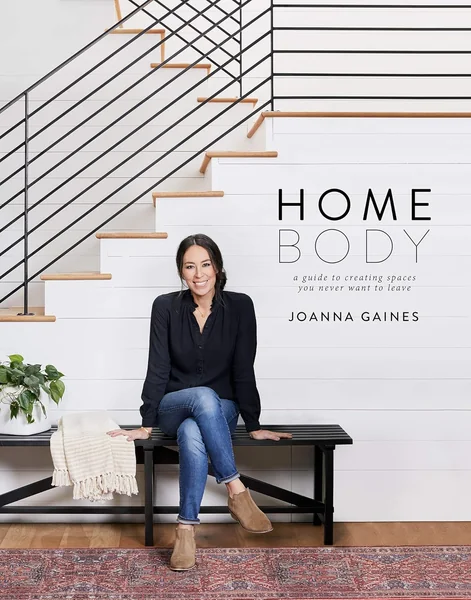
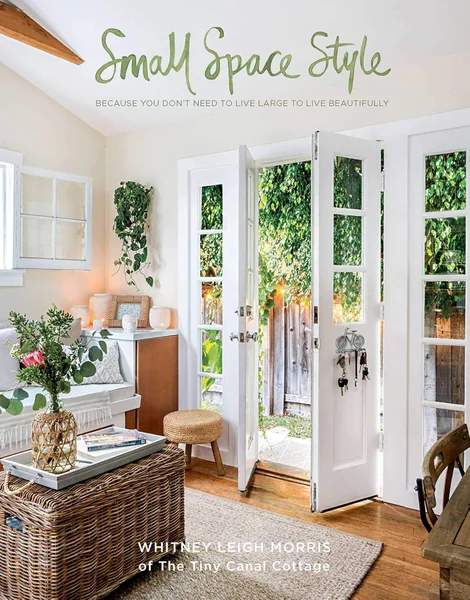
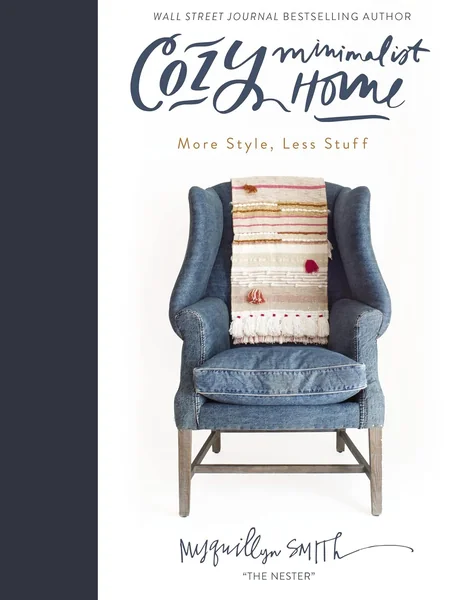
- Readers who enjoy The Nesting Place will find several natural companions on the shelf. Myquillyn Smith's own Cozy Minimalist Home: More Style, Less Stuff extends her philosophy into a more streamlined, less-is-more aesthetic. Joanna Gaines' Homebody: A Guide to Creating Spaces You Never Want to Leave shares The Nesting Place's warmth and livability focus. Melissa Michaels' The Inspired Room: Simple Ideas to Love the Home You Have is the closest philosophical match, built around the same message of embracing and improving the home you actually have. Liz Marie Galvan's Cozy White Cottage: 100 Ways to Love the Feeling of Being Home covers similar territory with a cottagecore sensibility, and Maxwell Ryan's Apartment Therapy: The Eight-Step Home Cure offers a more structured, urban-apartment-oriented approach for readers who want more systematic guidance.
- About Myquillyn Smith
- Myquillyn Smith, known as "The Nester," is the New York Times and Wall Street Journal bestselling author of Welcome Home, Cozy Minimalist Home, and The Nesting Place. A writer, homebody, and self-described "contentment evangelist," she has spent over 15 years encouraging women to embrace their spaces — imperfections and all. She lives in North Carolina with her husband and three sons.
- How does this compare to Cozy Minimalist Home?
- Both The Nesting Place and Cozy Minimalist Home by Myquillyn Smith share an anti-perfectionist, encouragement-forward philosophy, but they occupy slightly different territory. The Nesting Place establishes the foundational argument — that homes don't need to be perfect to be beautiful — and is rooted in the warmth and mess of family life with kids and pets. Cozy Minimalist Home sharpens that lens into a more specific aesthetic framework, focused on achieving more style with less stuff. Readers new to Smith's work are generally best served starting with The Nesting Place before moving to Cozy Minimalist Home.
- What's the writing style like?
- The Nesting Place reads more like an enthusiastic friend than a design authority handing down rules — a tone that stems directly from Smith's origins as The Nester, a home blogger who built her following before the book's publication. The voice is warm, first-person, and encouragement-forward, prioritizing permission and confidence-building over technical prescription. Sherry Petersik of Young House Love describes it as "full of approachable ideas, encouragement, and a whole lot of heart," which accurately captures the register Smith maintains throughout. Readers who prefer a more authoritative, methodology-driven tone may find the approach less satisfying.
Summarize this book
Follow up
Synthesized from verified book data & published reviews · How we review
Press Enter to ask. Answers come from our editorial Q&A — start typing to see related questions.
Age & Reading Level
Recommended age
Adult
Reading level
Adult
who it suits
Skip if you're looking for technically rigorous, methodology-driven design instruction with detailed guidance on spatial planning or color theory.
Editorial Review
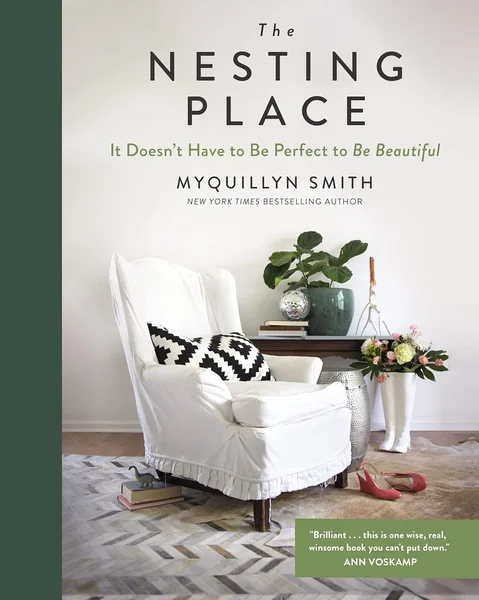
Myquillyn Smith's The Nesting Place is a four-color home-decorating book built on a single liberating premise: a home doesn't need to be perfect to be beautiful, and real life — kids, pets, mess, and all — is not an obstacle to a welcoming space but the very thing worth designing around.
Read the Full ReviewBooks like The Nesting Place
Curated picks for readers who enjoyed The Nesting Place, with our reasoning for each match.
If you liked The Nesting Place