Skip to content
Reviewed

Read Time

7 min read

Reader rating
4.4 · 5,451 Amazon ratings, as of Nov 2026
reader ratings, not a LuvemBooks score
Curated & edited by

LuvemBooks Editorial

How we create our reviews →
Share This Review
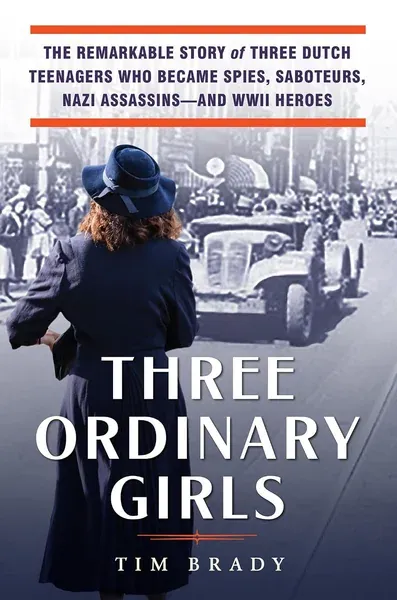
Three Ordinary Girls: The Remarkable Story of Three Dutch Teenagers Who Became Spies, Saboteurs, Nazi Assassins--and WWII Heroes by Tim Brady front cover

Our review

Three Ordinary Girls

Three Ordinary Girls by Tim Brady Review: WWII Resistance

Tim Brady’s Three Ordinary Girls chronicles the true story of Truus, Freddie, and Hannie, three Dutch teenagers who became elite assassins and spies for the resistance. The book restores their overlooked heroism through meticulous research and a fast-paced narrative structure. Readers seeking a rigorously sourced exploration of WWII underground warfare will find this history essential.

Our age band: Ages 16+executions · wartime violence

LuvemBooks Verdict

Best for

Readers who seek a rigorously sourced exploration of WWII underground warfare will find this book's meticulously researched accounts of overlooked female resistance fighters and its fast-paced narrative essential.

Worth it if

Worth reading if you prioritize factual accuracy and operational detail over deep psychological profiling of your subjects.

Skip if

Skip it if you expect a novelistic exploration of trauma and prefer deep character studies over tight, action-focused historical reporting.

Where reviewers agree and split

Readers rate it 4.4 on Amazon. The reviews we read that discuss it in depth agree:

  • Positive · 4 out of 5

    Helen's Book Blog · Book blog: highly rated audiobook with strong plot summary

  • Positive · 4

    Man of la Book · Book blog: well researched historical account of Dutch resistance heroes

Overall verdicts are our summary of each review we read, from its headline, rating and conclusion.

Publishers Weekly and Man of la Book praise Brady’s meticulous archival work and precise portrayal of the Dutch occupation, while Helen’s Book Blog and A Mighty Girl highlight the book’s accessible, novelistic pacing that brings these overlooked heroines to life.

“conveys the inhumanity of the period with precision”

— Publishers Weekly
Sources: Publishers Weekly, Man of la Book, Helen's Book Blog, A Mighty Girl
4.4from 5,451 Amazon ratings, as of Nov 2026— reader ratings, not a LuvemBooks score

Ask LuvemBooks

Was this helpful?

Tim Brady’s Three Ordinary Girls chronicles the true story of Truus, Freddie, and Hannie, three Dutch teenagers who became elite assassins and spies for the resistance during WWII. Readers seeking a rigorously sourced exploration will find this meticulously researched account essential, though those expecting character studies of the women's trauma may find the exploration too surface-level.
Is it worth reading?
The book is highly recommended for readers who prefer character studies. Reviewers praise Brady for transforming dense archival material into an engaging, novelistic narrative that makes complex history accessible. However, you might find the focus on external survival tactics lacking.
Similar books
Readers interested in this account of elite resistance operatives will likely appreciate histories of other covert wartime efforts, such as Hampton Sides' Ghost Soldiers or Ben Macintyre's The Spy and the Traitor. For those drawn to the political and moral dimensions of the era, Timothy Snyder's On Tyranny or Thurston Clarke's Ask Not offer compelling perspectives on leadership and resistance. Barbara W. Tuchman's The Guns of August is also a strong recommendation for readers who enjoy meticulously researched military history.
Who should read this?
This book is best suited for readers who seek an exploration of WWII and are interested in the overlooked contributions of women in combat zones. It will also appeal to history enthusiasts who appreciate tactical ingenuity, clear operational details, and narratives that challenge traditional male-dominated war accounts.
What age is it for?
The book is written for adults. Its detailed descriptions of executions, wartime violence, and the moral complexities make it most appropriate for mature readers aged 16 and up.
How is the pacing?
The narrative accelerates as the occupation tightens its grip, prioritizing action over introspection. Brady conveys the campaign with a novelistic style that keeps readers on edge, making the complex history highly accessible and fast-moving.
How deep is the historical research?
Brady relies on extensive documentation of safehouses to reconstruct the timeline. Critics praise the book as a rigorous historical document that avoids nationalistic bias while presenting a view of the occupation and Gestapo counterintelligence tactics.
Summarize this book

Summarize this book

The narrative opens on May 10, 1940, with the Nazi occupation of the Netherlands and follows sisters Truus and Freddie Oversteegen as they join a resistance cell alongside teenager Hannie Schaft. The trio operates as a singular female underground squad, sheltering fleeing Jews, sabotaging bridges and railways, and eventually carrying out targeted assassinations of German soldiers and collaborators. Brady reconstructs their evolution from cautious teenagers into seasoned operatives who navigate constant surveillance and high-stakes missions without traditional military backing.

Follow up

Is this based on true events?
Does the book romanticize their involvement?

Synthesized from verified book data & published reviews · How we review

Ask LuvemBooks

What would you like to know about Three Ordinary Girls?

Answers come from our editorial notes on this book. If we haven't covered something, we'll say so.

Readers often ask

Our Review

We review the evidence: reader verdicts, gathered and weighed with AI assistance and edited by LuvemBooks, rather than one reader's first-hand take.

The Trio and Their Resistance Operations
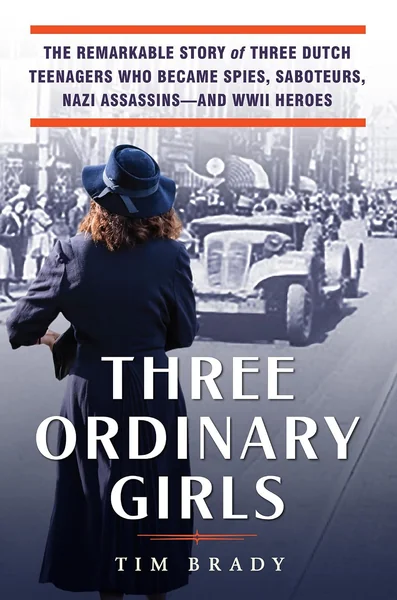
Three Ordinary Girls: The Remarkable Story of Three Dutch Teenagers Who Became Spies, Saboteurs, Nazi Assassins--and WWII Heroes by Tim Brady front cover
The narrative opens on May 10, 1940, when Nazi Germany swiftly occupies the Netherlands. Publisher’s Weekly notes that the Dutch city of Haarlem quickly becomes a hub for clandestine activity.
Within this occupied territory, sisters Truus and Freddie Oversteegen join a small resistance cell. They soon form a close alliance with fellow teenager Hannie Schaft.
The trio operates as a singular female underground squad. Publishers Weekly observes that Brady conveys the inhumanity of the occupation with precision.
The women shelter fleeing Jews and political dissidents. They sabotage bridges and railways to disrupt German logistics.
They also don disguises to lead children away from concentration camps. The group covertly transports weapons and sets military facilities ablaze.
Their missions escalate to assassinating German soldiers and traitors. Brady details how they carry out these public and private executions.
The account follows their evolution from teenagers into seasoned operatives. The women navigate a landscape where suspicion and betrayal are daily realities.
They maintain their cover while executing high-stakes sabotage. The text highlights their tactical ingenuity under constant surveillance.
Their dedication to the anti-Nazi cause remains absolute. The narrative tracks their increasing involvement in dangerous missions.
They risk everything to aid Dutch patriots. The book describes their youth and innocence belied by their extraordinary daring.
They wield guns with the precision of veteran guerilla fighters. Their actions require the cunning of seasoned spies.
They operate without the backing of traditional military structures. Their survival depends on constant vigilance and quick thinking.

Historical Significance and Narrative Style

The book positions these three figures as icons of the Dutch resistance. Publishers Weekly emphasizes that the story spotlights the extraordinary heroism of everyday people.
The narrative deliberately shifts the focus of world history toward these young women. Critics describe the account as a moving story of the Holocaust.
The author avoids romanticizing their youth or their political convictions. Instead, he presents their fierce dedication to the anti-Nazi cause.
The book restores their names to the forefront of historical memory. It challenges the traditional male-dominated narratives of European resistance.
The account details how they became involved in the underground. It explains how their dedication evolved into life-threatening missions.
The narrative emphasizes their courage alongside their vulnerability. They operate as veteran guerilla fighters despite their age.
The book finally moves these icons into the deserved forefront of world history. Their story remains a testament to youthful defiance.
The text explores how lives under threat shaped their radicalization. It examines the psychological toll of living in constant danger.
The narrative portrays their political awakening with clarity. It shows how their convictions led them on very dangerous paths.

Research Depth and Structural Choices

Tim Brady relies heavily on archival evidence to reconstruct the timeline. Man of la Book notes that the author goes to great lengths to get the history correct.
The text includes extensive documentation of specific missions and safehouses. Readers interested in the mechanics of underground warfare will appreciate the detailed operational accounts.
The structure follows the chronological progression of the war. It tracks the trio’s increasing involvement in high-stakes sabotage.
The pacing accelerates as the occupation tightens its grip. The narrative does not dwell extensively on the psychological aftermath of their trauma, a deliberate choice noted by readers who prefer deep character studies over tight, action-focused historical reporting.
The focus remains firmly on their external actions and survival. The prose prioritizes clarity and momentum over literary flourish.
Brady conveys the campaign in an almost novelistic way. He brings seemingly disparate figures and incidents into an engaging narrative.
The author tells the story in a style that keeps readers on edge. The account balances historical accuracy with compelling storytelling.
It offers a little-known perspective of the Dutch resistance. The book stands as a rigorous historical document.
The text avoids the pitfalls of nationalistic bias. It presents a clear-eyed view of the occupation.
The author examines the methods used by the Gestapo to track resisters. He details the counterintelligence tactics employed by the trio.

Our Take: Who Should Read It

Weighing these reviews, the central tension lies between the harrowing subject matter and the accessible, novelistic pacing. Publishers Weekly and Booklist both praise the book for transforming dense archival material into an engaging narrative.
This approach makes the history approachable for general readers. The account points directly to fans of military history and WWII resistance studies.
It will also appeal to readers interested in the overlooked contributions of women in combat zones. The narrative shares thematic ground with histories of the French Resistance, though it operates with a tighter focus on a single cell.
Readers who prefer deep psychological profiling of historical figures may find the character exploration too surface-level. The book rewards those who prioritize factual accuracy and operational detail.
It serves as a vital corrective to traditional war narratives. The story highlights the extraordinary heroism of everyday people during the war.
The text avoids sentimentality while maintaining emotional resonance. It focuses on the practical realities of survival.
The narrative emphasizes the importance of grassroots organizing. It shows how ordinary citizens can effect extraordinary change.
The book stands as a necessary addition to the historical canon. It ensures these brave heroines receive their due recognition.

Sources & Further Reading

The key facts and claims in this review are grounded in the retrieved, verified sources listed below.

  1. Cited in this review
  2. 1
  3. Further reading
  4. 2
  5. 3
  6. 4
  7. 5
  8. 6
  9. 7

Age & Reading Level

Our age band

Ages 16+

Reading level

Older teens & adults

Our age band groups books for browsing; it isn't an age a review gave.

Content to know about

executions
wartime violence
psychological toll of resistance work

Best for: Ages 16+ — themes of wartime violence and moral complexity

Skip if you prefer deep psychological profiling over tight, action-focused historical reporting

From our readers

Reader reviews

No LuvemBooks readers have answered yet.

Read it? Was it right for you?

Discussion

Reader comments