7 min read
4.6
· 60 Amazon ratingsShare This Review
Ask Not: The Inauguration of John F. Kennedy by Thurston Clarke Review: A Riveting Micro-History of American Optimism
Thurston Clarke's Ask Not narrows its lens to the three months before John F. Kennedy's inauguration and the creation of one of the most celebrated speeches in American political history, producing what critical coverage called an absorbing narrative that is balanced, revealing Kennedy at his most dazzlingly charismatic and cunningly pragmatic.
LuvemBooks Verdict
Best for
Readers drawn to micro-history and American political narrative who want a fresh, deeply reported angle on Kennedy — particularly those who already carry some familiarity with the Camelot era and want insider texture rather than a broad biography.
Worth it if
You're fascinated by the relationship between presidential rhetoric and national purpose, and want to understand how a single speech — and the weeks of pressure behind it — can serve as a portrait of an entire political moment.
Skip if
You're looking for a comprehensive account of the Kennedy presidency as a whole — its foreign policy crises, domestic battles, or tragic end — since Clarke deliberately and narrowly limits his scope to the pre-inauguration weeks and the address itself.
What readers & critics say
Tertulia's aggregated critical coverage highlights praise from critical coverage (an "absorbing narrative" with an evenhanded portrait of Kennedy) and Publishers Weekly (rich insider detail including a visibly depressed Vice President Johnson "growling at anyone who disturbed him"), while Bob Herbert is quoted there calling Clarke's achievement "seemingly impossible" in finding a revealing new angle on JFK. The author's own site (thurstonclarke.com) surfaces a critical coverage line calling the book's effect one of "bringing quite fully to life that brief, hopeful hour in our nation's history."
Sources: Tertulia, thurstonclarke.comAsk LuvemBooks
Was this helpful?
- Is it worth reading?
- For readers drawn to micro-history and American political biography, Ask Not delivers on its promise. Critical coverage called it an absorbing and balanced narrative, The Christian Science Monitor ranked it among the most entertaining and informative contributions on its subject, and Bob Herbert, former New York Times Op-Ed Columnist, described Clarke's portrait of Kennedy as "masterful in this compelling convergence of history and biography." The book's tight scope is its greatest asset and its clearest limitation — those already familiar with the Kennedy era will find much to savor, but readers new to the period or hoping for a comprehensive account of the presidency may find it assumes more contextual knowledge than it provides.
- Similar books
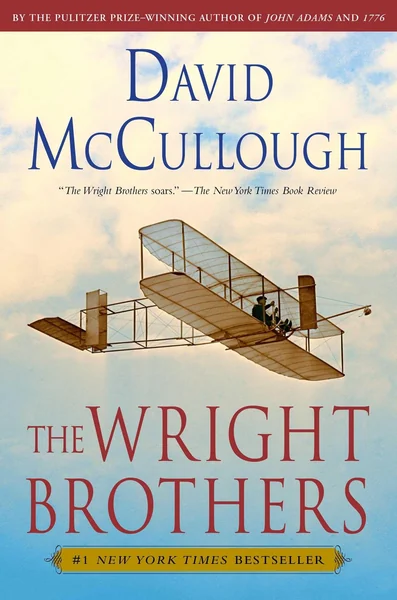
- Readers who enjoy Ask Not's micro-historical approach and narrative drive will find kindred titles in the curated selections below. David McCullough's The Wright Brothers applies a similarly tight biographical and narrative lens to a pivotal American achievement. Scott Ellsworth's Midnight on the Potomac offers another example of focused American historical narrative rooted in a specific time and place. For those drawn to the Kennedy circle more broadly, Evan Thomas's Robert Kennedy: His Life provides a complementary biographical portrait of the era's central family.
- Who should read this?
- Ask Not is best suited to Kennedy enthusiasts looking for a fresh angle on a heavily documented subject and to general readers of American political history who value narrative drive and biographical depth over exhaustive chronology. Fans of micro-history — the discipline of extracting large meaning from a tight frame of time and event — will find Clarke's approach particularly rewarding. Readers who already have some familiarity with the Kennedy era will get the most out of the book's insider texture; those with little prior knowledge may find the narrow framing assumes context the book does not fully supply.
- About Thurston Clarke
- Thurston Clarke is an American historian, author, and journalist.
- What are the main themes?
- At its core, Ask Not explores the relationship between presidential rhetoric and national purpose — how a single speech can serve as both political act and moral statement. Clarke examines Kennedy's effort to translate electoral victory into genuine moral authority at a moment of Cold War anxiety, situating the inaugural address as an ideological foundation rather than mere ceremony. The book also functions as a character study, probing Kennedy's dazzling charisma alongside his cunning pragmatism, and offers vivid portraits of the political world around him, including a visibly depressed Vice President Lyndon Johnson and the insider dynamics of the transition period.
- What is micro-history and why does it matter here?
- Micro-history is the discipline of extracting large historical meaning from a deliberately tight frame of time and event, rather than attempting a sweeping chronological survey. Clarke applies this method by confining Ask Not to the three months before January 20, 1961, and to a single address — arguing that those compressed weeks and that one speech can illuminate the entire Kennedy presidency and era. As reviewers noted, Clarke's central achievement is finding a genuinely new angle of vision on one of the most documented subjects in American political history by embracing, rather than resisting, that constraint.
Summarize this book
Follow up
Synthesized from verified book data & published reviews · How we review
Press Enter to ask. Answers come from our editorial Q&A — start typing to see related questions.
Age & Reading Level
Recommended age
Adult
Reading level
Adult
who it suits
Skip if you want a comprehensive account of the full Kennedy presidency, its foreign policy crises, domestic ambitions, or its tragic end.
Our Review
What the Book Is and What It Covers

Significance and Place in JFK Literature
Strengths: Balance, Detail, and Narrative Drive
Limitations and Ideal Reader
Relevance and Who It's For
Sources & Further Reading
The key facts and claims in this review are grounded in the retrieved, verified sources listed below.
- Cited in this review
- 1
- 2
- 3
penguinrandomhouse.com
- Further reading
- 4
Thurston Clarke, Wikipedia
- 5
- 6
thurstonclarke.com
- 7
- 8
- 9
Books like Ask Not
Curated picks for readers who enjoyed Ask Not, with our reasoning for each match.
If you liked Ask Not