Skip to content
Reviewed

Read Time

7 min read

Our age bandAdult
Reader rating
4.7 · 37,668 Amazon ratings, as of Nov 2026
reader ratings, not a LuvemBooks score
Curated & edited by

LuvemBooks Editorial

How we create our reviews →
Share This Review
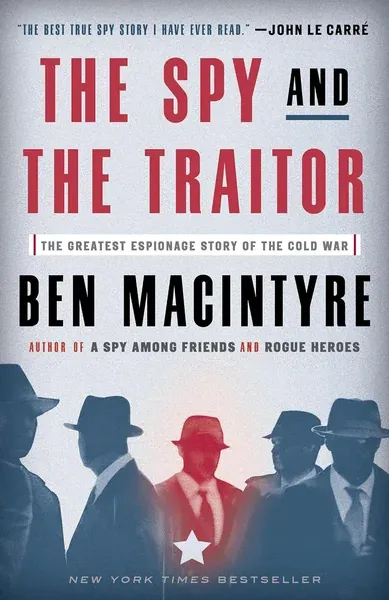
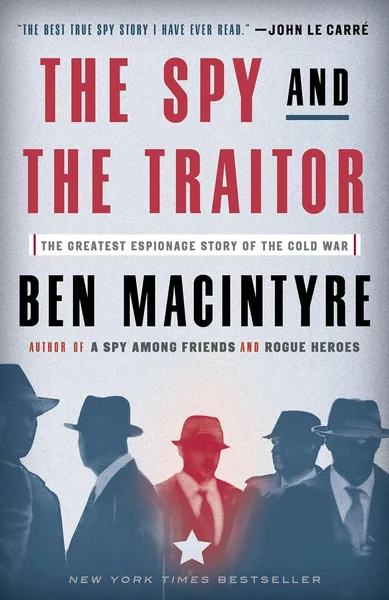
The Spy and the Traitor: The Greatest Espionage Story of the Cold War by Ben Macintyre front cover

Our review

The Spy and the Traitor

The Spy and the Traitor by Ben Macintyre Review: A Definitive Cold War Espionage History

Ben Macintyre’s The Spy and the Traitor: The Greatest Espionage Story of the Cold War follows Oleg Gordievsky’s decade as a KGB officer turned MI6 double agent, ending with his 1985 Moscow escape. Grounded in extensive interviews, it delivers a meticulously researched account of Cold War espionage that reads with thriller-level tension.

Our age band: Adult

LuvemBooks Verdict

Best for

Fans of true crime and historical thrillers who want a fast-paced, meticulously researched account of Cold War espionage centered on tradecraft and plot momentum.

Worth it if

Worth reading if you want a rigorously researched, thriller-like account of Cold War espionage that prioritizes immediate tension over geopolitical background.

Skip if

Skip it if you are looking for a thorough exploration of the ideological roots of the Soviet Union or deep literary analysis, as the narrative focuses primarily on tradecraft and plot momentum.

Where reviewers agree and split

Readers rate it 4.7 on Amazon. The reviews we read that discuss it in depth agree:

  • Positive

    The Guardian · Press review: A wonderful and astonishing account of a Cold War superspy

  • Positive

    Spybrary · Book blog: A spellbinding and masterful account of Cold War espionage

Overall verdicts are our summary of each review we read, from its headline, rating and conclusion.

The Guardian and Bookmarks.Reviews commend the book's thriller-like momentum, with the former calling it a 'wonderful' account of Gordievsky’s exploits and the latter labeling it a 'timely and insightful page-turner.' BookBrowse praises the narrative's accuracy and depth but cautions that little attention is given to the origins of the Soviet Union, aligning with the observation that the book favors immediate tension over geopolitical context.

“Gordievsky’s British contacts were a colourful bunch.”

— The Guardian
Sources: The Guardian, Bookmarks.Reviews, BookBrowse
4.7from 37,668 Amazon ratings, as of Nov 2026— reader ratings, not a LuvemBooks score

McKinnon Maddox reviews The Spy and the Traitor: The Greatest Espionage Story of the Cold War

A reviewer gives an enthusiastic, detailed assessment of Ben Macintyre's non-fiction Cold War thriller, The Spy and the Traitor.

A BookTube review by McKinnon Maddox, 2025 · 654 views · 675 subscribers · Watch on YouTube ·

Their views, not ours. The points are our AI summary of what they say, each playing from where they say it.

Beware of middle photo spoilers

The reviewer warns readers to skip the photo insert pages until finishing the book, as captions and pictures reveal major late-story events out of order.

Personal ethics and family deception

They examine the emotional weight of Oleg Gordievsky's decision to defect and his internal conflict over whether to bring his wife and children or leave them behind.

Direct influence on world leaders

The reviewer points out how rare and significant it was that Gordievsky's intelligence directly informed key decisions made by Ronald Reagan and Margaret Thatcher.

Fascinating real-world spy tradecraft

They highlight the astonishing espionage techniques used in Moscow, from radioactive dust on shoes to elaborate street-signaling rituals involving grocery bags and chocolate bars.

Ask LuvemBooks

Was this helpful?

The Spy and the Traitor chronicles Oleg Gordievsky’s decade as a KGB officer turned MI6 double agent, culminating in his daring 1985 escape from Moscow. Ben Macintyre’s narrative prioritizes tradecraft over broad geopolitical background, making it an essential read for fans of historical thrillers who value rigorous sourcing and pacing.
Is it worth reading?
Yes, particularly for readers who enjoy rigorously sourced narrative nonfiction that reads like a thriller. The Guardian and Spybrary both highlight Macintyre’s ability to translate archival research into a gripping account of Cold War espionage. Readers should be aware that the book emphasizes character study over deep historical analysis of the Soviet Union’s ideological roots.
Similar books
Readers who appreciate this account of Cold War intelligence operations may also enjoy Timothy Snyder’s On Tyranny for its insights into authoritarian regimes.
Who should read this?
This book is best suited for fans of true crime who want a straightforward account of Cold War espionage. It also appeals to readers interested in the mechanics of intelligence work, as well as those who prefer clear storytelling over dense political analysis.
How does the book handle historical background?
Macintyre provides minimal context regarding the origins of the Soviet Union or the ideological foundations of communism, choosing instead to focus on the tradecraft of Gordievsky’s mission. Spybrary note that this narrative choice creates a spellbinding, thriller-like pace, though readers seeking deep geopolitical analysis may find the background too brief.
How does this compare to spy fiction?
Unlike the amoral bleakness typical of genre fiction, Bookmarks.Reviews praises the book for its clear moral framework, leaving no doubt that Gordievsky served a just cause. Macintyre successfully clarifies complex plots while maintaining the narrative momentum and tension that readers expect from the spy thriller genre.
What is the audiobook like?
Listeners familiar with the author’s narrative style will find the audio format enhances the immediate, beat-by-beat recounting of Gordievsky’s mission and escape.
Summarize this book

Summarize this book

Ben Macintyre traces Oleg Gordievsky’s rise to the Soviet Union’s top position in London while secretly feeding critical intelligence to MI6. The narrative pivots on the devastating betrayal by CIA officer Aldrich Ames, which forces Gordievsky into a harrowing three-way game of espionage before his successful 1985 exfiltration from Moscow.

Follow up

Why was the 1985 escape significant?
Who was Aldrich Ames?

Synthesized from verified book data & published reviews · How we review

Ask LuvemBooks

What would you like to know about The Spy and the Traitor?

Answers come from our editorial notes on this book. If we haven't covered something, we'll say so.

Readers often ask

Our Review

We review the evidence: reader verdicts, gathered and weighed with AI assistance and edited by LuvemBooks, rather than one reader's first-hand take.
Verdict: Ben Macintyre’s The Spy and the Traitor delivers a meticulously researched account of Cold War espionage that reads with the tension of a thriller. The book is worth reading for its rigorous sourcing and nail-biting narrative, though it occasionally glosses over the broader geopolitical context that drove the events.
The Spy and the Traitor: The Greatest Espionage Story of the Cold War by Ben Macintyre front cover

Plot Summary and Historical Context

The narrative centers on Oleg Gordievsky, a Soviet KGB officer who secretly became a double agent for MI6 during the 1970s and 1980s. Gordievsky rose to become the Soviet Union’s top man in London while feeding the West critical intelligence about Soviet nuclear capabilities and internal security.
His decade of espionage helped turn the tables on the KGB and hastened the end of the Cold War. The book details his growing disillusionment with the Soviet system, which began after witnessing the 1968 invasion of Czechoslovakia.
The plot pivots on a devastating betrayal from within the Western alliance. MI6 kept Gordievsky’s identity a closely guarded secret, which led the CIA to become obsessed with identifying the source.
The CIA officer assigned to uncover the spy’s identity was Aldrich Ames, who ultimately sold Gordievsky’s secrets to Moscow. This betrayal forced Gordievsky to face imminent capture and execution.
The narrative chronicles the three-way gamesmanship between American, British, and Soviet intelligence agencies that culminated in Gordievsky’s harrowing 1985 escape from Moscow. British intelligence officers helped him flee the city in a daring operation that outwitted his Russian adversaries.
The book details the nail-biting, beat-by-beat sequence of his escape, which remains the only successful exfiltration of a penetration agent from the USSR.

Critical Reception and Narrative Style

Critical reception for the book has been uniformly favorable across the reviewed sources. The Guardian, publishing a press and trade review, delivered a positive verdict, describing the narrative as the astonishing story of a cold war superspy.
The publication highlighted the author’s focus on the dramatic recruitment of a serving KGB insider. Similarly, Spybrary dedicated book blog, issued a positive assessment, calling the title Ben Macintyre’s finest work.
Both outlets emphasized the compelling nature of the historical material, noting how Macintyre successfully translates archival research into a gripping narrative that honors the subject’s courage. Readers engaging with the text have consistently responded to the clear presentation of classified intelligence operations and the human drama at the heart of the espionage.
Bookmarks.Reviews praises the book as "a timely and insightful page-turner" that stands out for its clear moral framework. The reviewer notes that unlike the amoral bleakness found in John le Carré’s spy novels, Macintyre leaves no doubt that Gordievsky served a just cause.
The review contrasts Gordievsky’s righteous conviction with the cynical moral ambiguity typical of the genre. Spybrary echoes this sentiment, calling the book "a spellbinding work" that brings to life a critical period in modern espionage history.
BookBrowse observes that Macintyre conveys spy stories with uncommon accuracy and depth. The outlet notes that the book appeals to readers who enjoy thrillers and crime fiction, as well as those interested in nonfiction about international affairs.
The review points out that Macintyre successfully untangles the complex case of Gordievsky while keeping the narrative focused on the high-stakes reality of Cold War intelligence. The publication suggests the book functions as a vital refresher on the mechanics of espionage.

Research and Source Material

Macintyre built the narrative on extensive interviews. The author spoke directly to Gordievsky, who was living in the United Kingdom at the time of publication.
These conversations allowed Macintyre to reconstruct the precise tradecraft and psychological toll of the espionage. The book details how Gordievsky navigated the constant danger of exposure while managing his family life.
The book also draws on declassified documents and the personal accounts of Gordievsky’s British handlers. This access provided a detailed look at the internal workings of MI6 and the bureaucratic challenges of maintaining a deep-cover asset.
The resulting account offers an intimate portrait of the individuals who navigated the wilderness of mirrors that defined Cold War espionage. The research highlights the intense paranoia that gripped both Western and Soviet intelligence agencies.

Is It Worth Reading?

Weighing these reviews, the book succeeds as a definitive account of a pivotal Cold War figure. The primary tension lies in its pacing versus its historical scope.
Macintyre prioritizes tradecraft details and the immediate danger faced by Gordievsky, which creates a gripping read. However, this focus means the book provides minimal context regarding the origins of the Soviet Union or the ideological foundations of the communist regime.
The book is best suited for readers who prefer narrative nonfiction and fast-paced historical accounts over dense political analysis. It serves as an excellent companion to Gordievsky’s own memoir, offering the broader institutional perspective that his personal account lacks.
Readers looking for a thorough exploration of Cold War geopolitics may find the historical background too brief. Those seeking a meticulously sourced espionage narrative will find it compelling.

Sources & Further Reading

The key facts and claims in this review are grounded in the retrieved, verified sources listed below.

  1. Cited in this review
  2. 1
  3. Further reading
  4. 2
  5. 3
  6. 4
  7. 5
  8. 6
  9. 7
  10. 8

Age & Reading Level

Our age band

Adult

Our age band groups books for browsing; it isn't an age a review gave.

Ben Macintyre on The Spy and the Traitor

Author Ben Macintyre introduces the true espionage story behind his book The Spy and the Traitor.

Uploaded by Waterstones, 2018 · Watch on YouTube ·

More from this interview on Ben Macintyre's page →

Gordievsky's rebellion against the Soviet system

Macintyre explains that despite being born into a dedicated KGB family, Oleg Gordievsky became disillusioned with communism after witnessing events such as the construction of the Berlin Wall and the 1968 invasion of Czechoslovakia.

MI6's patient recruitment process

Macintyre describes how British intelligence identified Gordievsky early on and engaged in a prolonged, delicate courtship before successfully recruiting him to pass high-level secrets.

Engineered rise to KGB London chief

Macintyre highlights how Britain helped Gordievsky climb the ranks by systematically expelling his superiors as persona non grata, eventually granting him access to the KGB's secure headquarters safe in London.

Betrayal and high-stakes escape

Macintyre reveals that Gordievsky was betrayed at the height of his career and lured back to Moscow under false pretenses, forcing him to trigger a long-dormant emergency escape plan.

From our readers

Reader reviews

No LuvemBooks readers have answered yet.

Read it? Was it right for you?

Discussion

Reader comments