Skip to content
Reviewed

Read Time

8 min read

Our age bandAdult
Reader rating
4.4 · 8,427 Amazon ratings, as of Nov 2026
reader ratings, not a LuvemBooks score
Curated & edited by

LuvemBooks Editorial

How we create our reviews →
Share This Review
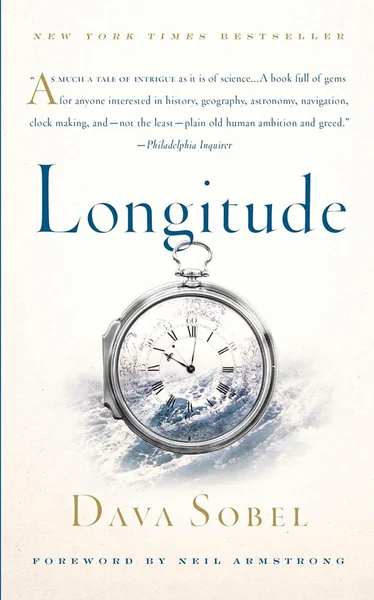
Longitude: The True Story of a Lone Genius Who Solved the Greatest Scientific Problem of His Time by Dava Sobel front cover

Our review

Longitude

Longitude by Dava Sobel Review: The Clockmaker's Quest

Dava Sobel’s Longitude chronicles John Harrison’s forty-year quest to build a marine chronometer that solved the thorniest scientific dilemma of the eighteenth century. The book earns attention for transforming a complex historical puzzle into a breezily written narrative of ambition and engineering triumph.

Our age band: Adult

LuvemBooks Verdict

Best for

Readers who enjoy accessible, novel-like narratives that transform complex challenges into an engaging story of ambition and engineering triumph will find this book rewarding.

Worth it if

Worth reading if you enjoy biographical narratives that balance intellectual history with brisk pacing and clear explanations of technical concepts.

Skip if

Skip it if you require detailed engineering diagrams or a deep technical manual on 18th-century horology.

Where reviewers agree and split

Readers rate it 4.4 on Amazon. The reviews we read that discuss it in depth split on some points:

  • Positive

    Kirkus Reviews · Press review: praises breezy writing and novel-like enjoyment

  • Positive

    kara.reviews · Book blog: highly recommends the fascinating historical narrative

  • Mixed

    Acampbell · Book blog: praises narrative clarity but notes lack of technical detail

    Overall verdicts are our summary of each review we read, from its headline, rating and conclusion.

    Kirkus Reviews calls the book 'breezily written' and praises its novel-like enjoyment, while book blogger Kara.reviews highlights its 'perfect mix of narrative, character, and scientific explanation.' Acampbell notes the story is well-told but wishes for more technical detail and diagrams.

    “Breezily written and full of fascinating characters and facts”

    — Kirkus Reviews
    Sources: Kirkus Reviews, kara.reviews, Acampbell
    4.4from 8,427 Amazon ratings, as of Nov 2026— reader ratings, not a LuvemBooks score

    Ask LuvemBooks

    Was this helpful?

    Dava Sobel’s Longitude chronicles clockmaker John Harrison’s forty-year battle to solve the eighteenth century’s most pressing scientific dilemma: calculating longitude at sea. The narrative successfully transforms complex horological history into a breezy, character-driven tale of ambition and institutional rivalry. Highly recommended for casual history enthusiasts, though readers seeking detailed technical diagrams or a rigorous engineering manual will find the scope too broad.
    Is it worth reading?
    Kirkus Reviews and independent bloggers praise the book for its accessible, novel-like pacing and focus on technical concepts. It delivers a comprehensive overview of maritime history without overwhelming the audience with jargon. However, critics note that the reliance on text and abbreviated treatment of testing phases may frustrate readers seeking a deep dive into horology.
    Similar books
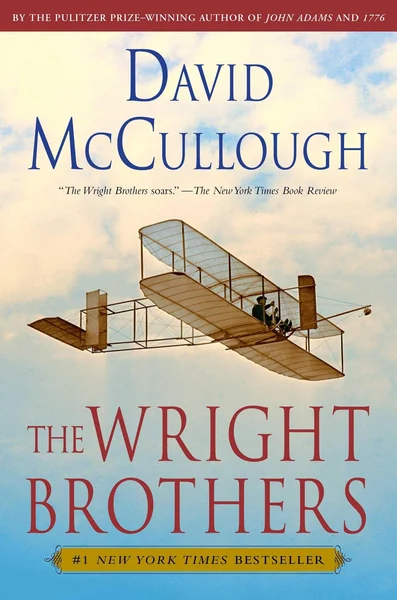
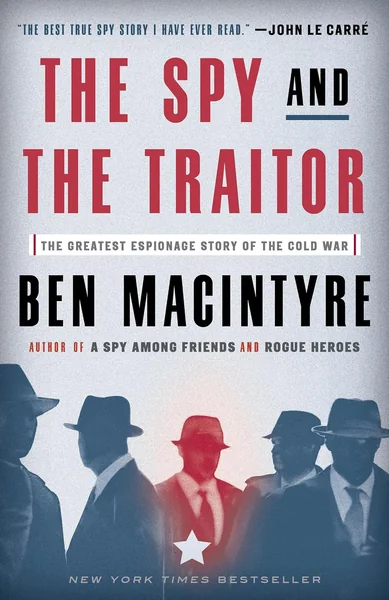
    Readers who enjoy this blend of intellectual history and biographical narrative often appreciate works like David McCullough’s The Wright Brothers or Peter Frankopan’s The Silk Roads. For those interested in Cold War espionage and institutional rivalry, Ben Macintyre’s The Spy and the Traitor offers a comparable dynamic. David Graeber’s The Dawn of Everything also explores the friction between established authority and innovative social structures.
    Who should read this?
    The book is written for adults who enjoy accessible, narrative-driven non-fiction and biographical accounts of scientific discovery. It suits readers who appreciate the intersection of historical context, maritime exploration, and institutional politics. General readers looking for a quick, engaging overview will find it highly rewarding, while those seeking rigorous technical manuals may want to look elsewhere.
    What age is it for?
    This book is written for adults, focusing on historical context and institutional politics. While it contains no explicit content warnings, its dense historical context and complex explanations of mechanical engineering are best suited for mature readers. Older teens with a strong interest in history or science may also appreciate it, but the reading level aligns with adult non-fiction.
    Why might technical readers skip this?
    Critics and readers note that the narrative relies heavily on textual explanation rather than detailed engineering breakdowns. Those expecting an extensive look into horological mechanics or a step-by-step analysis of the chronometer’s development will likely find the scope too abbreviated. The book prioritizes the human drama and historical context over technical instruction.
    How does it portray the scientific establishment?
    Sobel effectively frames the era’s scientific culture as a notable tension between hands-on innovation and academic elitism. The British Board of Longitude and prominent astronomers initially scorned Harrison for being a mere mechanic, favoring complex celestial calculations instead. His eventual triumph forced the establishment to acknowledge the superiority of his timepieces, revealing much about the rigidity of historical scientific institutions.
    Summarize this book

    Summarize this book

    Sobel traces John Harrison’s four-decade quest to build a marine chronometer that could accurately measure longitude, a problem that claimed countless ships and lives. The book frames the invention as a fierce clash between practical engineering and the rigid scientific establishment of the British Board of Longitude. Readers follow Harrison’s struggle against professional rivalry and political hurdles to achieve a breakthrough that revolutionized global navigation.

    Follow up

    What is the central conflict?
    Is the history accurate?

    Synthesized from verified book data & published reviews · How we review

    Ask LuvemBooks

    What would you like to know about Longitude?

    Answers come from our editorial notes on this book. If we haven't covered something, we'll say so.

    Readers often ask

    Our Review

    We review the evidence: reader verdicts, gathered and weighed with AI assistance and edited by LuvemBooks, rather than one reader's first-hand take.

    Dava Sobel’s Longitude delivers a compelling historical narrative that transforms a complex scientific puzzle into an accessible story of ambition and innovation.

    The Quest for Longitude at Sea

    Dava Sobel’s Longitude introduces readers to John Harrison, an eighteenth-century clockmaker who solved the thorniest scientific dilemma of his era. Early navigators could calculate latitude easily, but determining longitude at sea remained impossible for centuries.
    The British Parliament offered a massive prize in 1714 to anyone who could provide a practical solution. Harrison dedicated forty years to constructing increasingly precise marine chronometers.
    His mechanical timekeepers finally allowed mariners to calculate their exact position by comparing local sun time to a known reference point. Sobel frames this decades-long struggle as a fierce clash between scientific establishment and practical engineering.
    The narrative highlights how the loss of countless ships and lives fueled the urgency behind the royal decree. Harrison’s eventual triumph required navigating both technical hurdles and intense professional rivalry.
    Determining longitude on land was straightforward, but the unstable environment of a rolling ship demanded unprecedented accuracy. Captains previously relied on dead reckoning or coastal triangulation, methods that frequently proved fatal in stormy conditions.
    Sobel effectively conveys the high stakes that drove European powers to fund the search. The British government’s decision to offer a substantial bounty transformed the longitude problem from an academic curiosity into a national priority.
    Harrison’s early life remains somewhat obscure, but his dedication to precision is thoroughly documented.

    Narrative and Historical Scope

    Sobel charts the connections between Harrison and prominent contemporaries like Isaac Newton and Edmund Halley. The text explains the navigational problem that had to be solved while detailing the political intrigue surrounding the British Board of Longitude.
    The narrative balances technical horological details with the human ambition driving the quest. Readers encounter a story that functions equally as history and biography.
    The author opens with a personal memory. The book was later adapted into a television series of the same name.
    Sobel’s prose successfully bridges the gap between specialized scientific history and general storytelling. The work remains a definitive account of how a self-taught mechanic outmaneuvered academic elites.
    The British astronomers initially favored an astronomical solution involving lunar tables, which proved too complex for practical use at sea. Harrison’s mechanical approach faced fierce opposition from a scientific community that scorned a mere mechanic.
    The clockmaker’s persistence ultimately forced the establishment to acknowledge the superiority of his timepieces. The author skillfully interweaves the personal lives of the key players with the broader geopolitical context.
    The rivalry between the astronomical and mechanical camps reveals much about the scientific culture of the era.

    Strengths and Limitations

    Kirkus Reviews praised the work as "breezily written and full of fascinating characters and facts." The book blogger behind Kara.reviews noted the text seamlessly blends storytelling, character development, and scientific explanation.
    The same reviewer wished the volume were longer and featured more diagrams of the chronometers. Acampbell observed that the text lacks detailed information about the mechanisms of the clocks. kara.reviews finds the abbreviated treatment of the testing phases by famous mariners like Captain Cook insufficient.
    The narrative successfully conveys the historical stakes without overwhelming the audience with technical jargon. Critics agree that the book captures the drama of scientific discovery remarkably well.
    The pacing receives mixed feedback, though. The compact format delivers a comprehensive overview without sacrificing the core narrative arc.
    Readers seeking a deep dive into horological engineering may find the mechanical descriptions too abbreviated. The book relies heavily on textual explanation rather than visual aids to illustrate the chronometers.
    The narrative effectively conveys the tension between established authority and innovative breakthroughs. Sobel’s ability to humanize historical figures prevents the scientific details from becoming overwhelming.
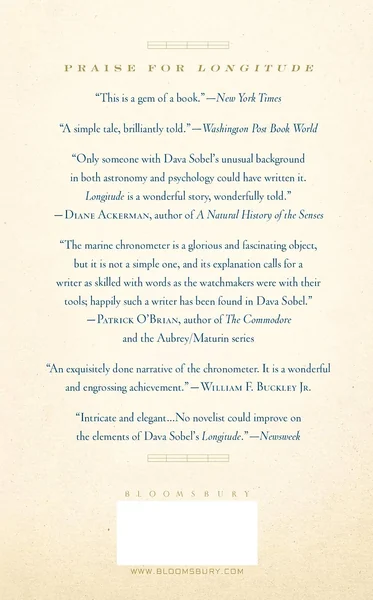
    Back cover with praise blurbs for the book and the publisher's logo.
    Back cover with praise blurbs for the book and the publisher's logo.

    Who Should Read This

    The book appeals to readers interested in the history of science and maritime exploration. It suits audiences who enjoy biographical narratives driven by intellectual rivalry and institutional resistance.
    The compact format makes it accessible for casual history enthusiasts seeking a quick overview. Those seeking deep technical horology manuals may find the scope too broad for their needs.
    The narrative remains relevant for modern readers fascinated by the origins of global positioning. Sobel’s clear explanations make complex astronomical and mechanical concepts understandable to laypeople.
    The focus on human ambition ensures the historical events remain engaging rather than dry. Readers who appreciate well-researched accounts of overlooked inventors will find much to admire here.
    The text serves as an excellent primer for those wishing to explore the broader history of navigation. Its enduring popularity demonstrates a lasting appeal across generations of science enthusiasts.
    The narrative effectively contextualizes Harrison’s invention within the wider Age of Exploration. Sobel’s research draws upon extensive archival materials to reconstruct the period’s scientific debates.

    Is It Worth Your Time?

    The reception highlights a book that successfully bridges scientific history and general storytelling. Critics praise its clarity and entertainment value without sacrificing historical accuracy.
    The main critique centers on the lack of visual aids for complex mechanical descriptions. The work stands as a definitive account of Harrison’s triumph over institutional resistance.
    Readers looking for a concise, engaging exploration of maritime history will find it highly rewarding. The narrative ultimately celebrates the power of persistent inquiry and practical ingenuity.
    The book remains a highly recommended read for anyone interested in the intersection of science and human determination. The book successfully maintains reader interest through its focus on the personal struggles behind the technical achievements.
    Sobel avoids dry academic prose in favor of a dynamic, character-driven historical account.

    Sources & Further Reading

    The key facts and claims in this review are grounded in the retrieved, verified sources listed below.

    1. Cited in this review
    2. 1
    3. Further reading
    4. 2
    5. 3
    6. 4
    7. 5
    8. 6
    9. 7

    Age & Reading Level

    Our age band

    Adult

    Our age band groups books for browsing; it isn't an age a review gave.

    From our readers

    Reader reviews

    No LuvemBooks readers have answered yet.

    Read it? Was it right for you?

    Books like Longitude

    Curated picks for readers who enjoyed Longitude, with our reasoning for each match.

    Discussion

    Reader comments